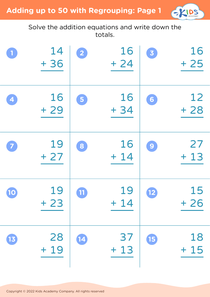
Recognizing shapes Adding up to 50 Without Regrouping Worksheets for Ages 7-9
5 filtered results
-
From - To
Discover our engaging "Recognizing Shapes Adding Up to 50 Without Regrouping Worksheets" designed for children aged 7-9! These worksheets combine the essential skills of shape recognition with math practice, focusing on addition without regrouping. Ideal for reinforcing foundational concepts, our activities help students learn to identify various shapes while they build their confidence in simple addition. With colorful illustrations and clear instructions, your young learners will find these worksheets both fun and educational. Perfect for classroom use or at-home practice, these resources support cognitive development and enhance problem-solving skills. Foster a love for learning with our interactive worksheets today!
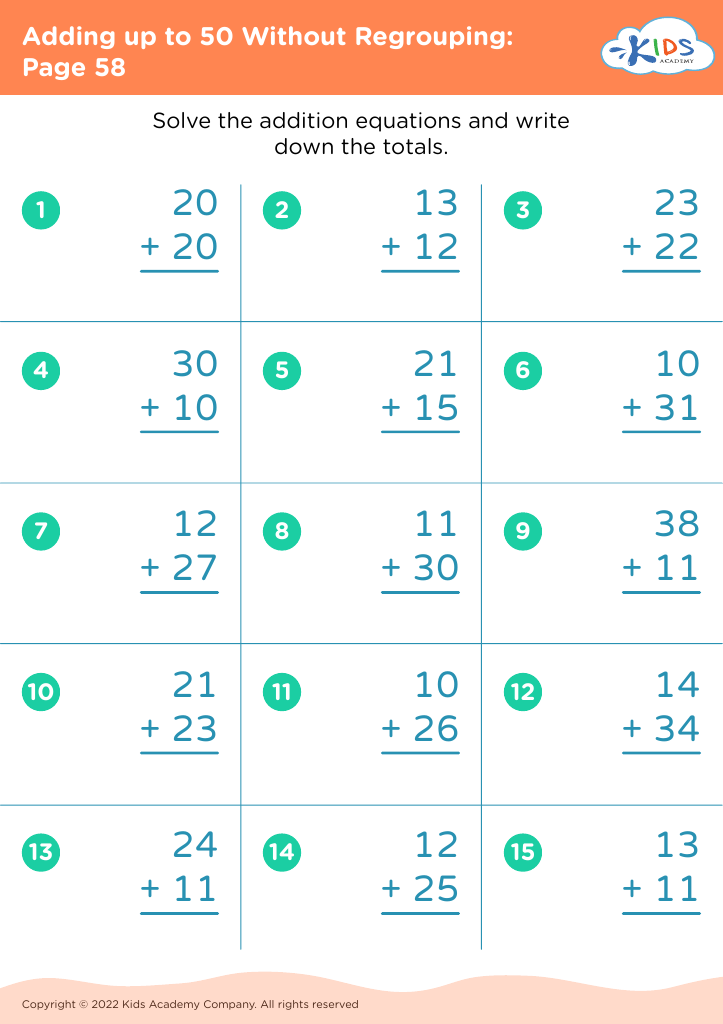
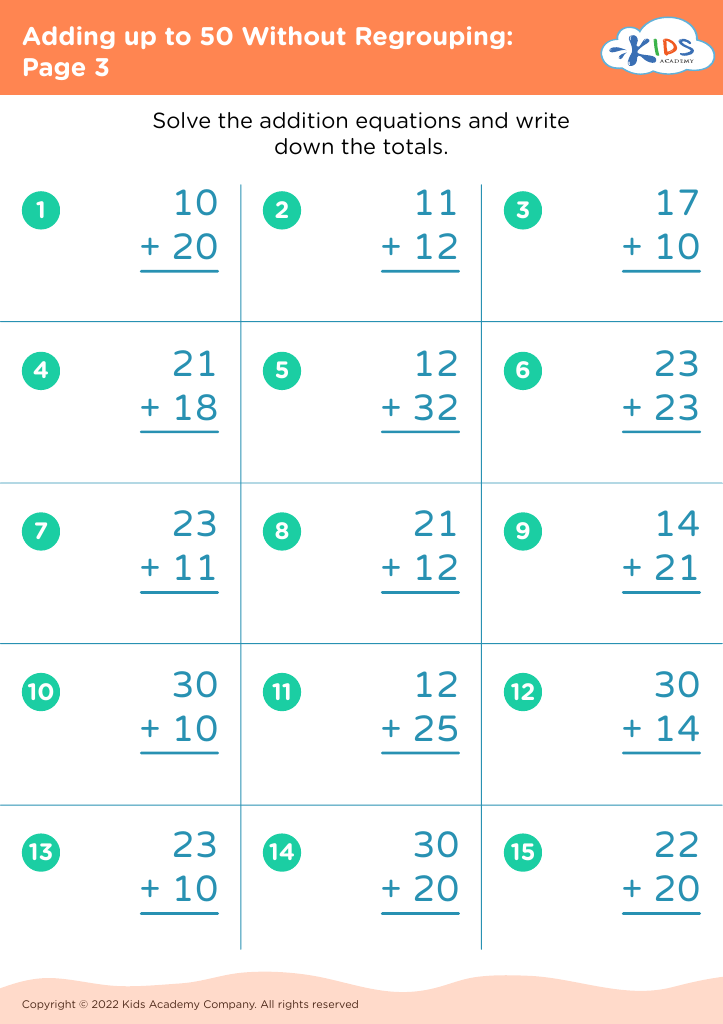
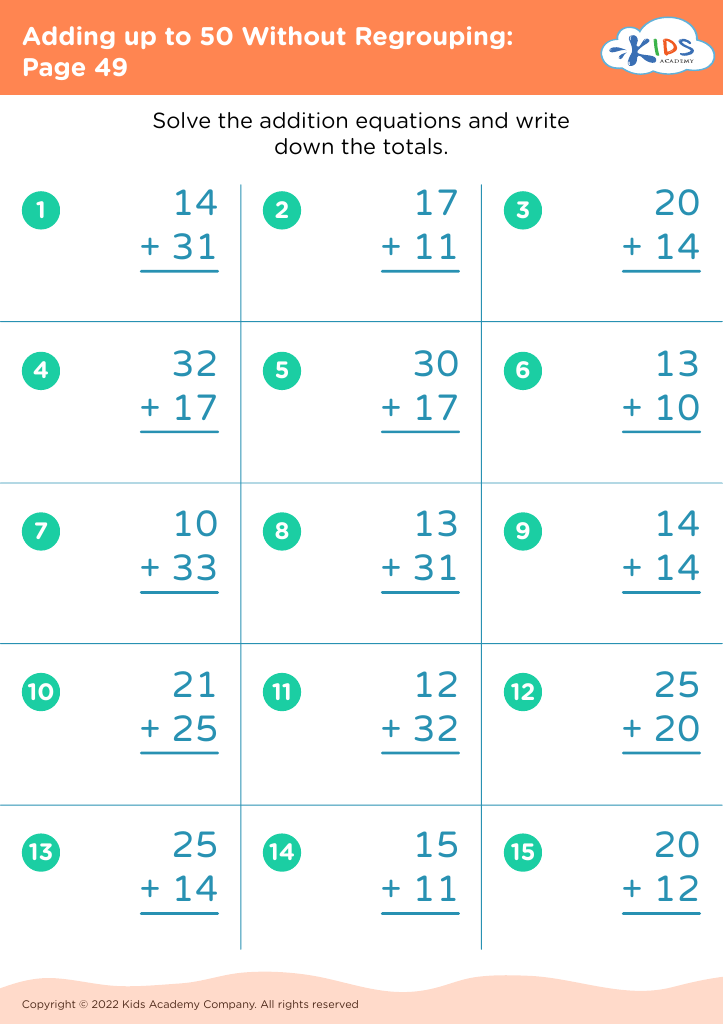
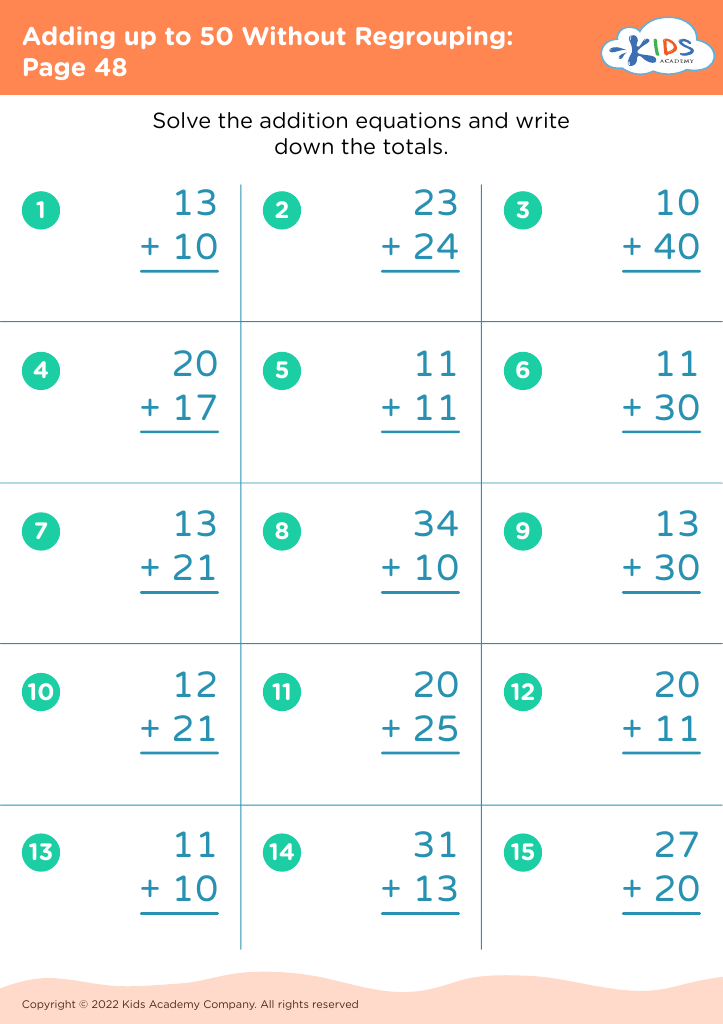
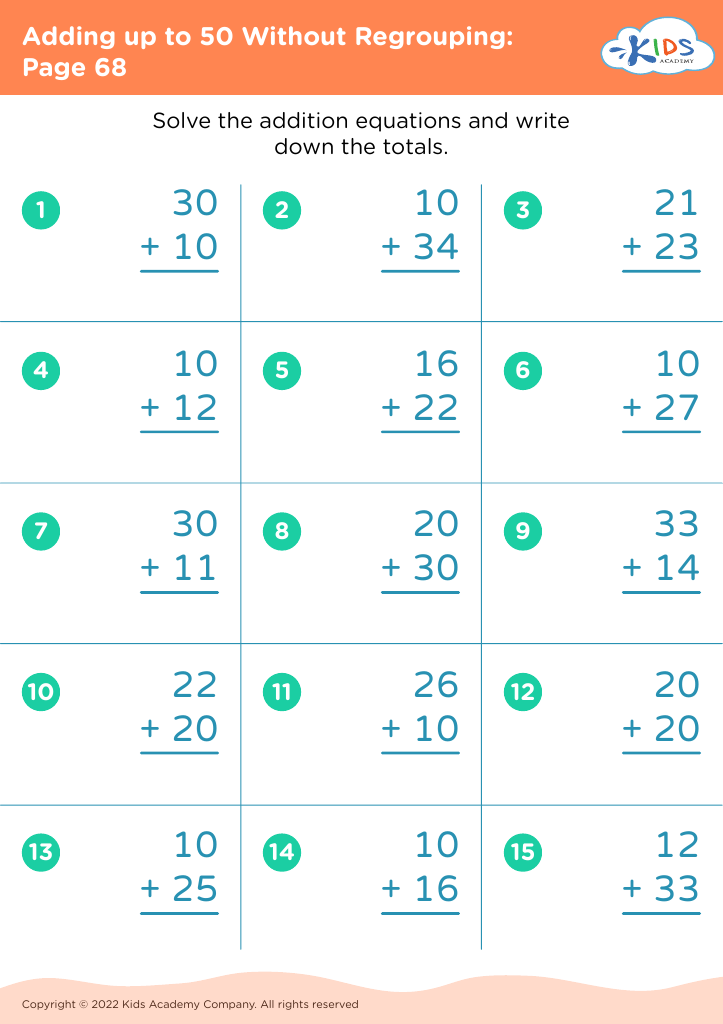


Recognizing shapes and mastering addition skills without regrouping are crucial foundational concepts for children aged 7-9. Understanding shapes aids in developing spatial awareness, critical thinking, and problem-solving skills. These geometric concepts are not only essential in mathematics but also relevant in various fields such as science, art, and engineering. For parents and teachers, fostering shape recognition can enhance a child’s cognitive and motor skills, encouraging them to explore and interact with their environment more effectively.
Adding up to 50 without regrouping is another key skill that promotes numerical fluency and confidence in mathematics. By mastering this technique, children solidify their understanding of fundamental arithmetic operations, laying the groundwork for more complex mathematical concepts later on. When children can perform these calculations comfortably, they are more likely to engage positively in math-related activities, reducing anxiety around the subject.
Moreover, these skills can have a greater impact on their overall academic performance. Recognizing shapes and improving addition skills can enhance a child's problem-solving ability, leading to success across various subjects. Consequently, both parents and teachers play a critical role in nurturing these competencies to ensure children develop a well-rounded foundation for future learning and everyday life.