Understanding fractions Adding up to 50 Without Regrouping Worksheets for Ages 7-9

Filters

13 filtered results

Clear all filters
Favorites
With answer key
Interactive

13 filtered results

Difficulty Level

Grade


Explore our engaging "Understanding Fractions: Adding Up to 50 Without Regrouping" worksheets, designed specifically for ages 7-9! These fun, interactive activities help young learners grasp the concept of fractions while practicing simple addition skills. Perfect for the classroom or at home, our worksheets incorporate visual aids and step-by-step instructions to ensure children build a strong foundation in math. By focusing on adding fractions without regrouping, kids can enhance their numerical fluency and confidence. Dive into our collection and provide your child with the tools they need to succeed in their math journey! Suitable for parents and educators alike!
Check out this FREE Trial Lesson on Adding up to 50 Without Regrouping for age 7-9!

Z

Favorites
With answer key
Interactive
  • 7-9
  • Understanding fractions
  • Adding up to 50 Without Regrouping
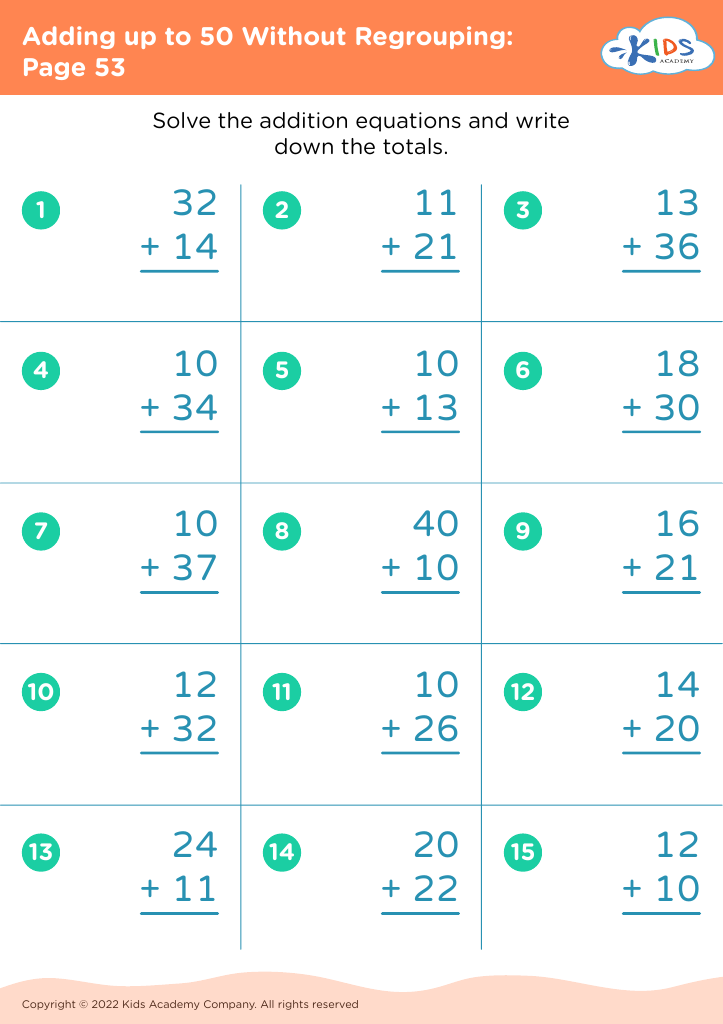
Adding up to 50 Without Regrouping: Page 53
Worksheet
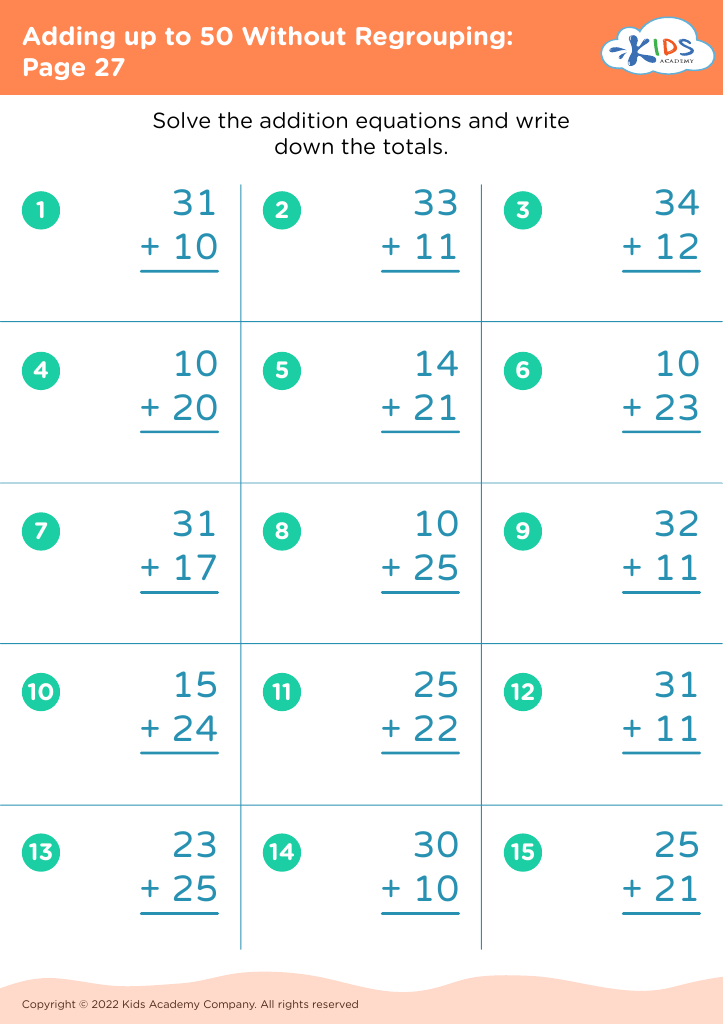
Adding up to 50 Without Regrouping: Page 27
Worksheet
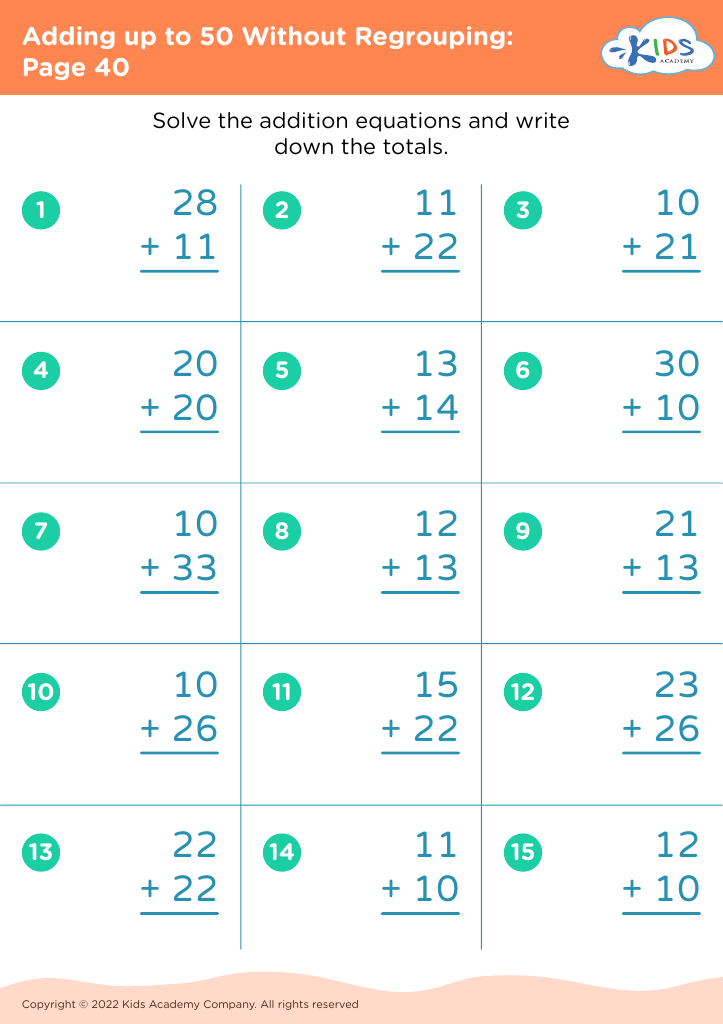
Adding up to 50 Without Regrouping: Page 40
Worksheet
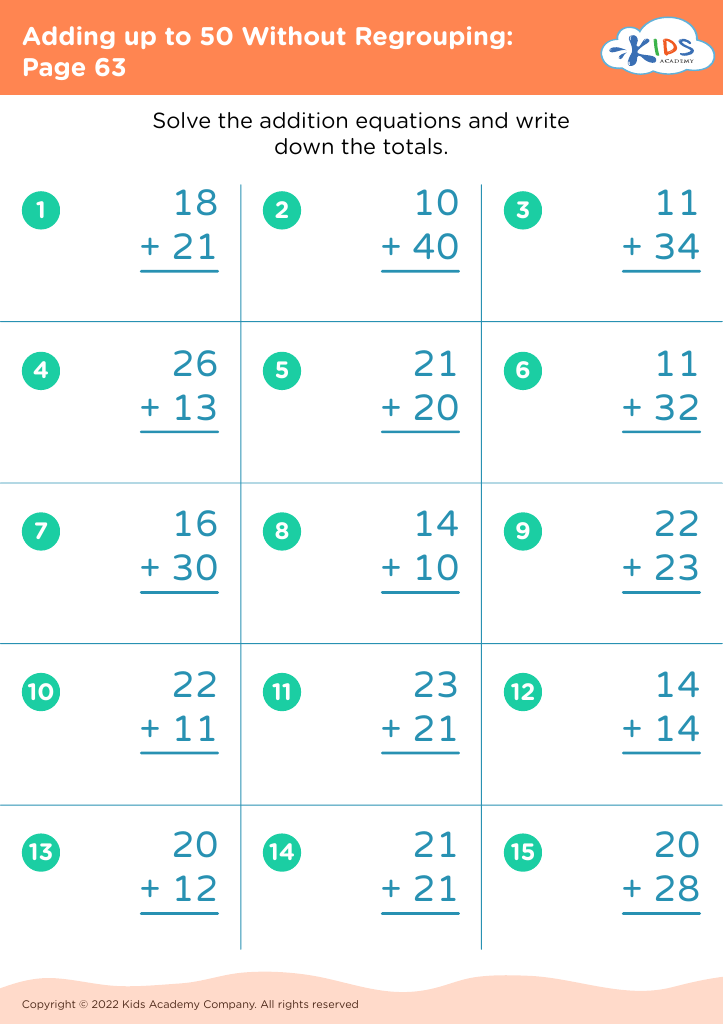
Adding up to 50 Without Regrouping: Page 63
Worksheet
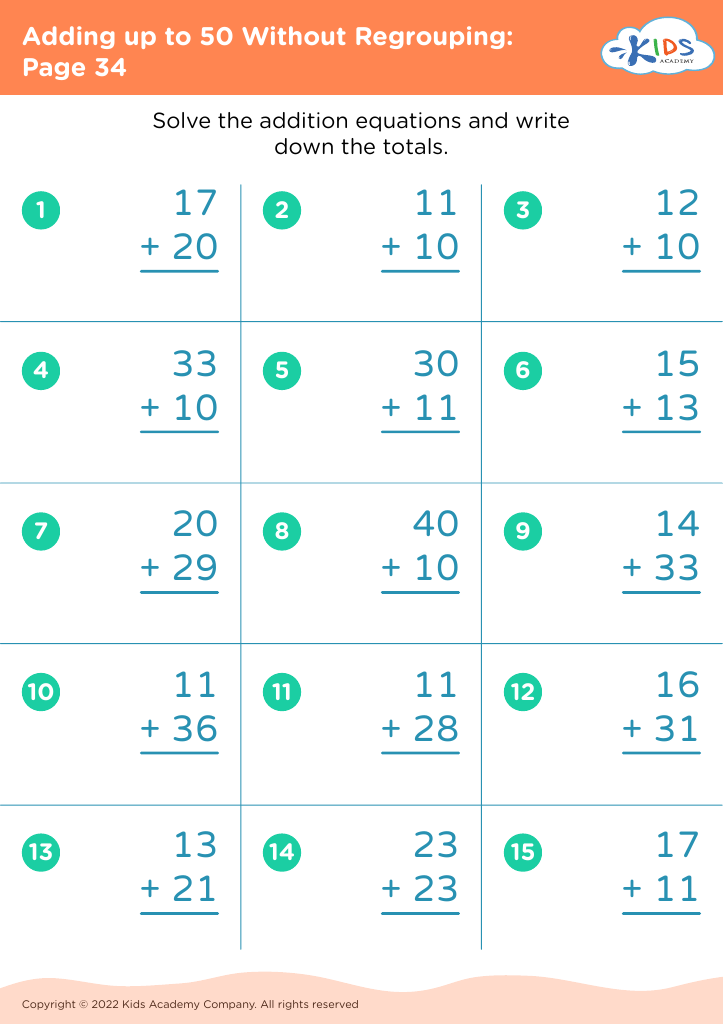
Adding up to 50 Without Regrouping: Page 34
Worksheet
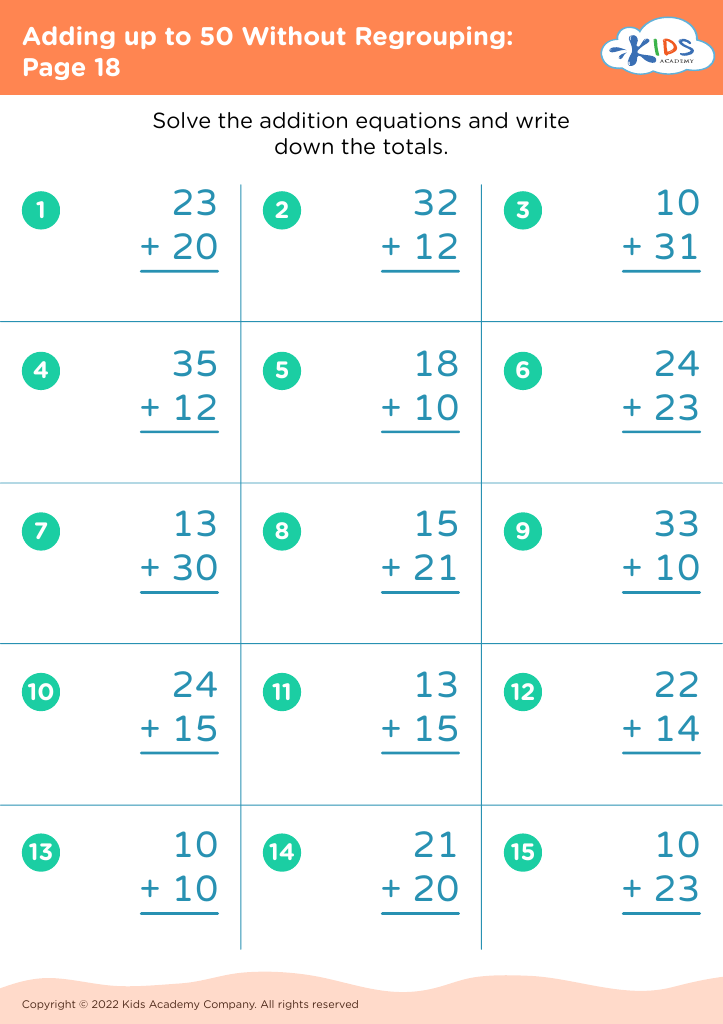
Adding up to 50 Without Regrouping: Page 18
Worksheet
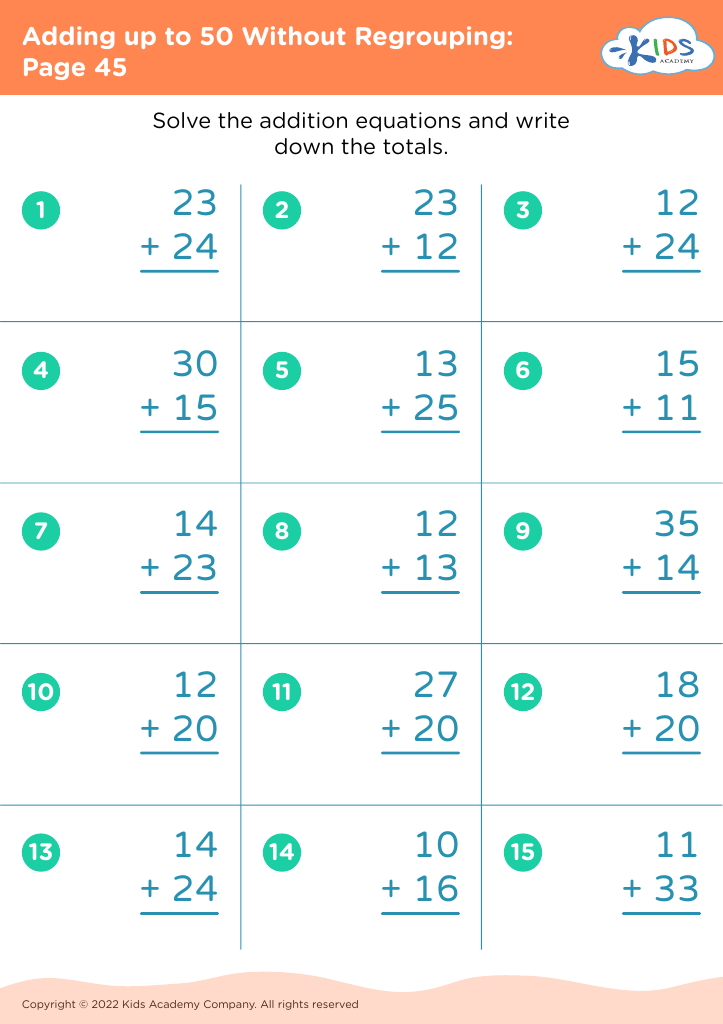
Adding up to 50 Without Regrouping: Page 45
Worksheet
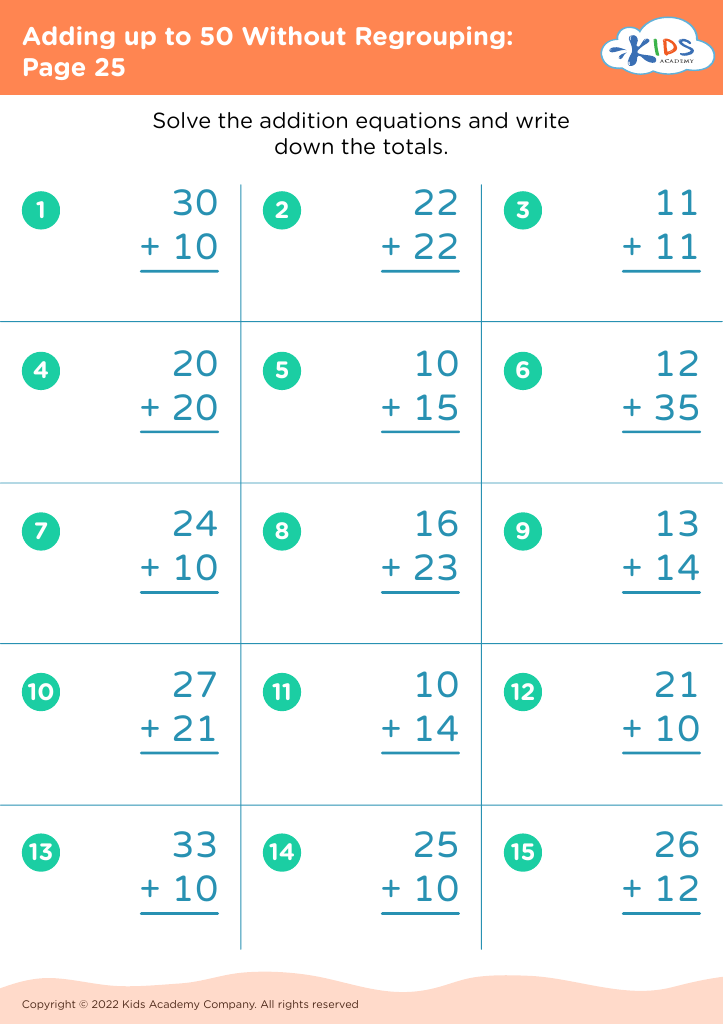
Adding up to 50 Without Regrouping: Page 25
Worksheet
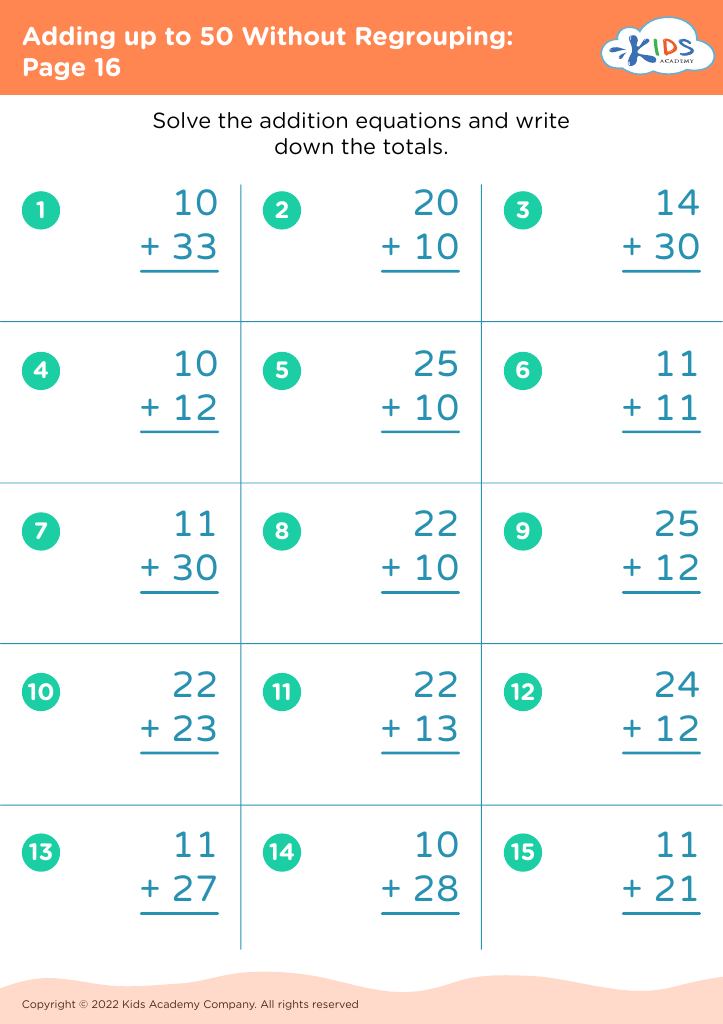
Adding up to 50 Without Regrouping: Page 16
Worksheet
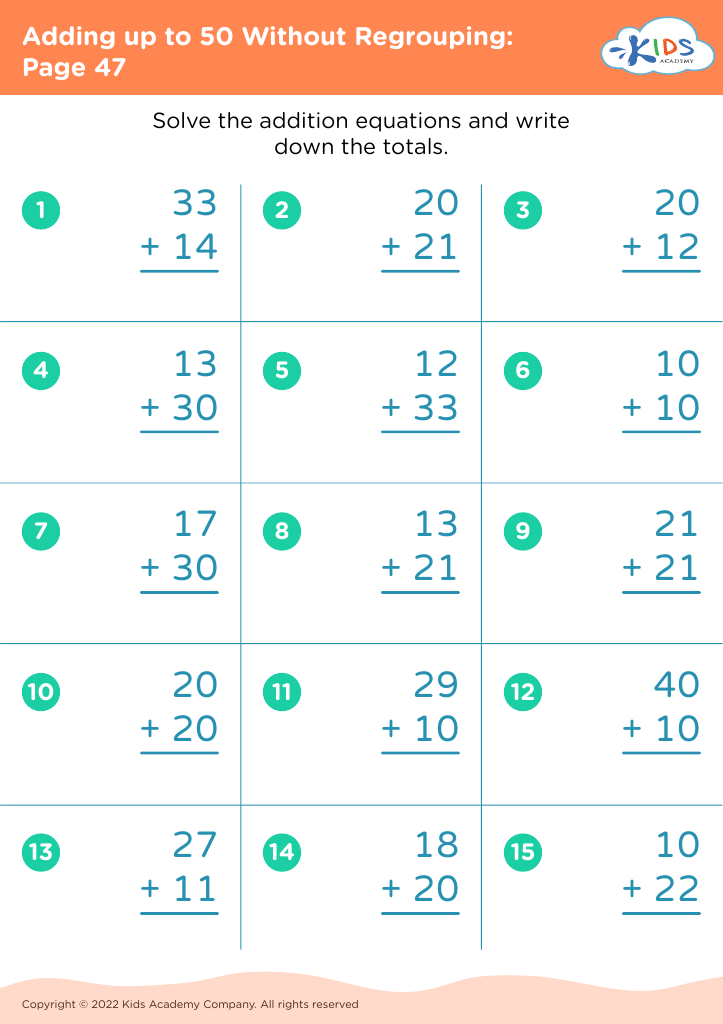
Adding up to 50 Without Regrouping: Page 47
Worksheet
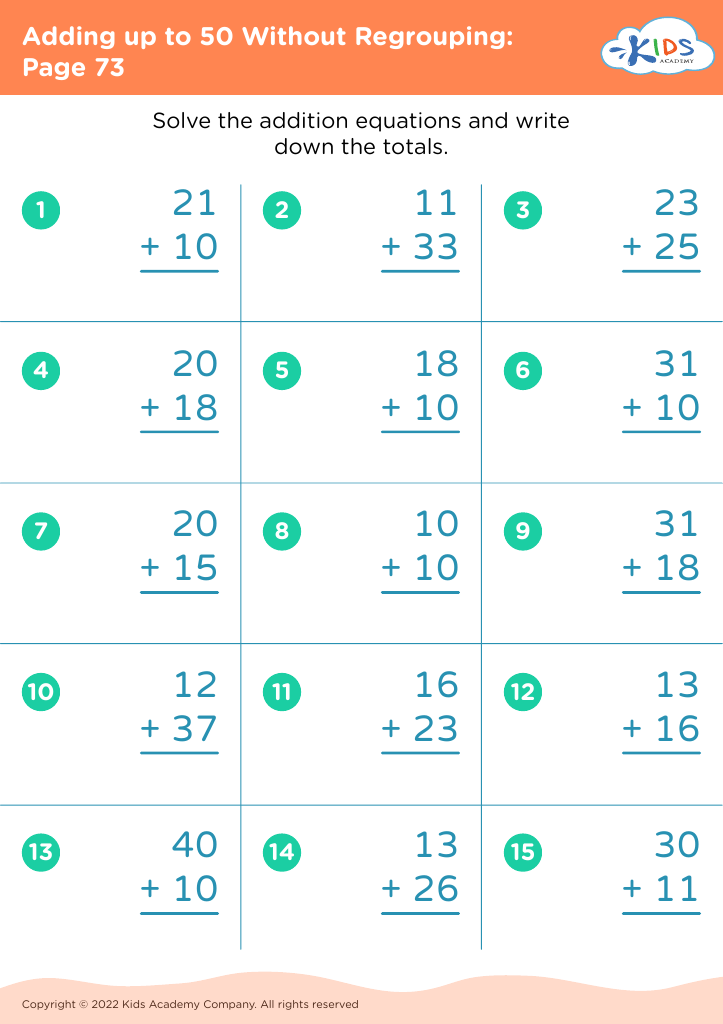
Adding up to 50 Without Regrouping: Page 73
Worksheet
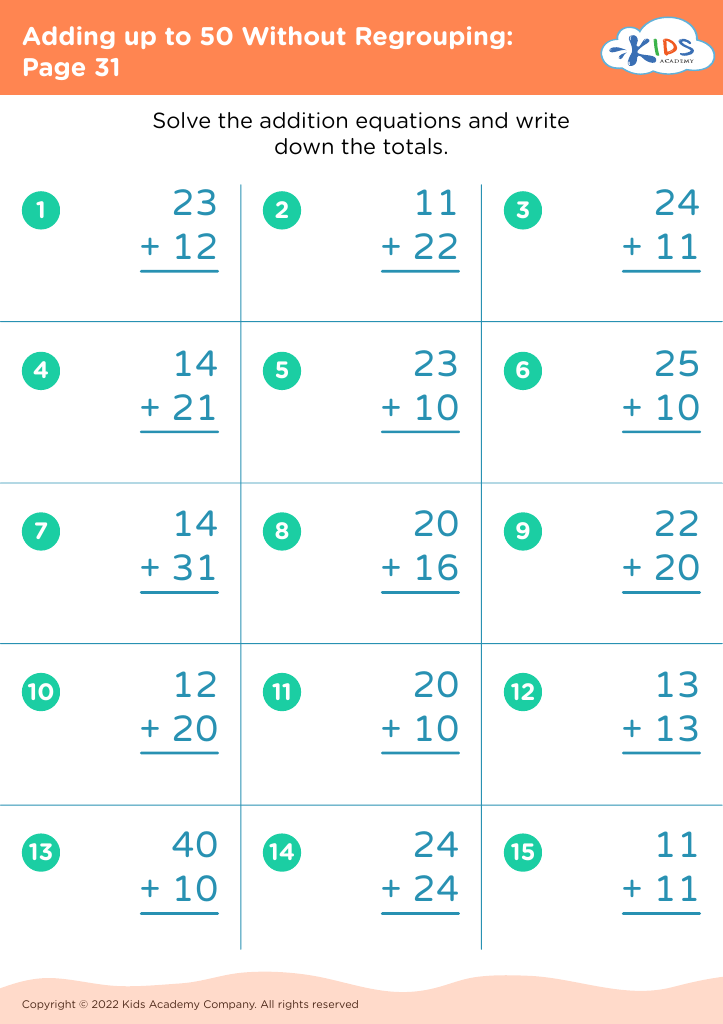
Adding up to 50 Without Regrouping: Page 31
Worksheet
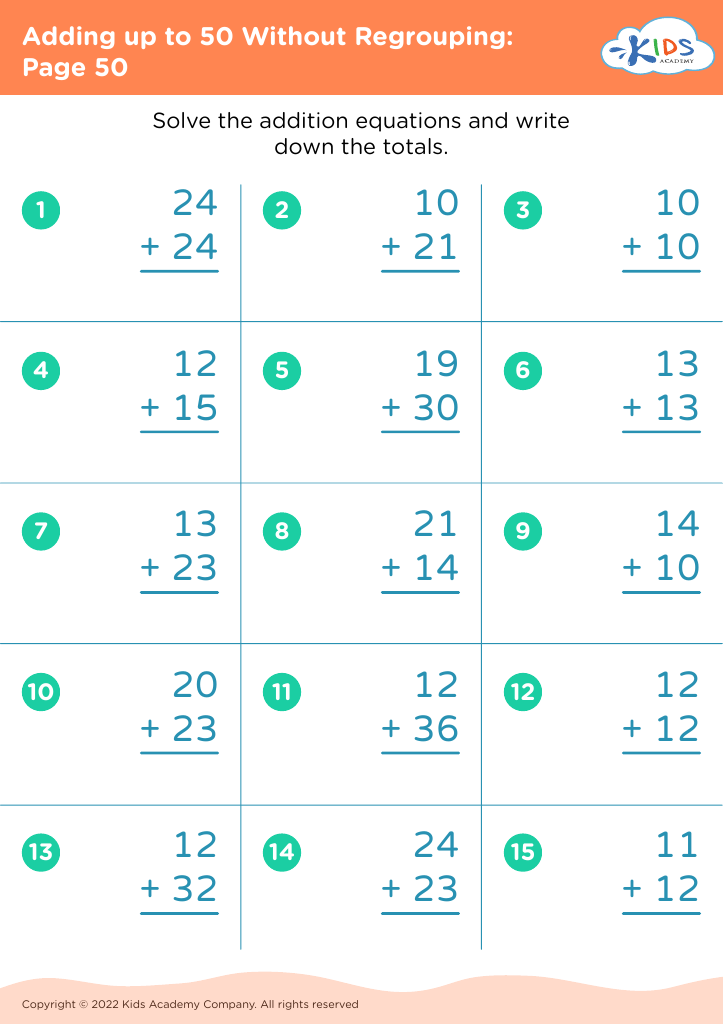
Adding up to 50 Without Regrouping: Page 50
Worksheet


Understanding fractions and adding them up to 50 without regrouping is crucial for children aged 7-9, as it forms the foundation for advanced math concepts. At this developmental stage, students begin to grasp more abstract mathematical principles, and fractions are integral for their cognitive growth in numeracy.

Firstly, comprehending fractions enhances problem-solving skills. When children learn how to add fractions, they not only practice arithmetic but also develop a stronger understanding of part-to-whole relationships, which is essential in everyday life, such as cooking or sharing items.

Moreover, mastering these concepts in a manageable range, like up to 50 without regrouping, helps build their confidence and reduces math anxiety. Early successes foster a positive attitude toward learning math, which can have lasting effects on their academic journey.

Finally, these skills are linked to improved performance in other subjects, especially science and financial literacy, where fractions play a vital role. Parents and teachers should prioritize understanding fractions as it equips children with necessary skills, preparing them for future learning and instilling a lifelong love for mathematics.