Understanding patterns Adding up to 50 Without Regrouping Worksheets for Ages 7-9
5 filtered results
-
From - To
Discover engaging "Understanding Patterns: Adding Up to 50 Without Regrouping" worksheets designed for children ages 7-9 at Kids Academy. These interactive resources help young learners grasp essential mathematical concepts by exploring patterns in addition. Through fun exercises, students practice addition skills, recognizing number relationships and enhancing their confidence in math. The worksheets focus on building a strong foundation without the need for regrouping, ensuring a clear understanding of how to reach totals up to 50. Perfect for at-home or classroom learning, our materials cater to various learning styles, making math both accessible and enjoyable for young minds. Start your journey to math mastery today!
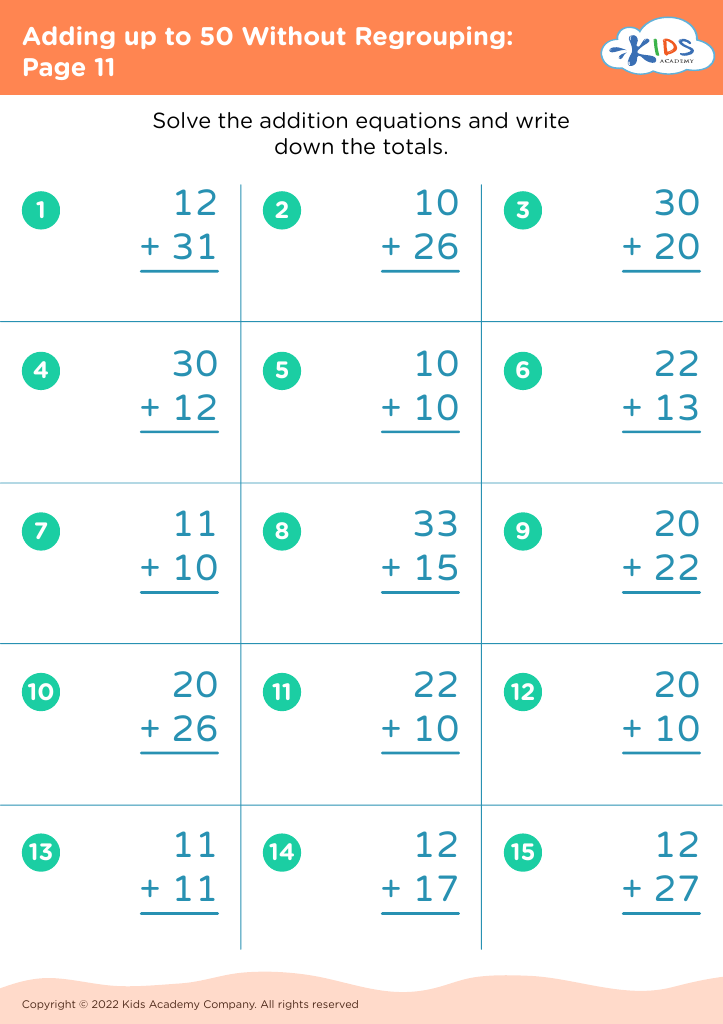
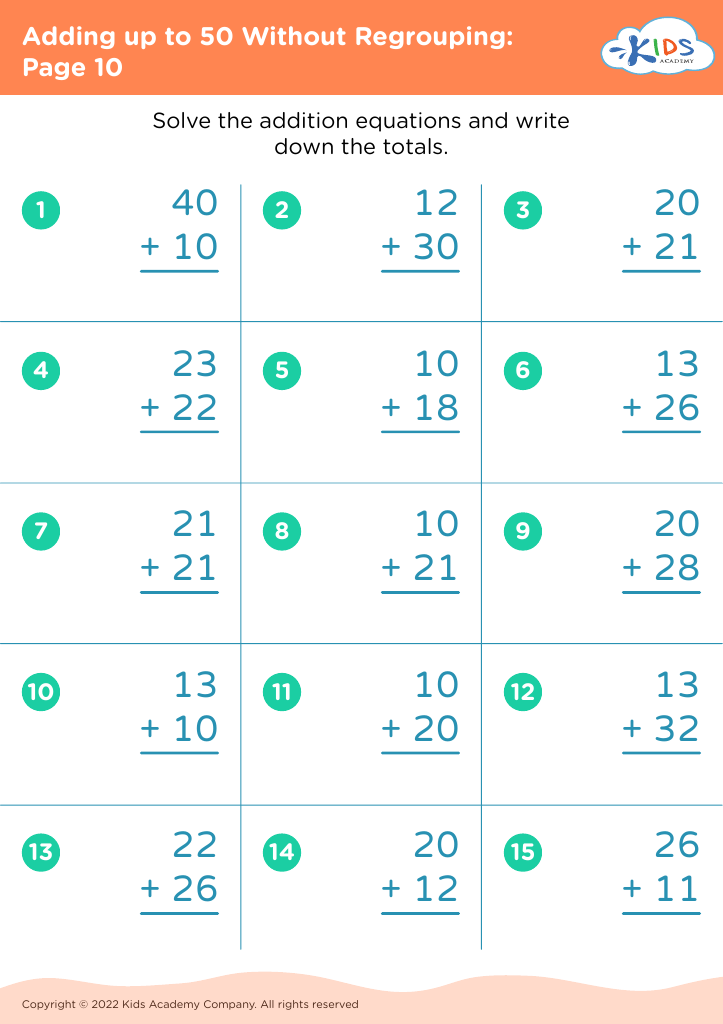
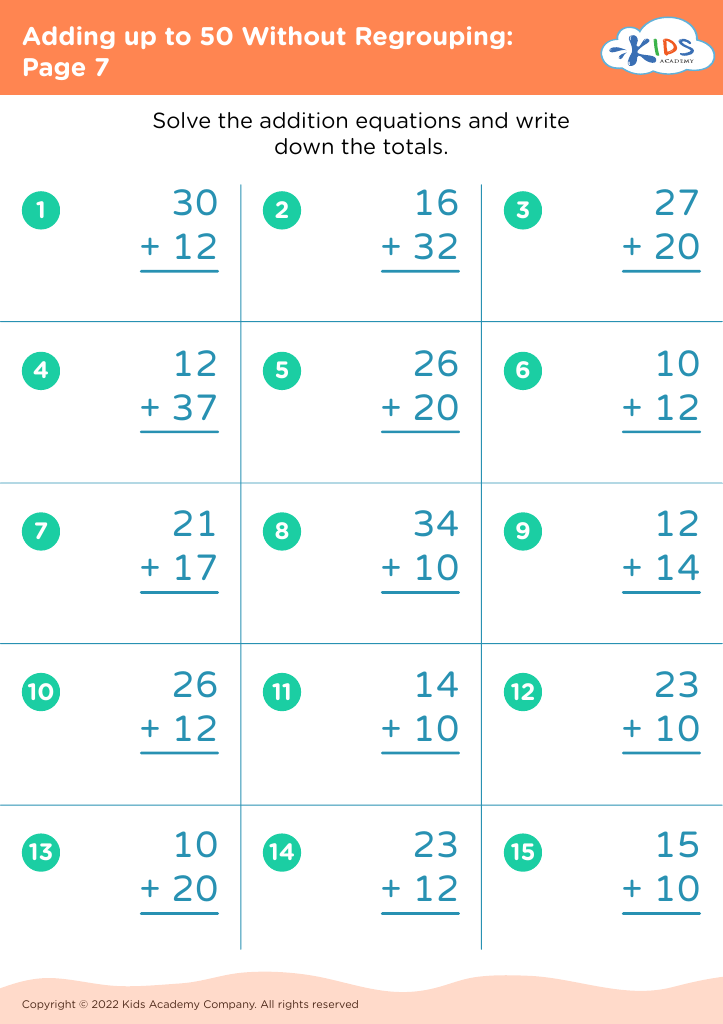
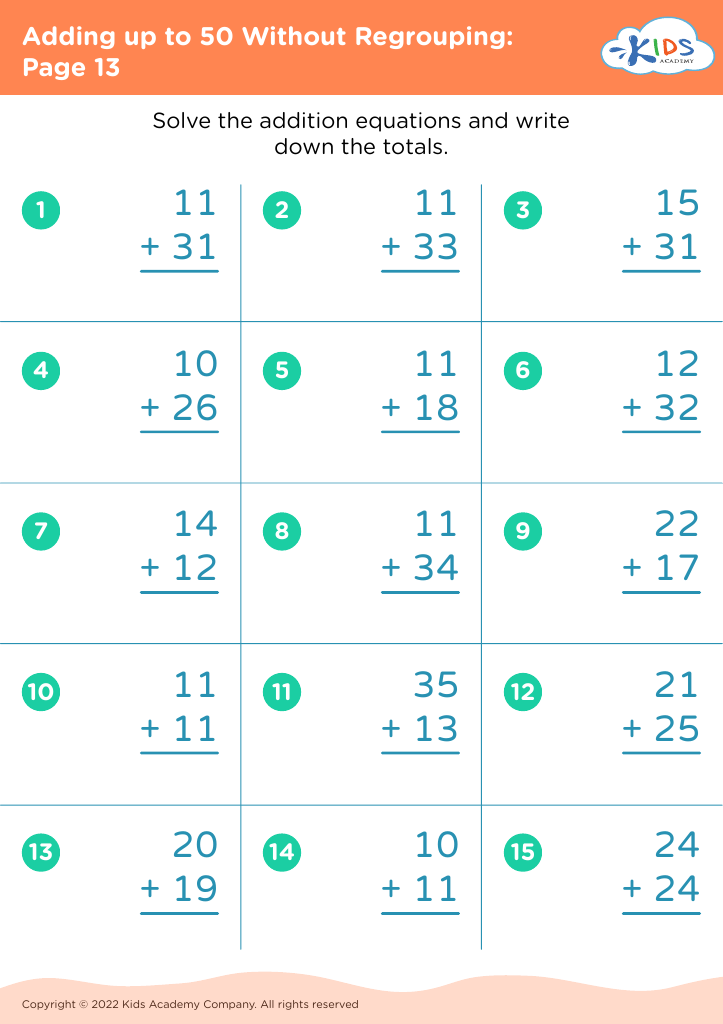
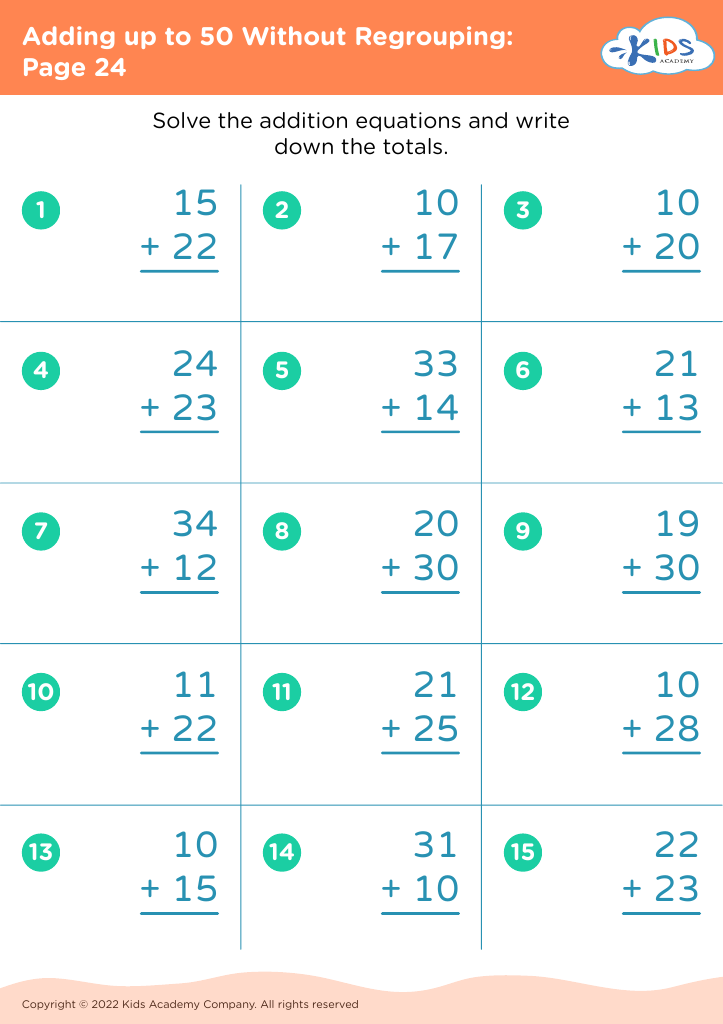


Understanding patterns in addition, especially when adding numbers up to 50 without regrouping, is crucial for children aged 7-9. At this developmental stage, students are building foundational mathematical skills that serve as building blocks for more complex concepts later on. Recognizing patterns helps children see relationships between numbers, making addition more intuitive and reducing computational errors.
When children learn to efficiently identify patterns, such as grouping numbers that add to ten (e.g., 7 + 3, 8 + 2), they can solve problems faster and with greater confidence. This skill also enhances their ability to understand and apply mathematical concepts in various situations, leading to improved problem-solving abilities.
For parents and teachers, fostering these skills means ensuring that children develop a positive attitude towards math. Engaging with patterns lays the groundwork for critical thinking and creative problem-solving, allowing children to explore math beyond rote memorization. Furthermore, as students master addition without regrouping, they can focus on more advanced topics, such as multiplication and division, with ease.
Ultimately, investing time and effort into helping children understand these patterns not only aids academic success but also promotes a lifelong appreciation for mathematics.