Developing problem-solving abilities Addition & Subtraction Worksheets for Ages 7-9
7 filtered results
-
From - To
Our "Developing Problem-Solving Abilities: Addition & Subtraction Worksheets for Ages 7-9" are designed to foster critical thinking in young learners. These worksheets provide an engaging mix of problems to help students master fundamental arithmetic operations while enhancing their analytical skills. Each sheet offers a variety of exercises, from basic sums to more complex word problems, all aimed at developing a child's mathematical confidence and problem-solving agility. Perfect for classroom use or extra home practice, these resources support a solid math foundation, preparing children for more advanced concepts. Boost your child's math abilities with our expertly-crafted worksheets today!
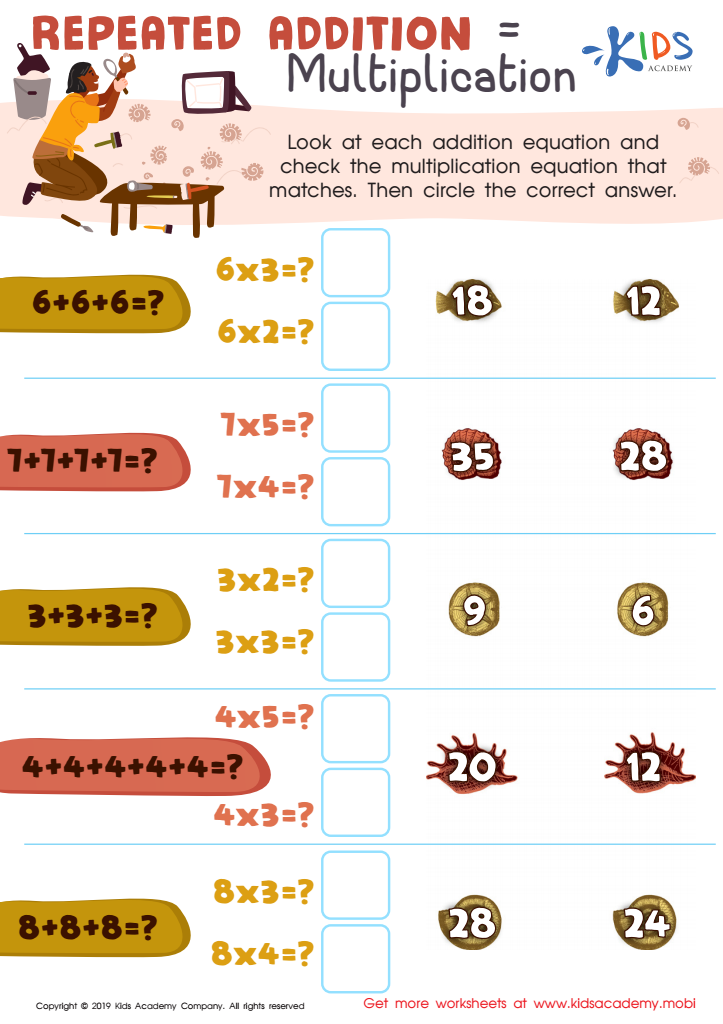
Repeated Addition = Multiplication Worksheet
 Assign to My Students
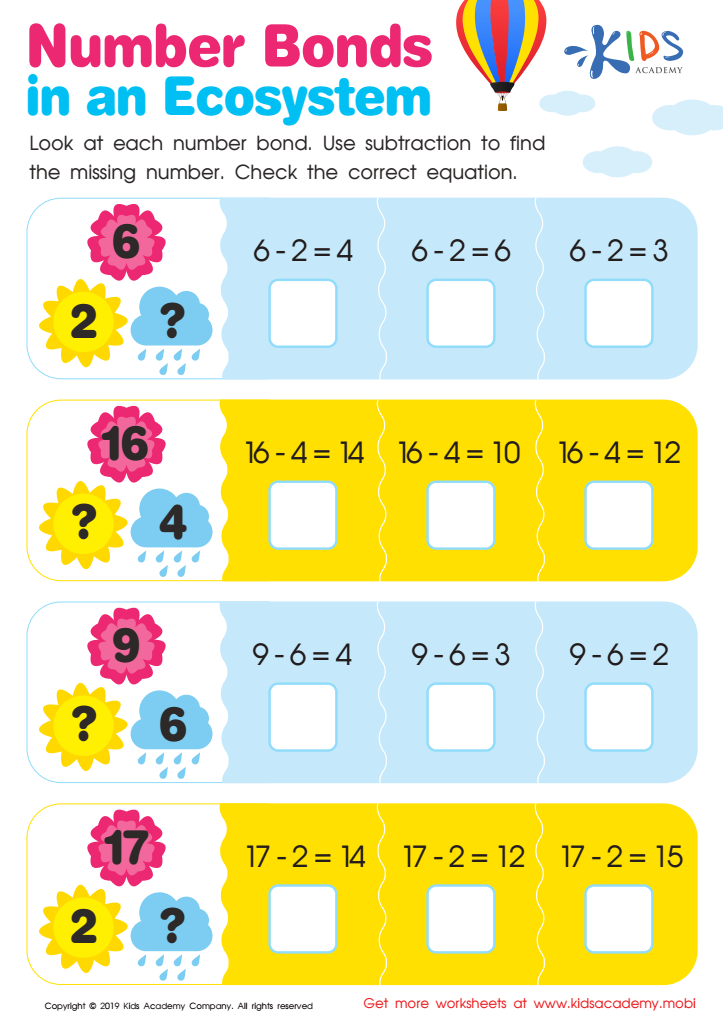
Number Bonds in an Ecosystem Worksheet
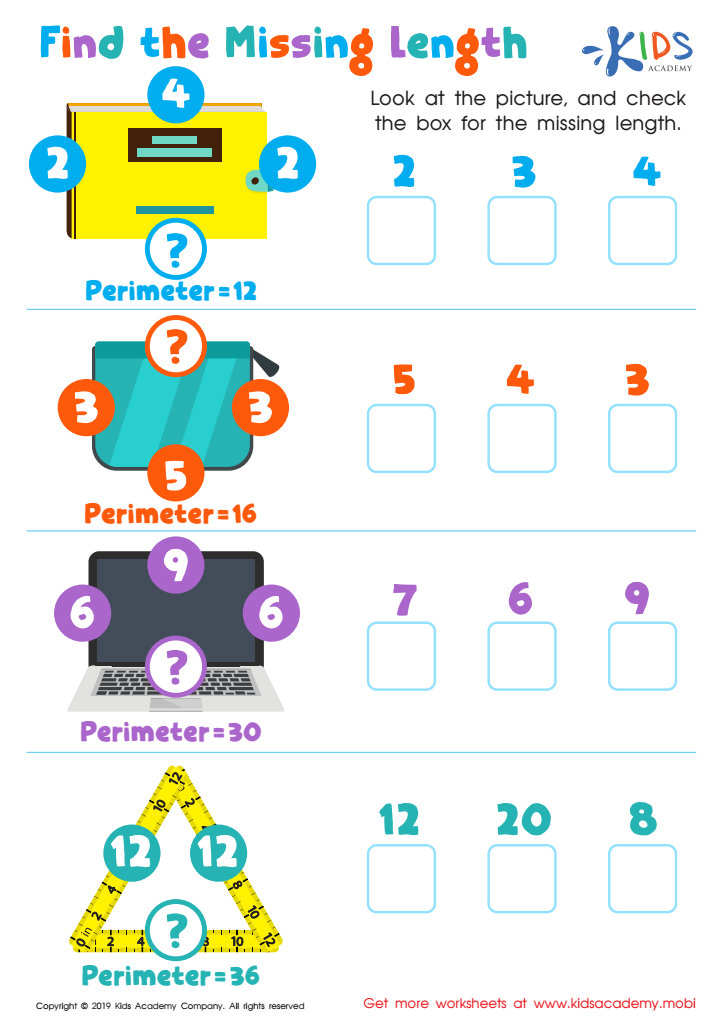
Find the Missing Length Worksheet
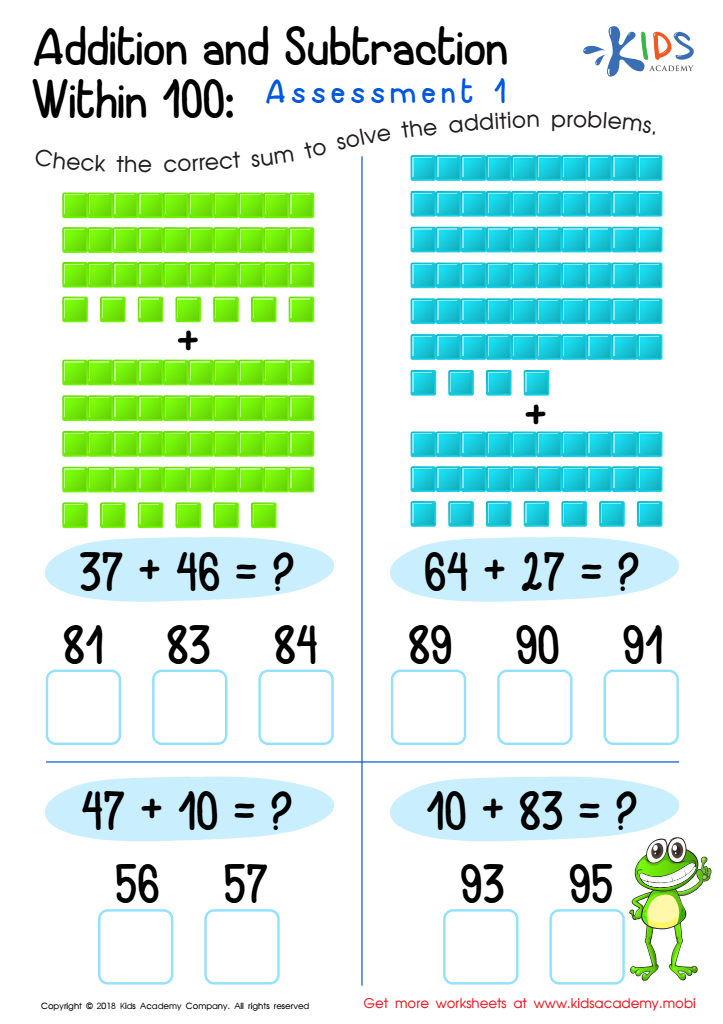
Addition and Subtraction Within 1: Assessment 1 Worksheet
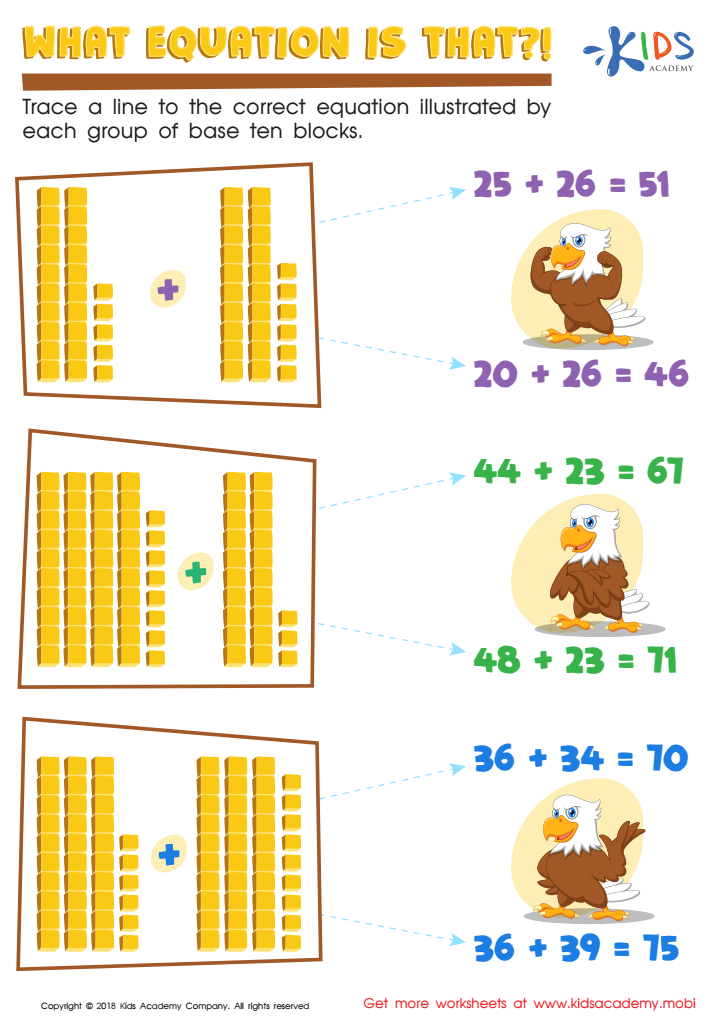
What Equation Is That? Worksheet








Developing problem-solving abilities in addition and subtraction for children aged 7-9 is crucial, not only for academic success but also for their overall cognitive development. At this stage, children are transitioning from concrete to more abstract thinking. Mastering these foundational math skills enables them to build confidence and a solid base for future, more complex mathematical concepts.
Addition and subtraction are cornerstone operations in mathematics. When children enhance problem-solving skills related to these operations, they cultivate critical thinking, logical reasoning, and analytical abilities. These skills are not limited to mathematics; they translate into everyday situations. For instance, kids learn to think flexibly, make decisions, and understand cause-and-effect relationships, which are vital life skills.
Moreover, effective problem-solving nurtures patience and perseverance. Children learn that solving complex problems often requires trying different strategies, thereby instilling a growth mindset. This mindset encourages them to view challenges as opportunities to learn rather than insurmountable obstacles.
Additionally, fostering these skills at an early age sets the foundation for essential life-based numeracy skills, such as budgeting, time management, and spatial awareness. Therefore, by prioritizing problem-solving abilities in addition and subtraction, parents and teachers guide children toward academic proficiency, robust cognitive skills, and lifelong learning and adaptability.








