Learn subtraction Addition & Subtraction Worksheets for Ages 7-9
4 filtered results
-
From - To
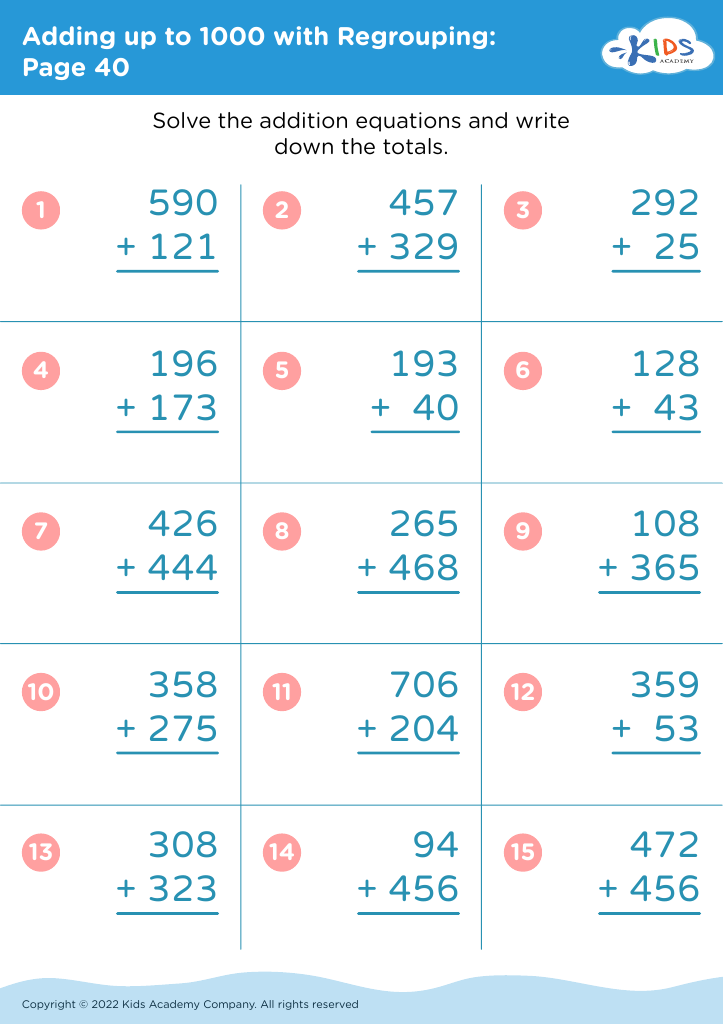
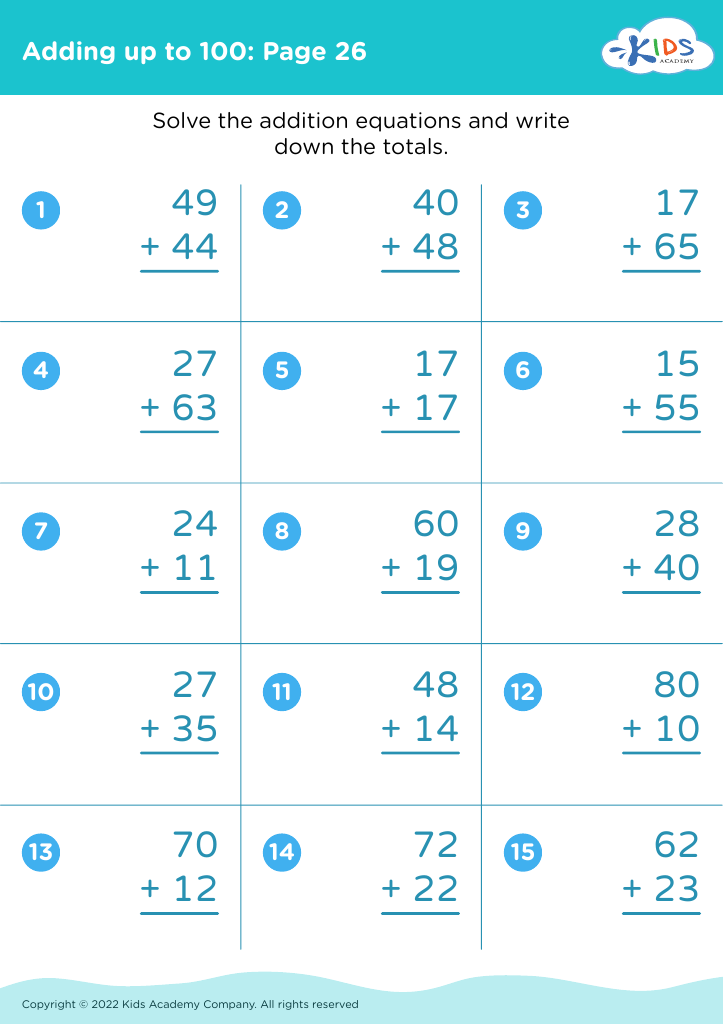
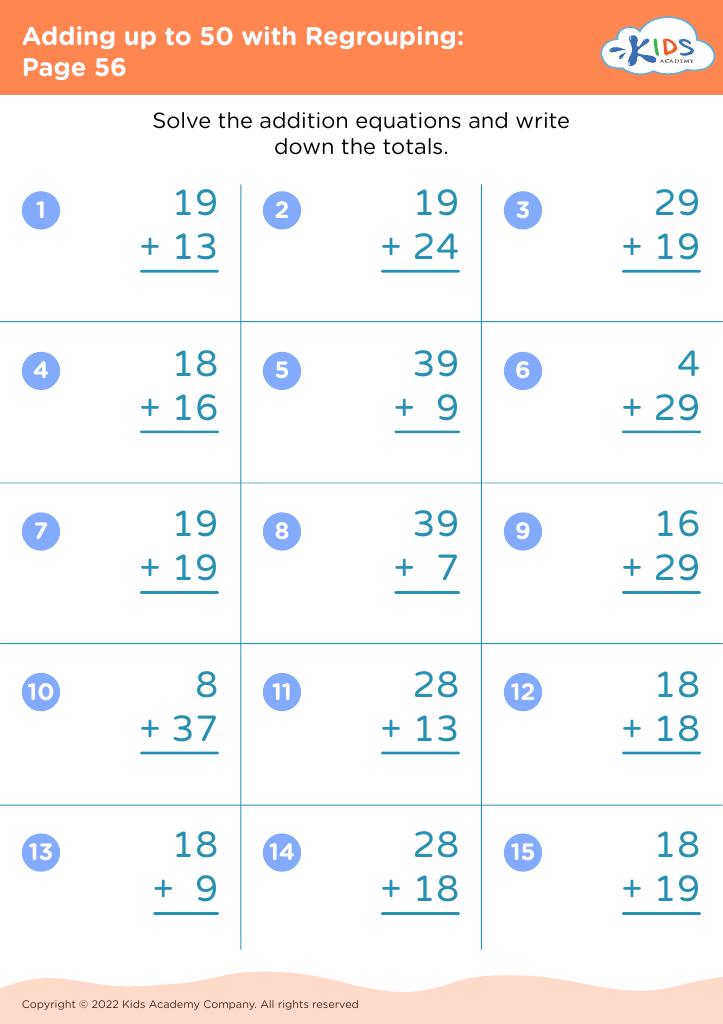
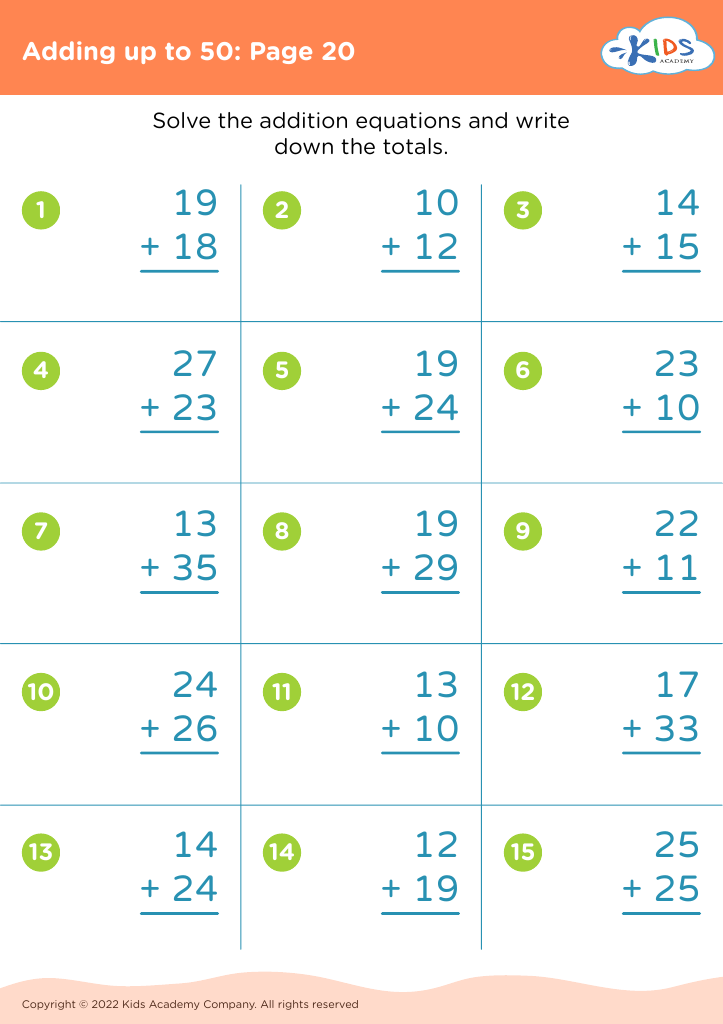
Discover engaging addition and subtraction worksheets specially designed for kids aged 7-9! Our interactive activities help young learners grasp essential math skills through fun exercises, ensuring they build a strong foundation in subtraction. Each worksheet supports various learning styles, making it easy for children to practice and master their subtraction skills while boosting their confidence. With vibrant illustrations and user-friendly formats, these resources keep young minds motivated and eager to learn. Unlock your child’s potential in math with our tailored worksheets, perfect for home or classroom practice. Equip them with the tools they need for academic success today!








Parents and teachers should prioritize teaching addition and subtraction to children aged 7-9 because these skills form the foundation of essential mathematical understanding and problem-solving abilities. At this age, children transition from basic computation to more advanced concepts, making it crucial for them to master these operations. Proficiency in addition and subtraction helps students to not only excel in math but also boosts their confidence in tackling everyday challenges involving numbers, such as managing time, money, and measurements.
Moreover, research indicates that early mastery of arithmetic operations correlates with later success in higher-level mathematics. By fostering these skills, parents and teachers facilitate a child’s cognitive development, enhancing their analytical thinking and reasoning capabilities. Building a strong mathematical foundation also positively affects academic performance across subjects, as mathematics serves as a pivotal discipline that supports learning in areas such as science and economics.
Additionally, engaging with addition and subtraction allows for interactive learning experiences, enabling adults to bond with children through games and practical activities. This not only makes learning enjoyable but also reinforces the applicative importance of math in daily life, fostering lifelong skills and a positive attitude towards education.








