Recognizing equivalent fractions Addition & Subtraction Worksheets for Ages 7-9
4 filtered results
-
From - To
Discover our engaging and educational "Recognizing Equivalent Fractions Addition & Subtraction Worksheets" designed specifically for children aged 7-9. These worksheets provide a fun and interactive way for young learners to master the concept of equivalent fractions while practicing their addition and subtraction skills. With colorful visuals and age-appropriate exercises, students will develop a solid foundation in fractions, gaining confidence as they work through various problems. Perfect for classroom use or at-home learning, these worksheets cater to different learning styles and encourage self-paced learning. Help your child build their math skills and embrace the world of fractions today!
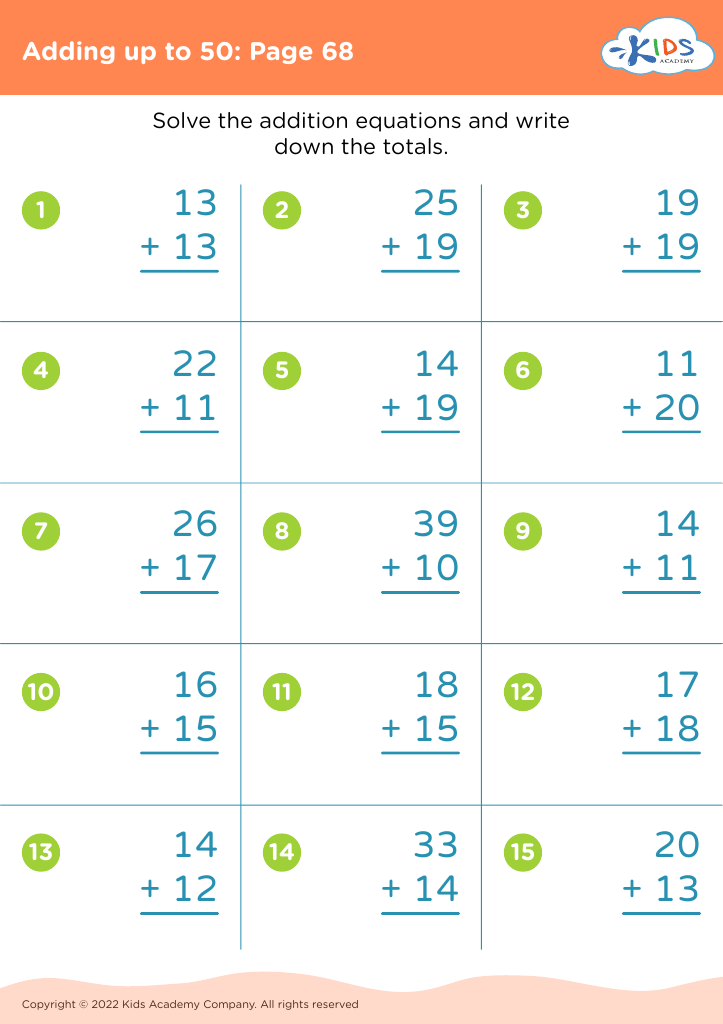
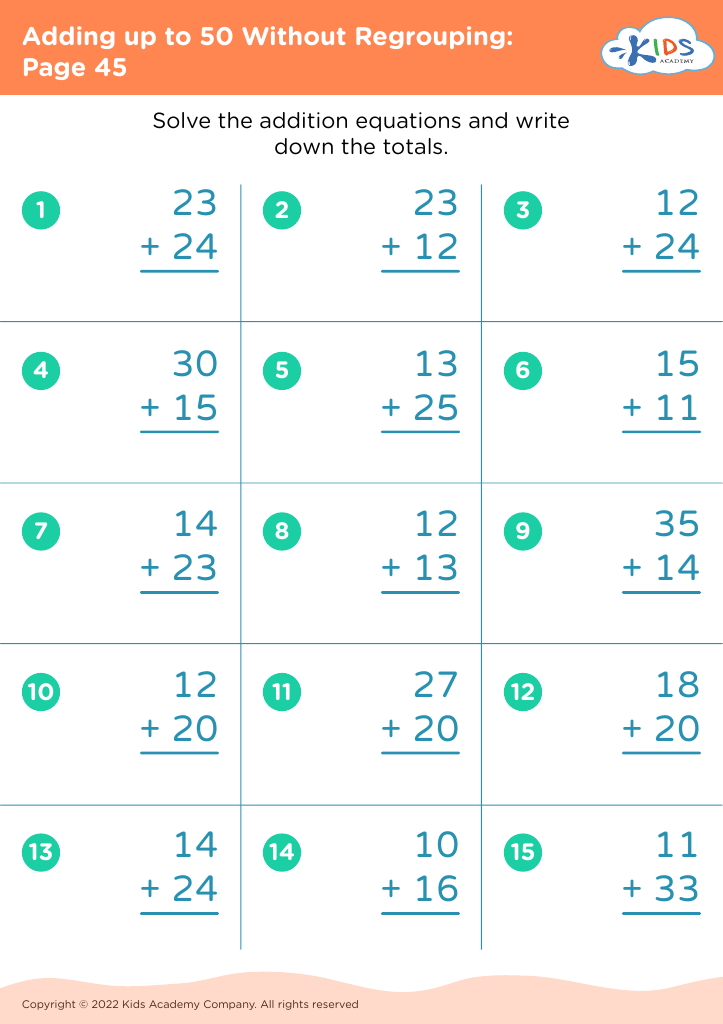
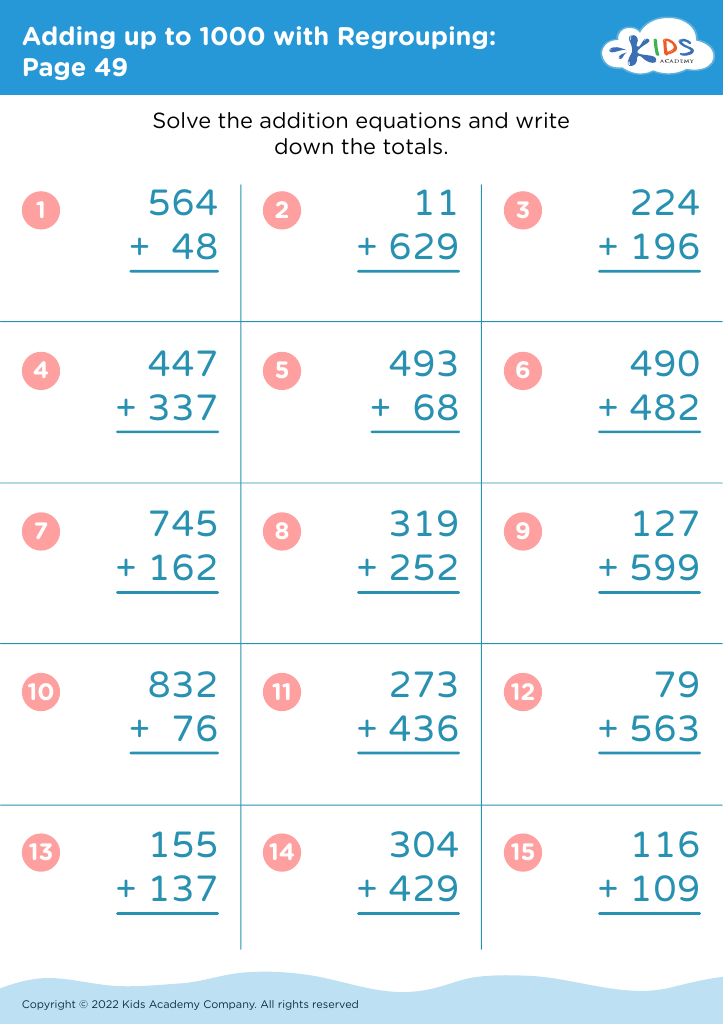
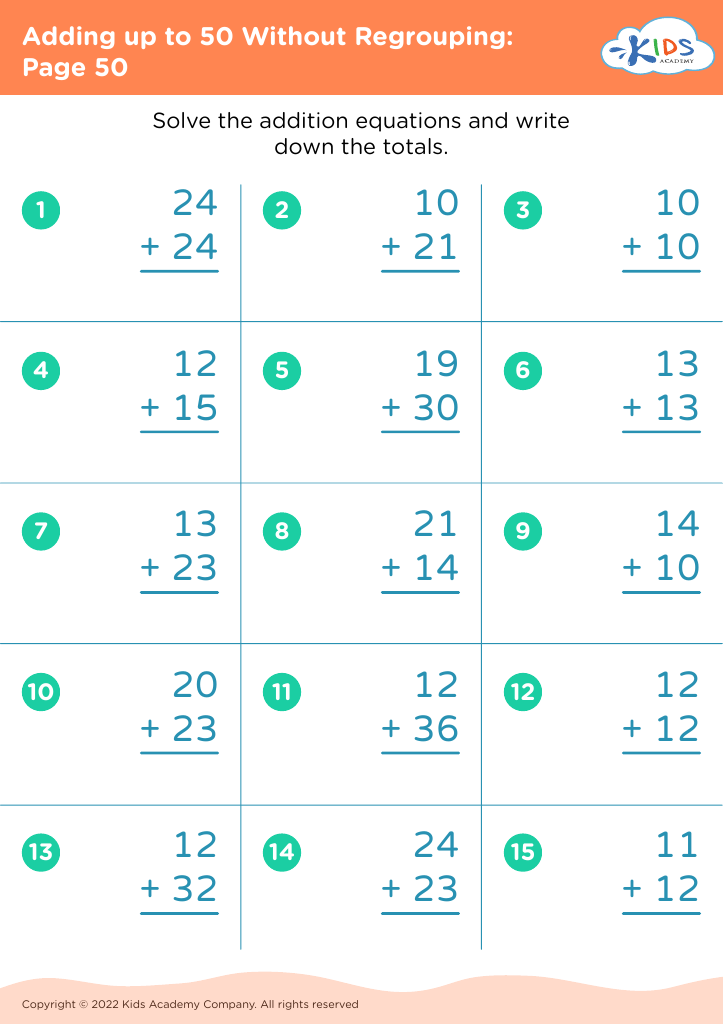








Recognizing equivalent fractions, especially in the context of addition and subtraction, is crucial for children aged 7-9 as it lays the foundation for more advanced mathematical concepts. Understanding equivalent fractions helps children grasp the concept that different fractions can represent the same value, which enhances their number sense. This skill is essential when combining fractions or determining common denominators for addition and subtraction.
Moreover, this proficiency aids in developing critical thinking and problem-solving abilities. When students can recognize equivalencies, they are better equipped to simplify fractions, making calculations easier and allowing them to tackle more complex problems with confidence.
Parents and teachers should also consider that strengthening this skill fosters perseverance and a growth mindset in young learners. When children succeed in understanding fractions, it boosts their confidence in math, turning a potentially intimidating subject into an engaging one.
Furthermore, incorporating everyday examples, like slicing a pizza or a cake, makes learning relevant and fun. Ultimately, by supporting children's understanding of equivalent fractions, adults contribute significantly to their mathematical fluency, paving the way for success in future math topics and real-life applications.








