
Develop inference skills Addition Worksheets for Ages 7-9
3 filtered results
Difficulty Level
Grade
Age
-
From - To
Subject
Activity
Standards
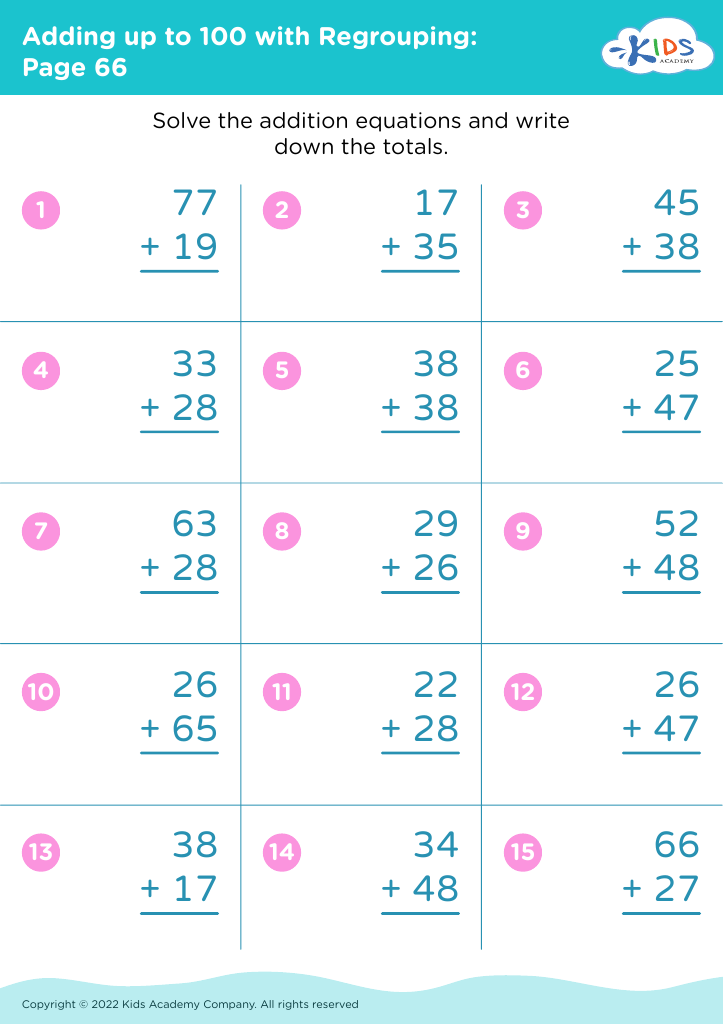
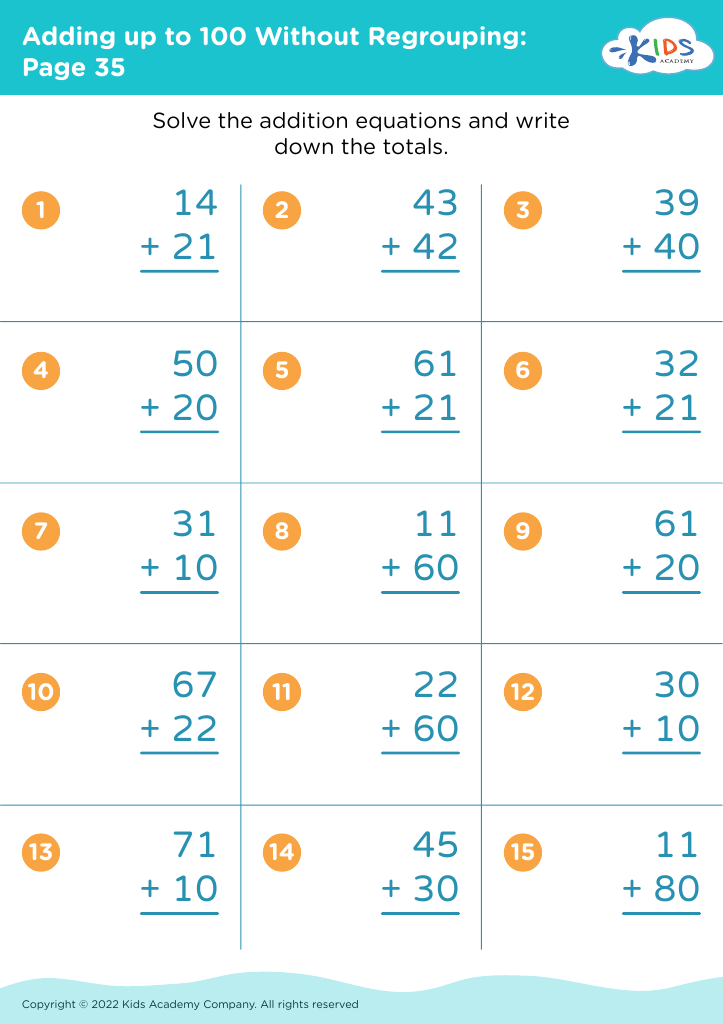
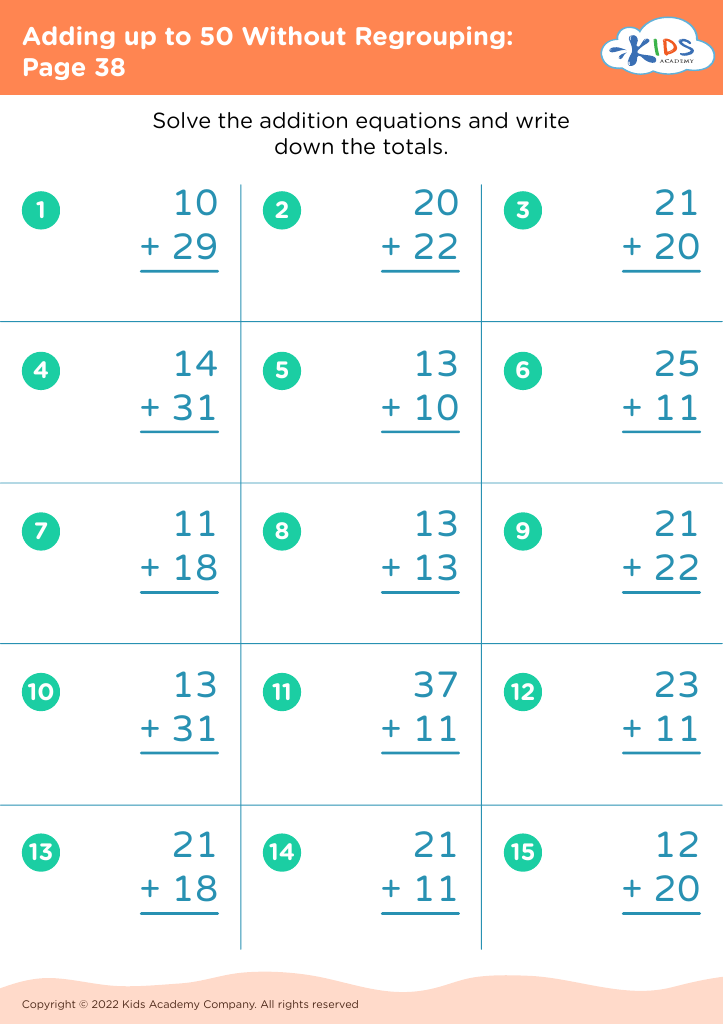
Unlock your child's potential with our "Develop Inference Skills Addition Worksheets" designed for ages 7-9! These engaging resources help students enhance their critical thinking and reasoning abilities while mastering addition. Our worksheets incorporate real-life scenarios and intriguing word problems that require kids to apply their reasoning skills, encouraging them to draw conclusions and make educated guesses. Perfect for classroom use or at-home practice, these worksheets provide a fun and interactive way for young learners to strengthen their math foundation and confidence. Help your child excel in addition and comprehension with our thoughtfully crafted materials today!
Favorites
With answer key
Interactive
Join Kids Academy for Free
Who is primarily going to use this learning content?








Parents and teachers should prioritize the development of inference skills in children aged 7-9, particularly in the context of addition, because these skills lay the foundation for critical thinking and problem-solving. Inference skills enable children to go beyond simple calculations by helping them make connections and draw conclusions based on the information provided.
For example, understanding that if a child has 5 apples and buys 3 more, they can infer that they now have a total of 8 apples without needing to count each one. This ability enhances numerical understanding and reinforces their comprehension of addition as a concept, not just a procedure.
Moreover, inference skills also promote reading comprehension and analytical abilities, crucial components of overall academic success. As children learn to make inferences, they become adept at interpreting various contexts, which improves their performance in math word problems and real-life situations.
Encouraging these skills during formative years fosters independence, critical reasoning, and confidence. As children begin to synthesize information and draw appropriate conclusions, they build a robust mathematical foundation that benefits their future learning. Hence, fostering inference skills in the context of addition is essential and impactful in shaping effective learners.








