Developing logical thinking Addition Worksheets for Ages 7-9
4 filtered results
-
From - To
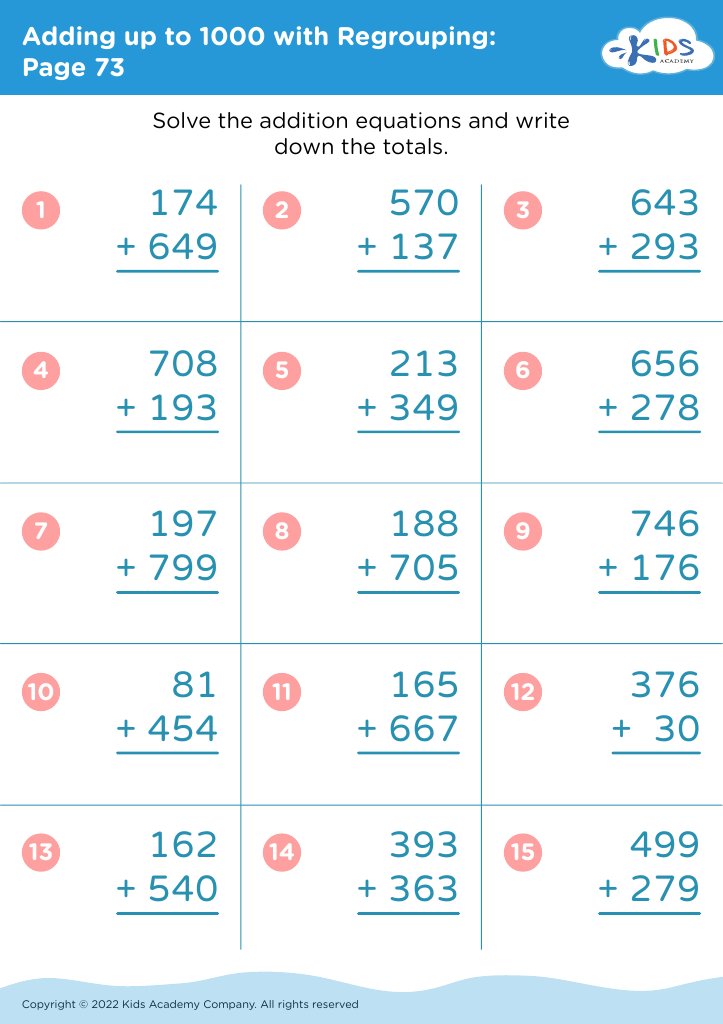
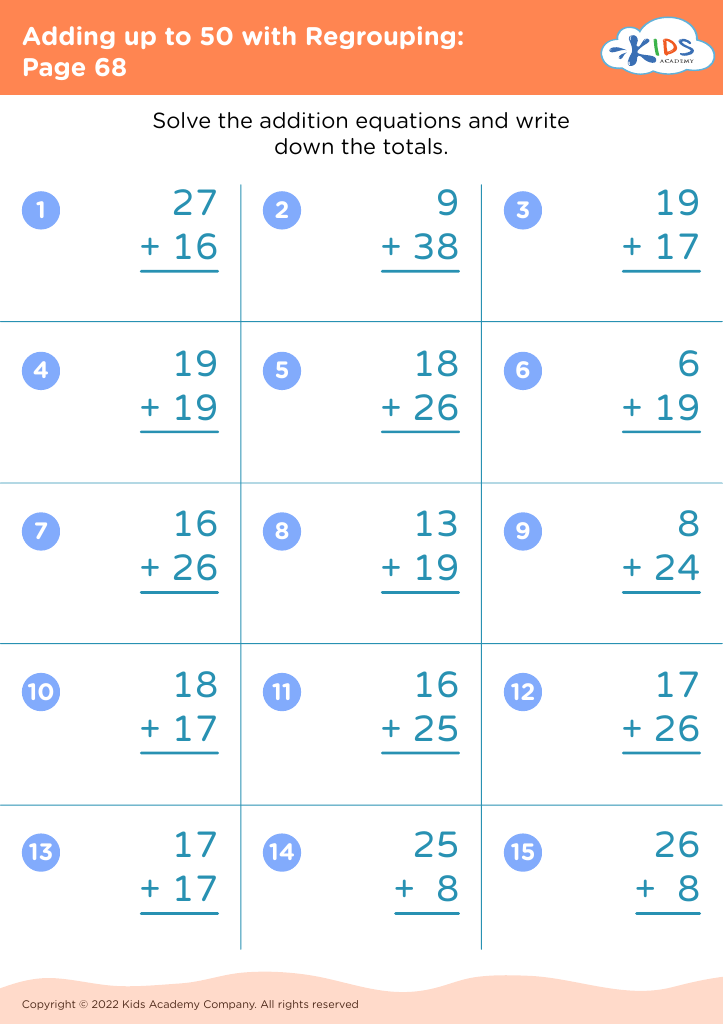
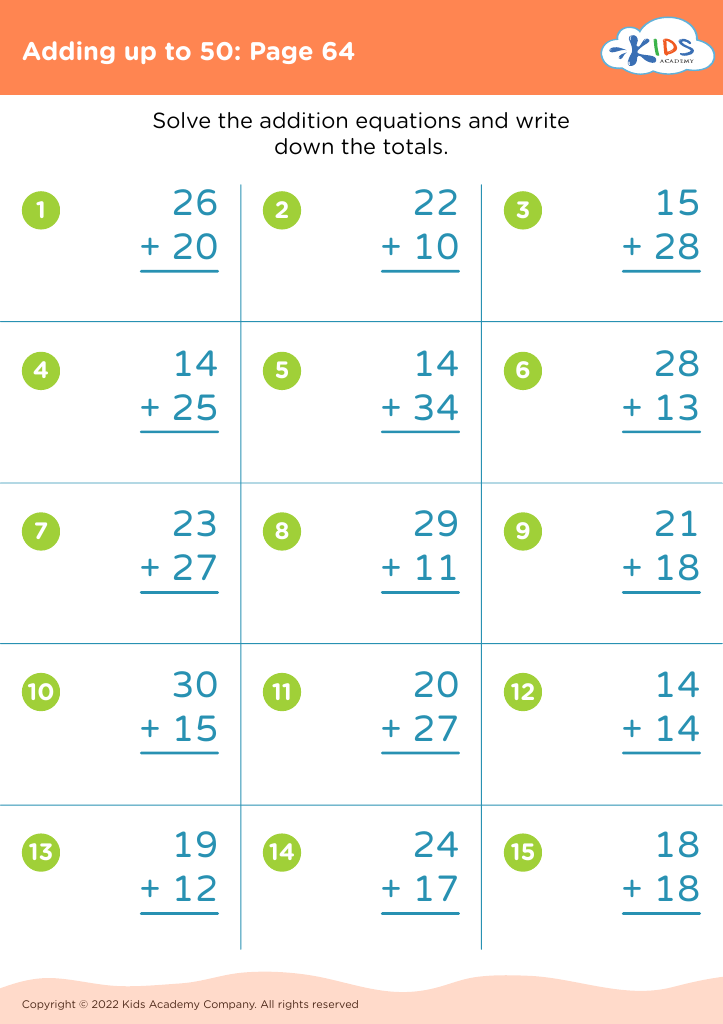
Unlock your child's potential with our "Developing Logical Thinking Addition Worksheets" designed specifically for ages 7-9. These engaging worksheets foster critical thinking and problem-solving skills while enhancing basic addition concepts. By offering a variety of interactive exercises, children explore patterns, comparisons, and logical sequences, making math fun and relatable. Our thoughtfully crafted activities encourage young learners to approach challenges with confidence and creativity, paving the way for future success in mathematics. Whether used at home or in the classroom, these worksheets provide essential practice that nurtures logical reasoning alongside arithmetic abilities. Start your child's journey toward mathematical mastery today!
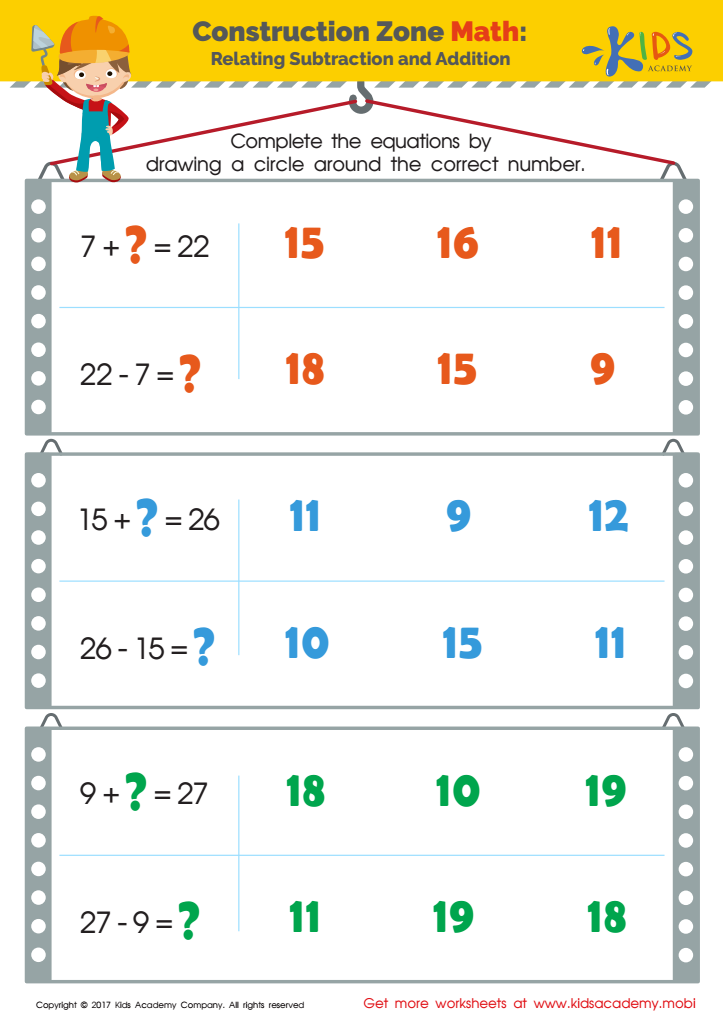
Related Addition and Subtraction Facts Worksheet
 Assign to My Students








Developing logical thinking through addition for children aged 7-9 is crucial for several reasons. At this developmental stage, children are increasingly capable of abstract thinking and problem-solving, which are foundational skills not only in mathematics but across all academic areas and everyday life. By focusing on logical thinking in addition, children can learn to recognize patterns, make connections between numbers, and understand the relationships involved in mathematical operations.
Encouraging logical reasoning in addition also fosters critical thinking skills. Children learn to approach problems strategically, breaking them down into manageable parts and using logical steps to arrive at a solution. This approach builds their confidence and independence in mathematics, laying the groundwork for more complex concepts in later years, such as multiplication, fractions, and algebra.
Furthermore, logical thinking helps children develop the capacity for analytical reasoning, enabling them to tackle real-world problems with confidence. Engaging with addition in a logical context enhances not only numerical skills but also promotes key competencies like perseverance, attention to detail, and the ability to collaborate. Therefore, parents and teachers should prioritize logical thinking in addition to cultivate a well-rounded skill set that will benefit children throughout their education and beyond.








