Identifying equivalent fractions Addition Worksheets for Ages 7-9
7 filtered results
-
From - To
Discover fun and educational "Identifying Equivalent Fractions Addition Worksheets for Ages 7-9"! Our worksheets provide engaging activities to help young learners grasp the concept of equivalent fractions through engaging addition problems. These printables encourage essential math skills, enhance problem-solving abilities, and boost confidence in recognizing and simplifying fractions. Perfect for both classroom and home settings, our carefully crafted worksheets integrate colorful visuals and easy-to-follow instructions to make learning both enjoyable and effective. Join us to support your child's journey in mastering fractions while sparking their love for math! Download now from Kids Academy.
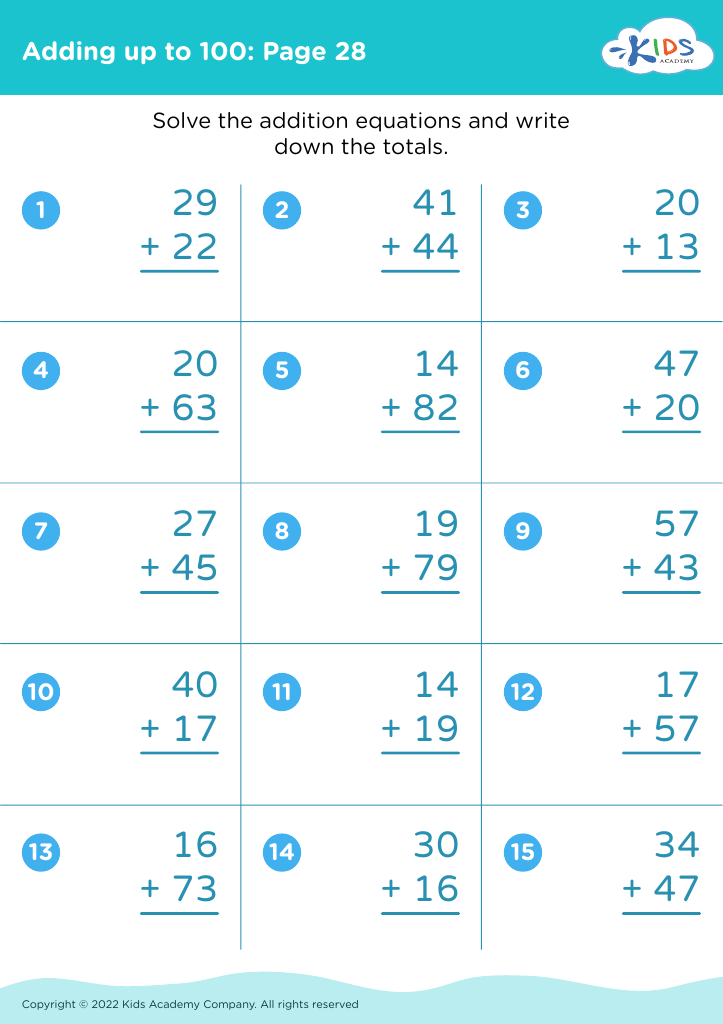
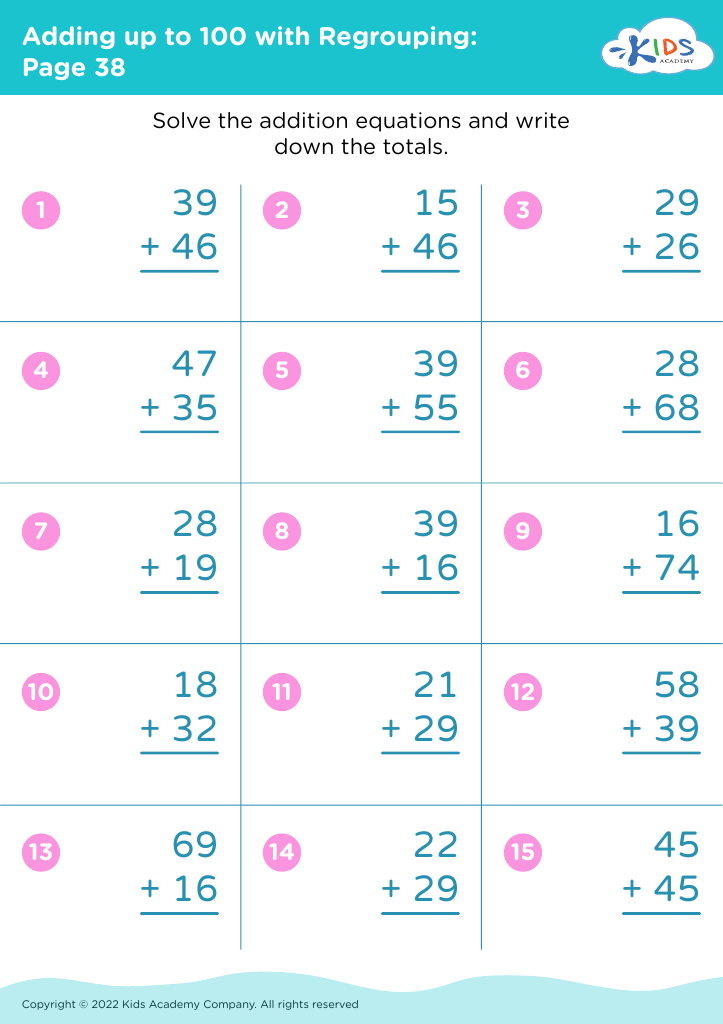
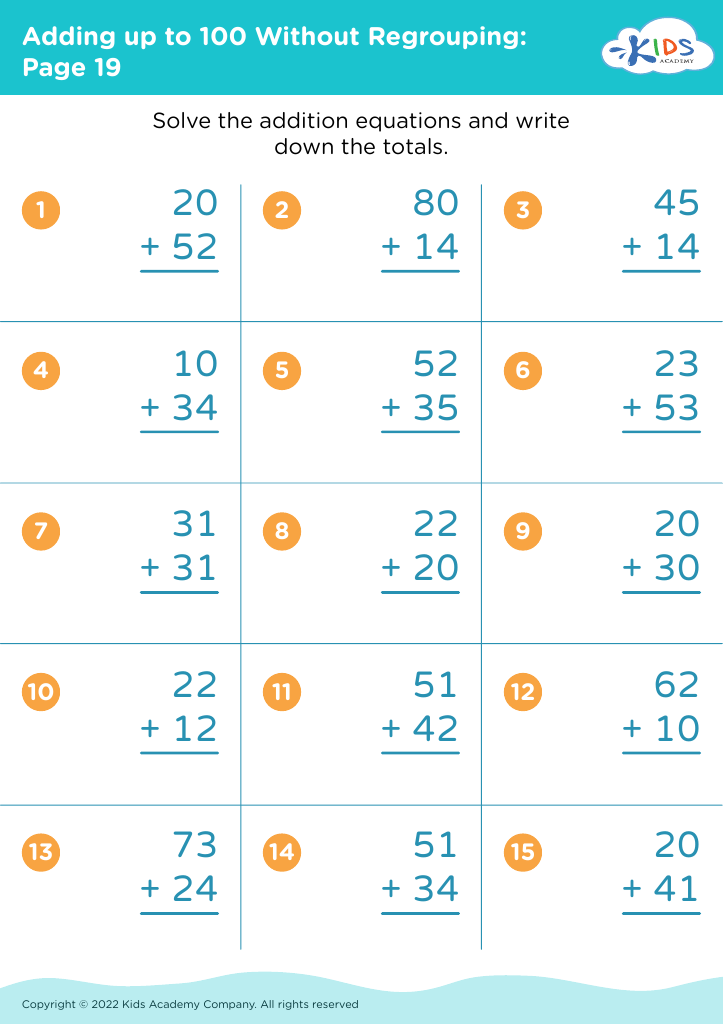
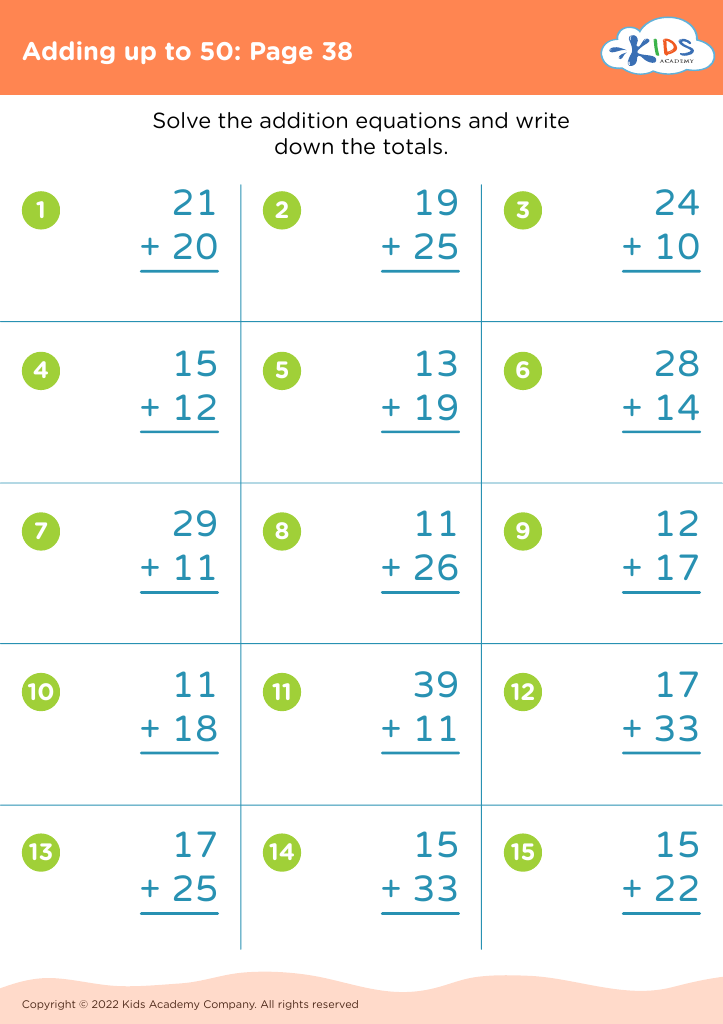
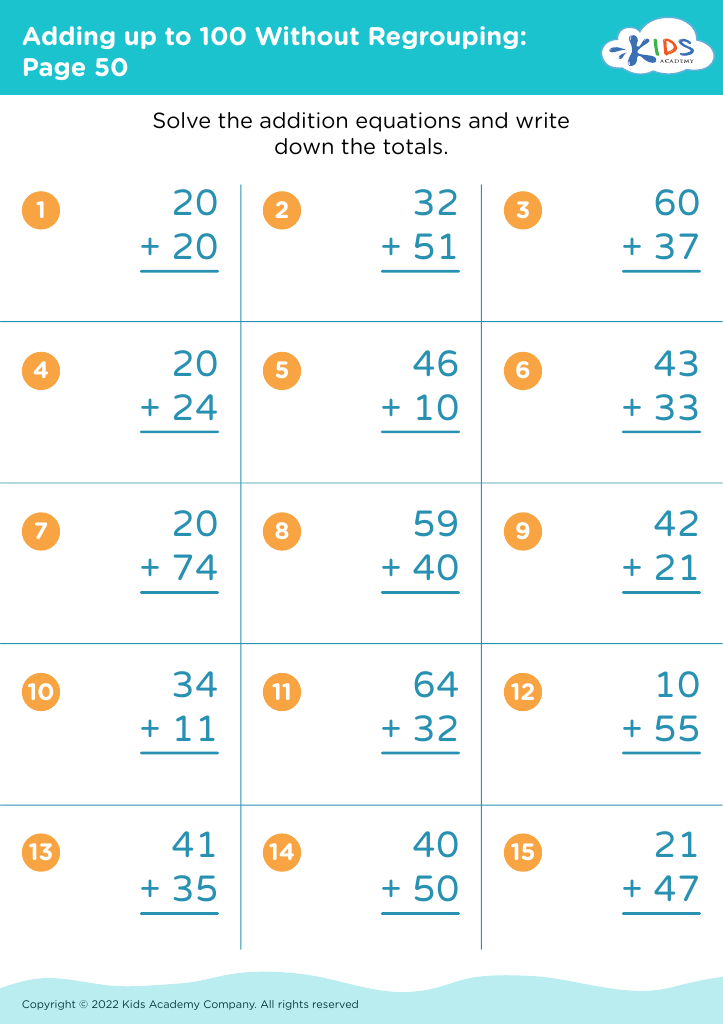
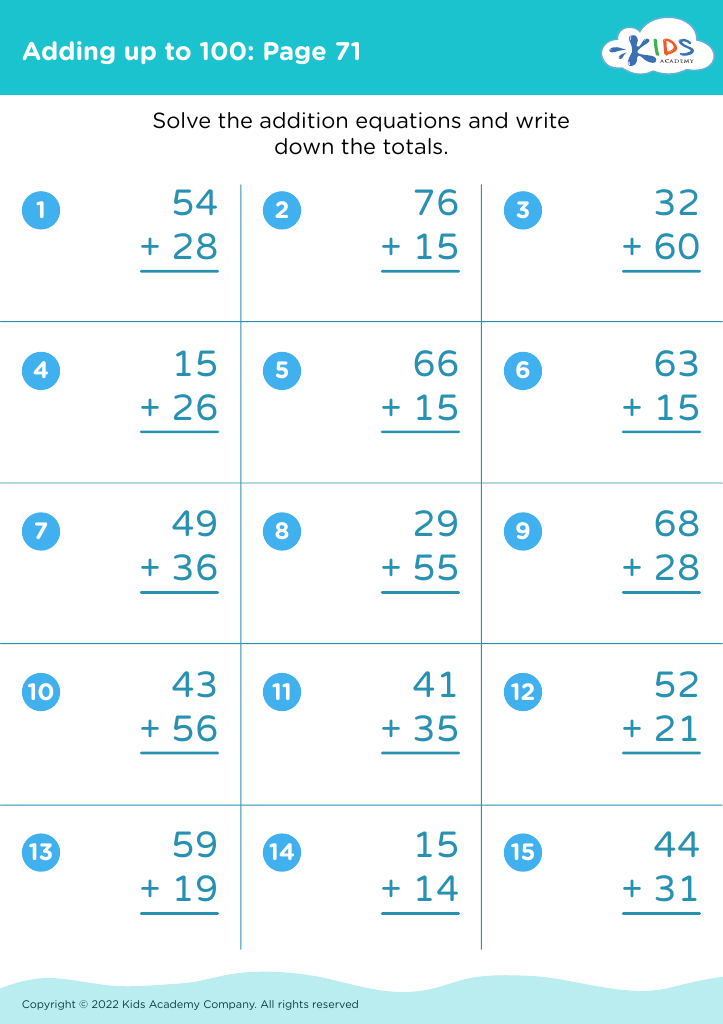
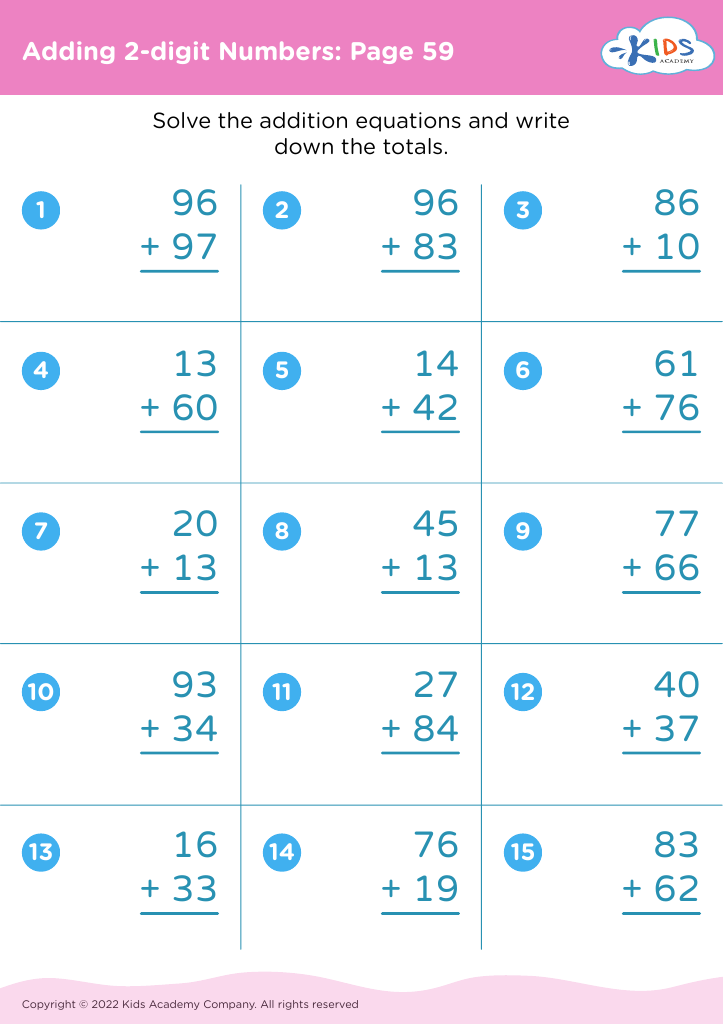








Identifying equivalent fractions and adding them is a fundamental math skill for children ages 7-9, laying a crucial foundation for their future mathematical understanding. At this age, children begin to grasp the concept of fractions, which involves dividing whole objects or sets into equal parts. Recognizing equivalent fractions—for instance, understanding that (1/2) is the same as (2/4)—helps solidify their ability to think flexibly about numbers and quantities.
Equipping children with this knowledge early supports their overall numeracy. Adding fractions augments their problem-solving skills, essential both in advanced mathematics and in daily life scenarios, like dividing a pizza or adjusting recipes in the kitchen. Moreover, mastering these skills fosters a positive attitude towards math by building confidence; the practice of identifying equivalent fractions and performing additions encourages precision, logical thinking, and perseverance.
Educators and parents can support this learning journey by incorporating hands-on activities like pie charts or visual aids and implementing software tools or apps designed for math practice. Emphasizing these fundamentals will not only enhance the child's academic proficiency but also stimulate a deeper appreciation for the logical structure and practical utility of mathematics, nurturing lifelong learning traits. Thus, teaching equivalent fractions supports cognitive development and lays groundwork for future scholastic success.








