Recognizing equivalent fractions Addition Worksheets for Ages 7-9
4 filtered results
-
From - To
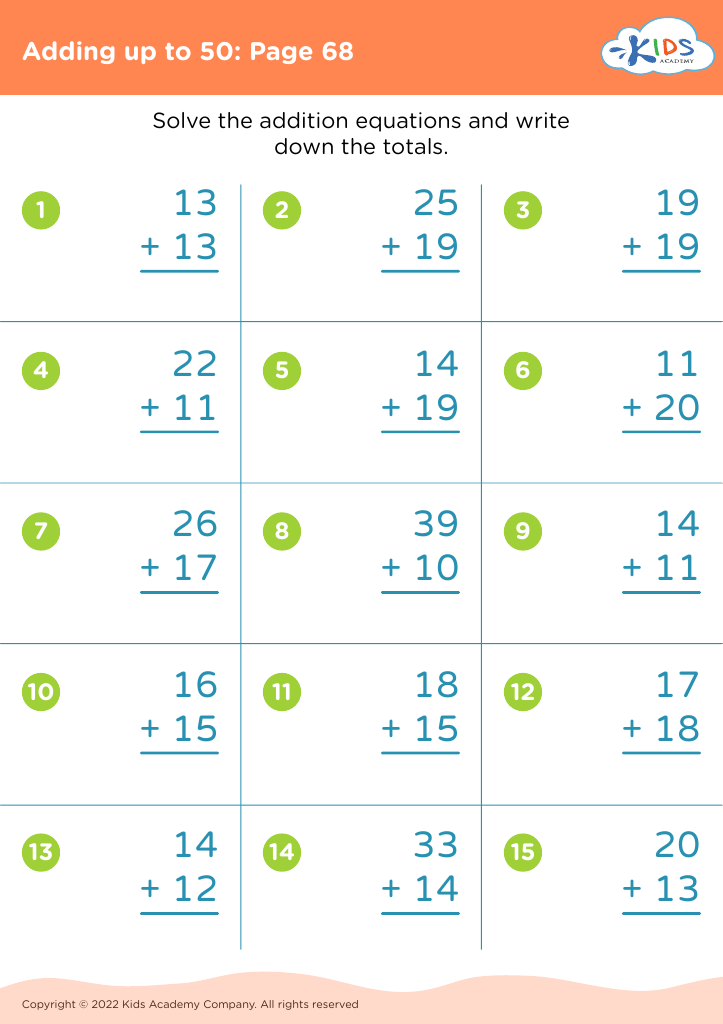
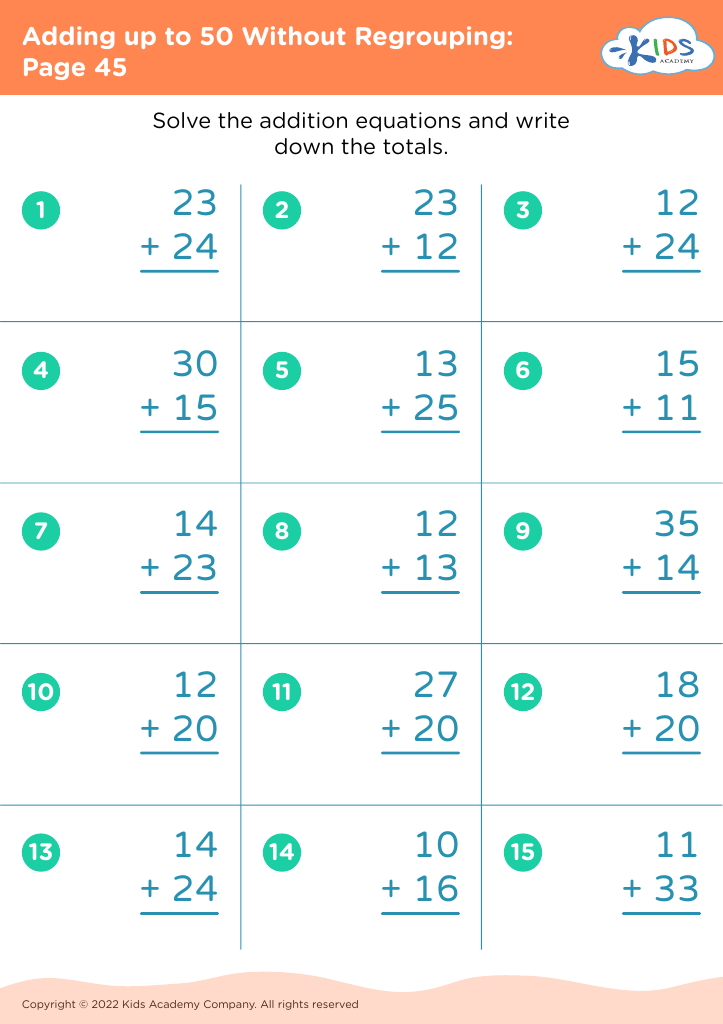
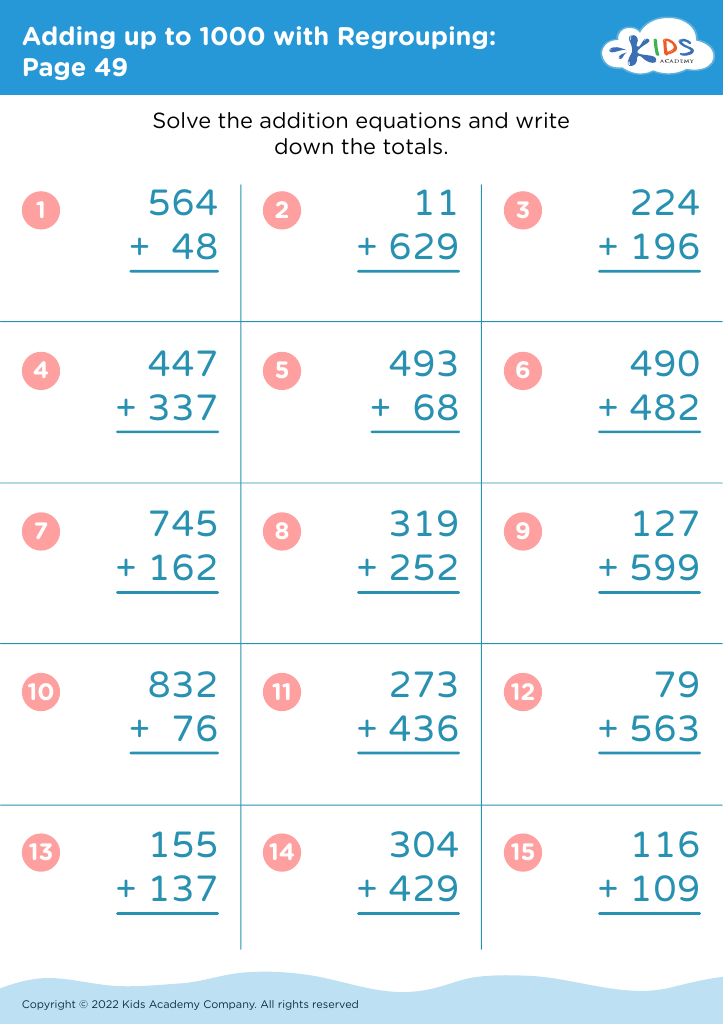
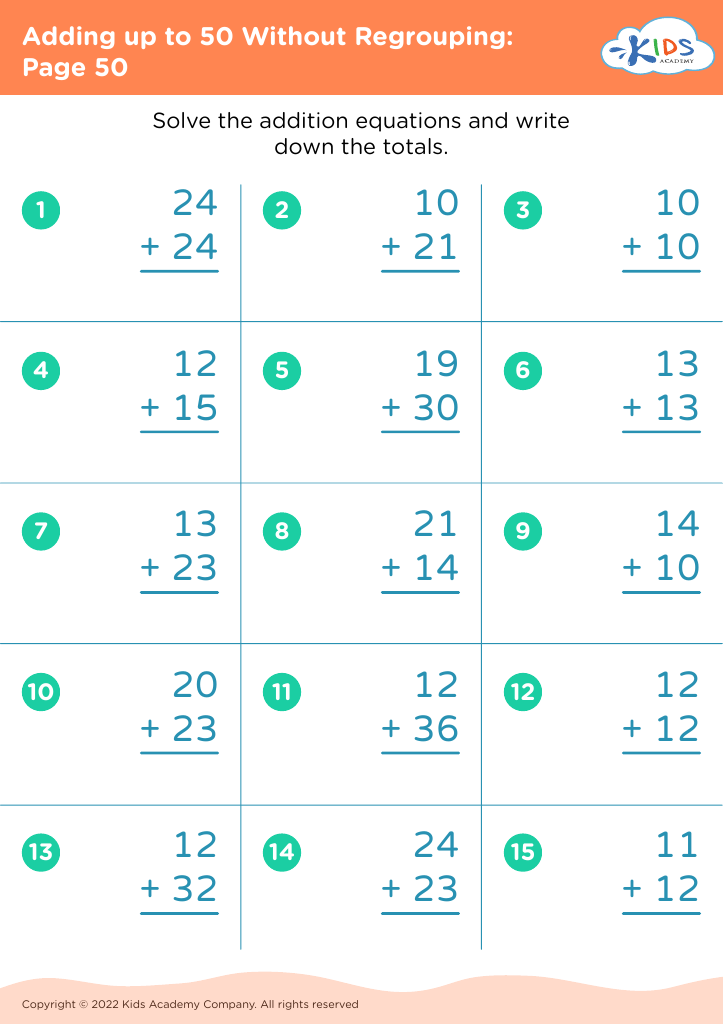
Boost your child's math skills with our "Recognizing Equivalent Fractions Addition Worksheets" designed specifically for ages 7-9! These engaging and interactive worksheets help young learners understand the concept of equivalent fractions while practicing addition. Each worksheet features vibrant illustrations and age-appropriate exercises that encourage critical thinking and problem-solving. As children work through the fun tasks, they will build their confidence in fraction recognition and improve their overall math proficiency. Perfect for home practice or classroom use, these resources make learning fractions enjoyable and effective. Start your child on their journey to mathematical mastery today!








Recognizing equivalent fractions and their addition is vital for children aged 7-9 as it lays the foundation for their future understanding of mathematics. Mastering this concept enhances their number sense, helping them visualize relationships between different numbers and fractions. When children learn to identify fractions that offer the same value, they develop critical skills for simplifying and adding fractions, which is essential in topics such as measurement, ratios, and probability.
Additionally, giving attention to equivalent fractions fosters problem-solving abilities. As children engage in adding fractions, they learn to analyze and break down complex problems into manageable parts. This builds resilience and a positive attitude toward tackling challenging mathematical concepts, reinforcing belief in their capabilities.
Furthermore, parents and teachers can use recognition of equivalent fractions as a cross-curricular bridge, tying math into everyday experiences like cooking or sharing snacks, thus facilitating a deeper understanding. By emphasizing the importance of this skill, educators and parents promote not only academic success but also important life skills such as critical thinking, reasoning, and a love for learning. Encouraging practice and exploration in recognizing and adding equivalent fractions ultimately cultivates confident math learners equipped for future challenges.








