Understanding Sequences Addition Worksheets for Ages 7-9
13 filtered results
-
From - To
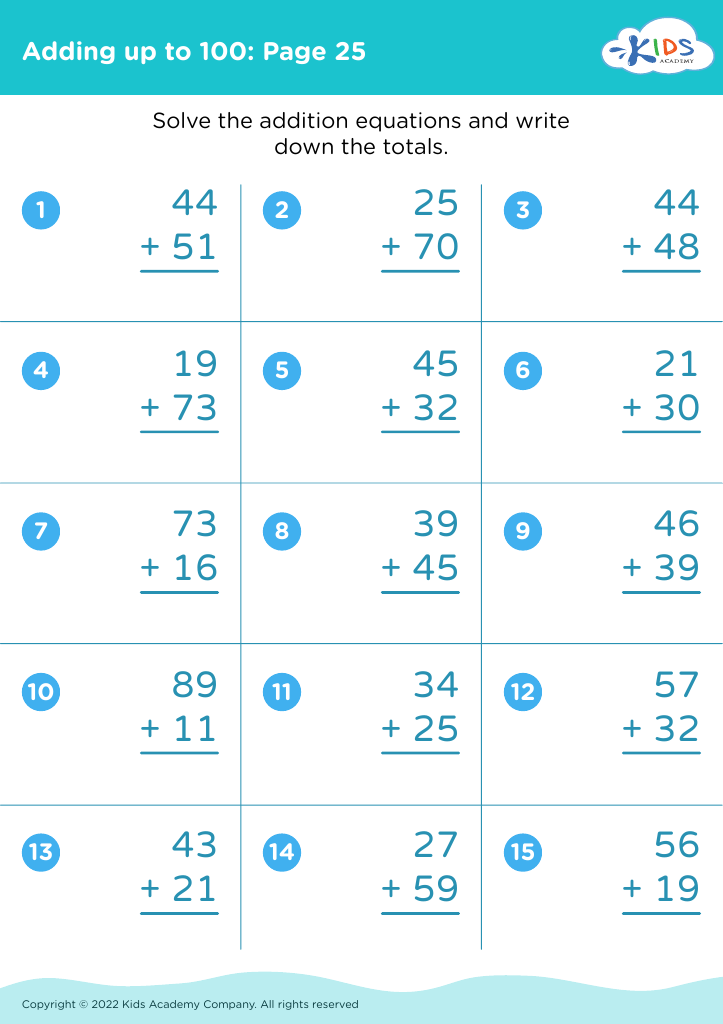
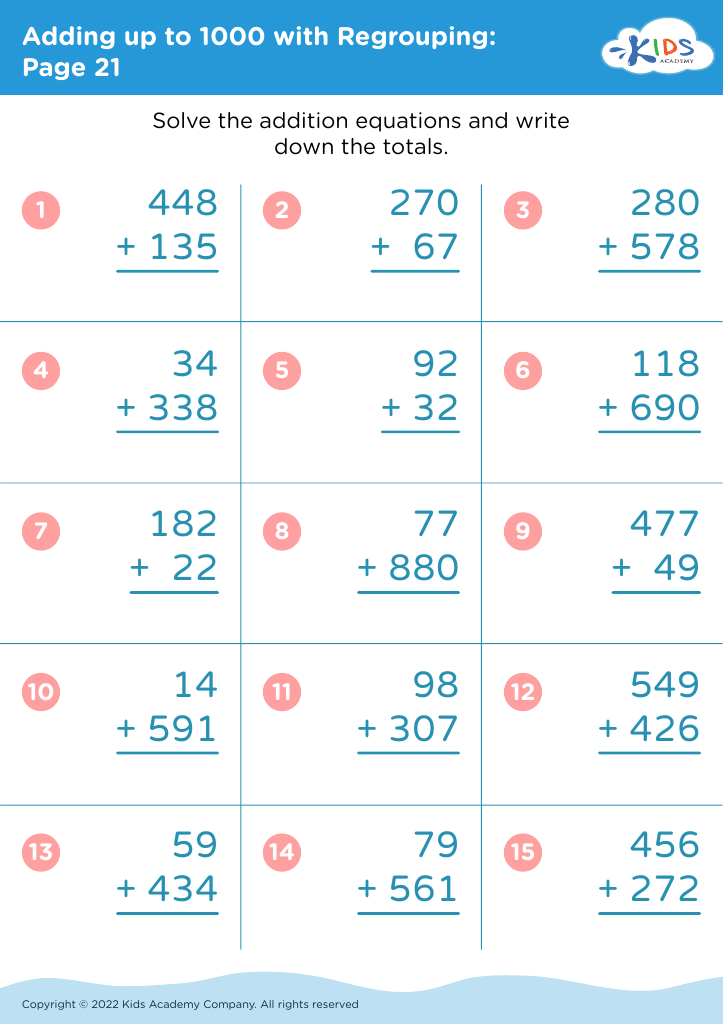
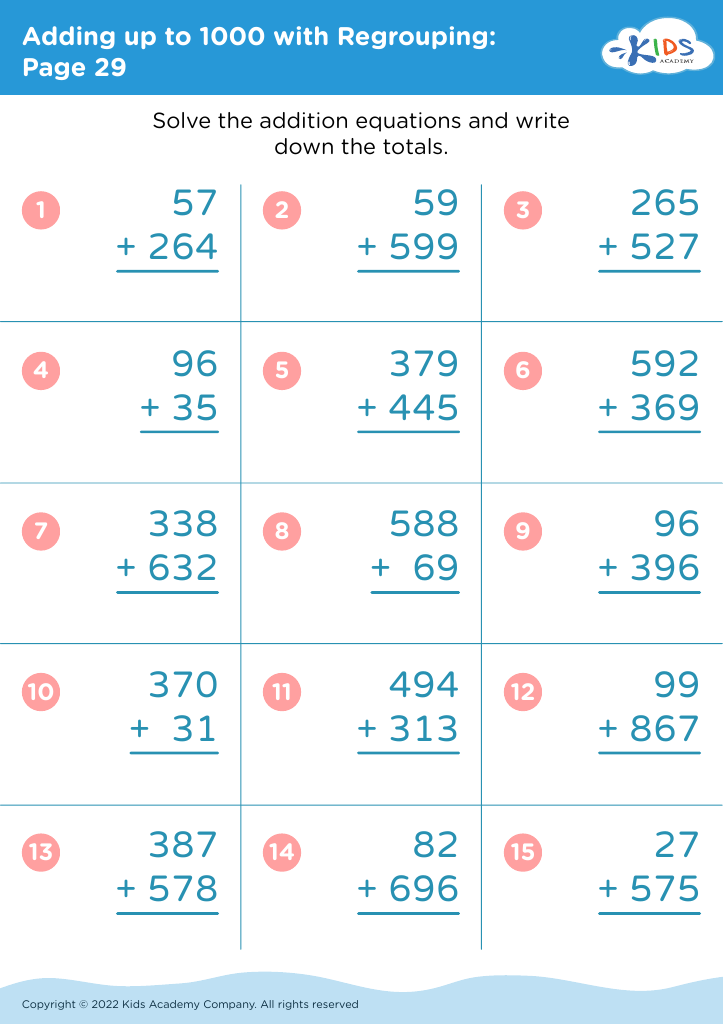
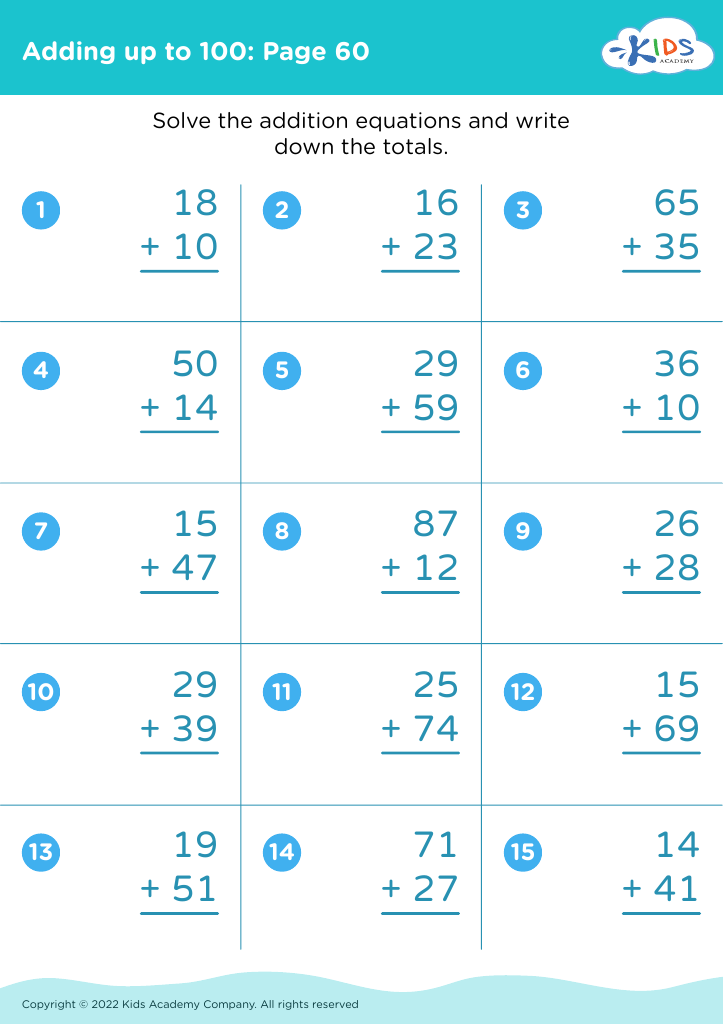
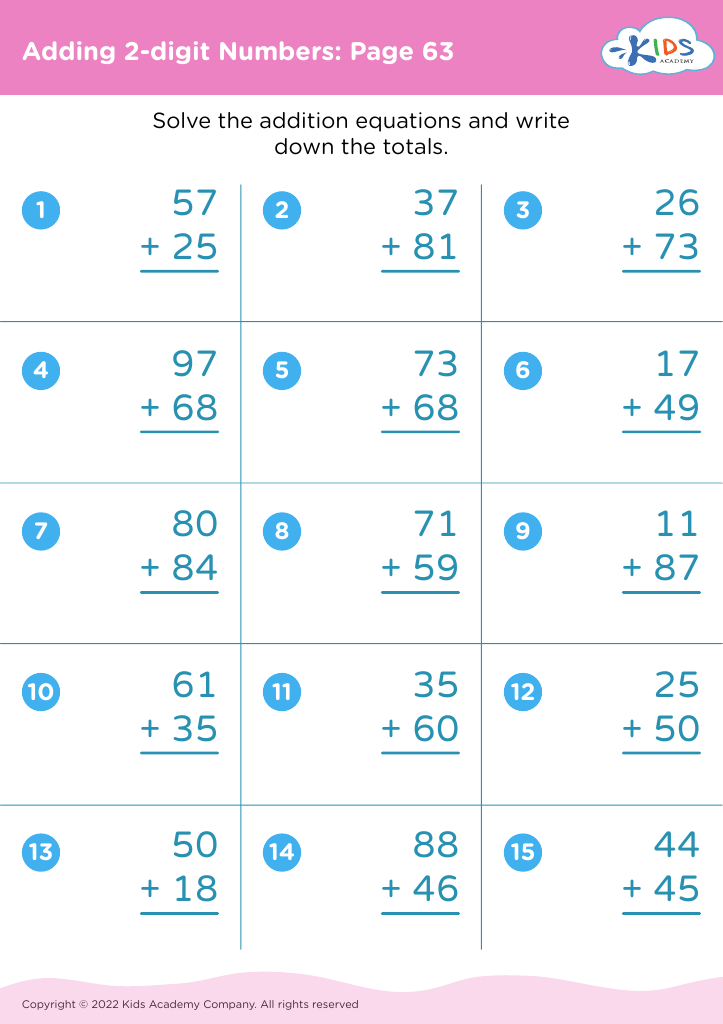
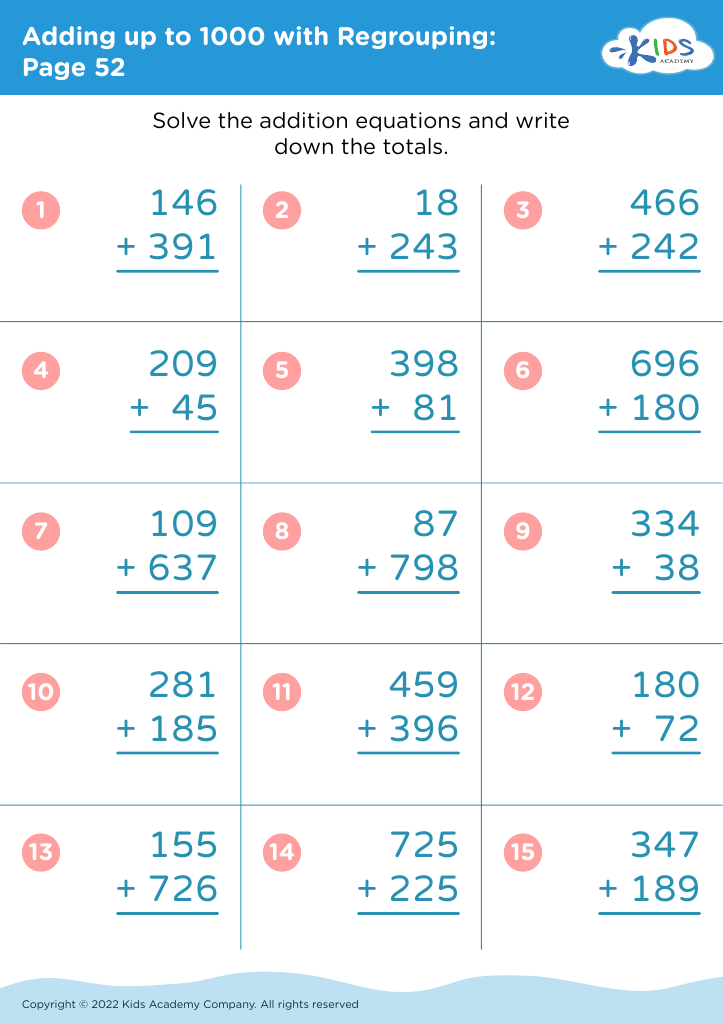
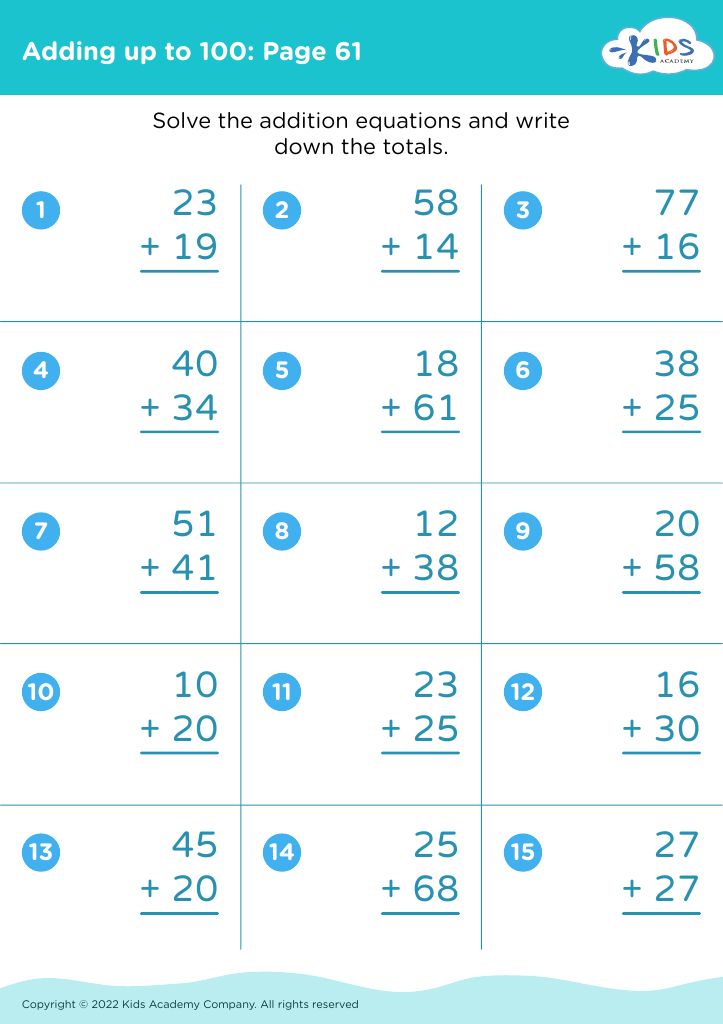
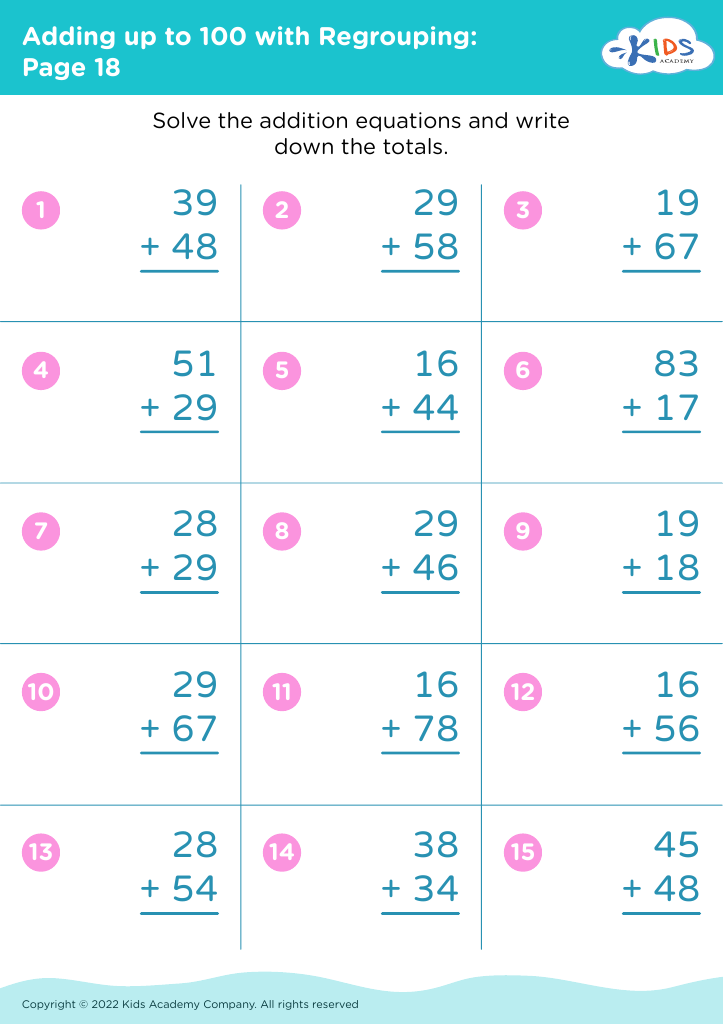
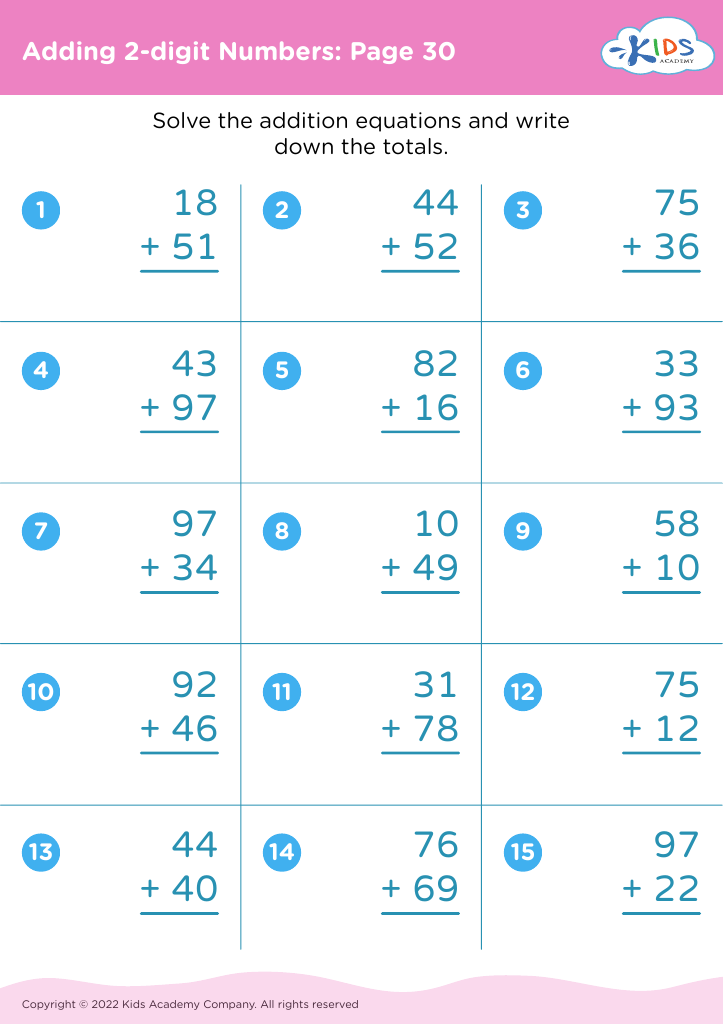
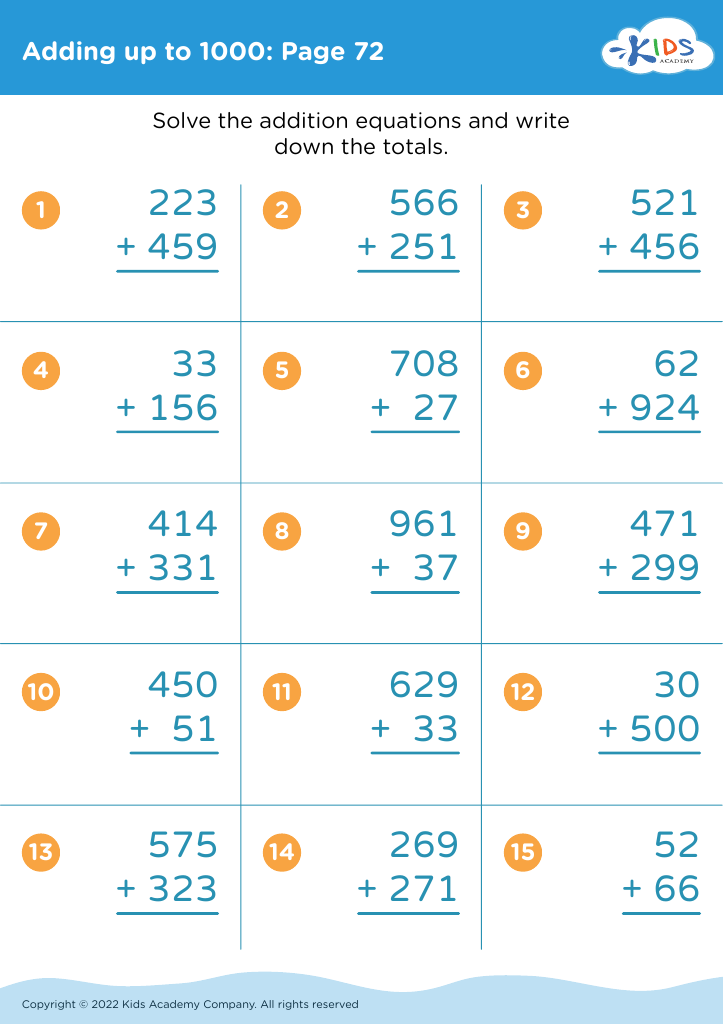
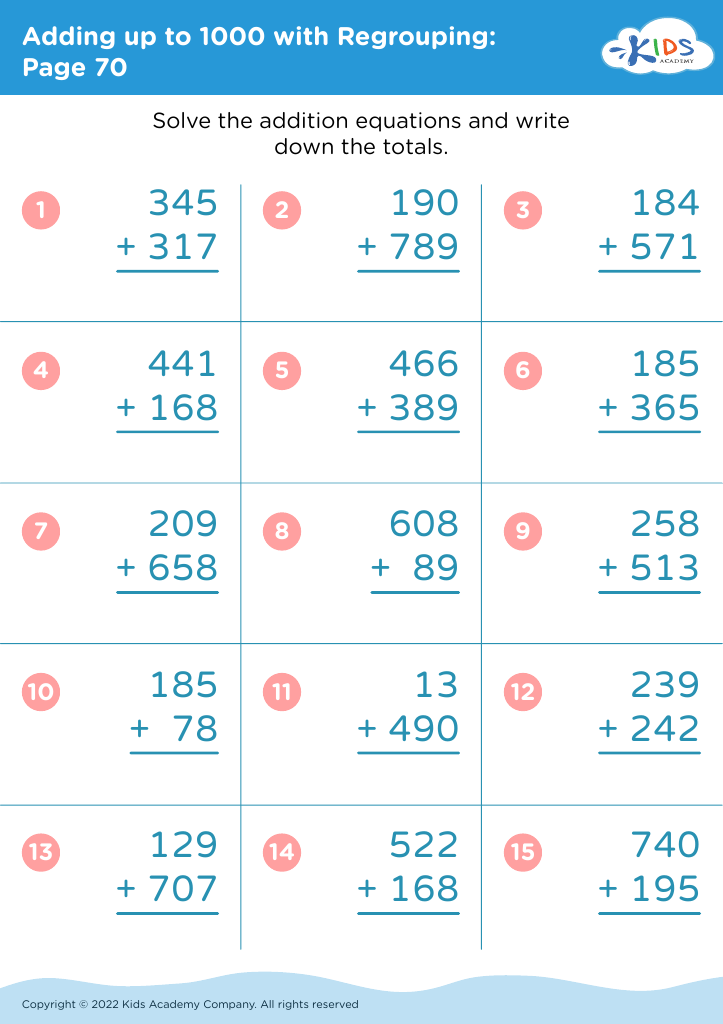
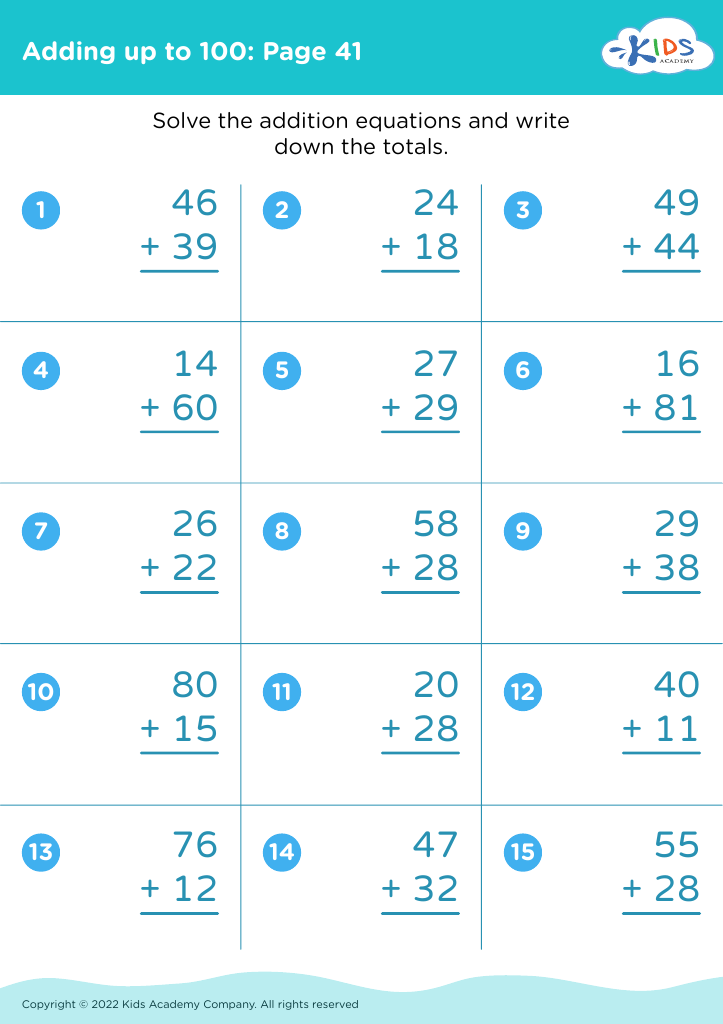
Explore our "Understanding Sequences Addition Worksheets" designed specifically for children aged 7-9! These engaging and interactive worksheets aim to reinforce addition skills while introducing the concept of numerical sequences. Perfect for the classroom or at-home learning, our resources provide children with the opportunity to practice adding numbers in a fun and understandable way. With visually appealing designs and step-by-step instructions, students will build their confidence in mathematics. These worksheets promote critical thinking and problem-solving skills, helping young learners enjoy the journey of mastering addition and developing a solid foundation for future math concepts. Ignite a love for learning with our comprehensive resources!
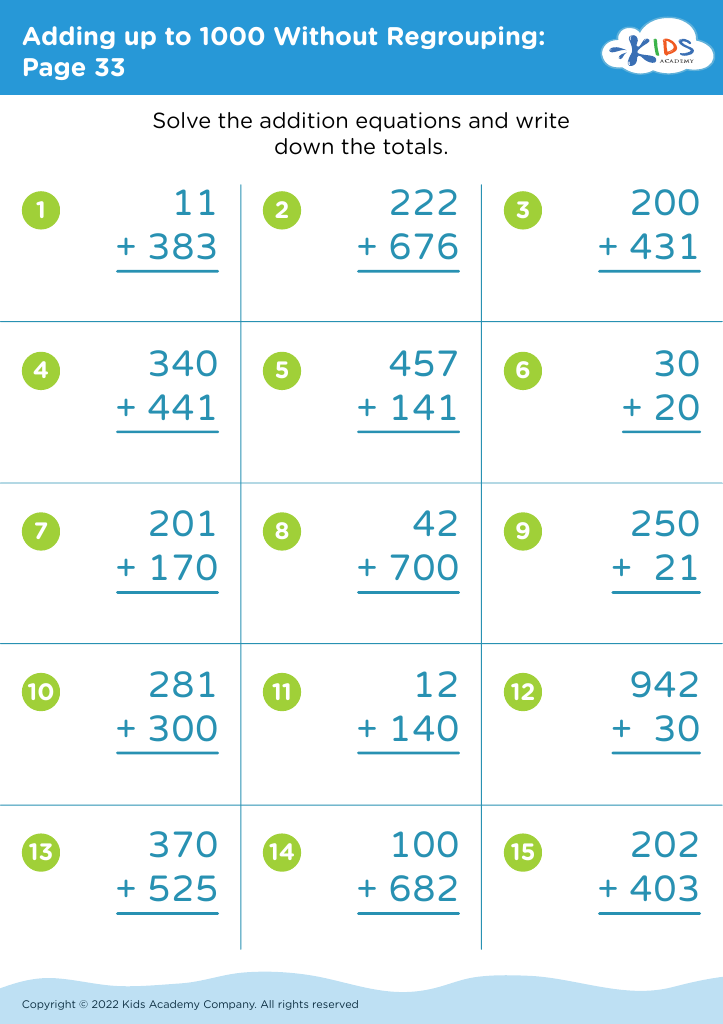








Understanding sequence addition is crucial for children aged 7-9, as it lays the foundation for more complex mathematical concepts. This age group is typically transitioning from concrete understanding to more abstract thinking, making it an essential time for mastering numeracy skills.
Firstly, sequence addition develops a solid grounding in number patterns and relationships. By recognizing how numbers progress and relate to each other, children sharpen their problem-solving skills. This comprehension aids in tackling higher-level math problems as they advance in their education.
Moreover, sequences taught through addition enhance critical thinking by encouraging students to make predictions and identify trends. This skill can be utterly beneficial beyond mathematics, promoting logical reasoning in other subjects and everyday situations.
Teaching sequence addition builds confidence in kids, allowing them to approach math with a positive mindset. Engaging with sequences fosters a deeper love for numbers and their significance in the world around us.
Finally, teachers and parents' guidance in this area is pivotal for creating a solid math foundation, ensuring children are well-prepared for future learning challenges. Ultimately, investing time in understanding sequence addition is vital for children's academic success and lifelong learning.








