Visual representation comprehension Addition Worksheets for Ages 7-9
5 filtered results
-
From - To
Explore our Visual Representation Comprehension Addition Worksheets designed for children ages 7-9! These engaging and interactive worksheets help young learners master addition concepts through visual aids like number lines, block models, and pictorial representations. By connecting numbers with visual techniques, students develop a solid understanding of addition, enhancing their problem-solving skills and mathematical confidence. Perfect for homeschooling or classroom use, these worksheets promote critical thinking and make learning fun. Download our easy-to-use resources today and watch your child improve their addition skills while enjoying colorful, imaginative layouts! Give your 7-9-year-old the tools they need to excel in mathematics!
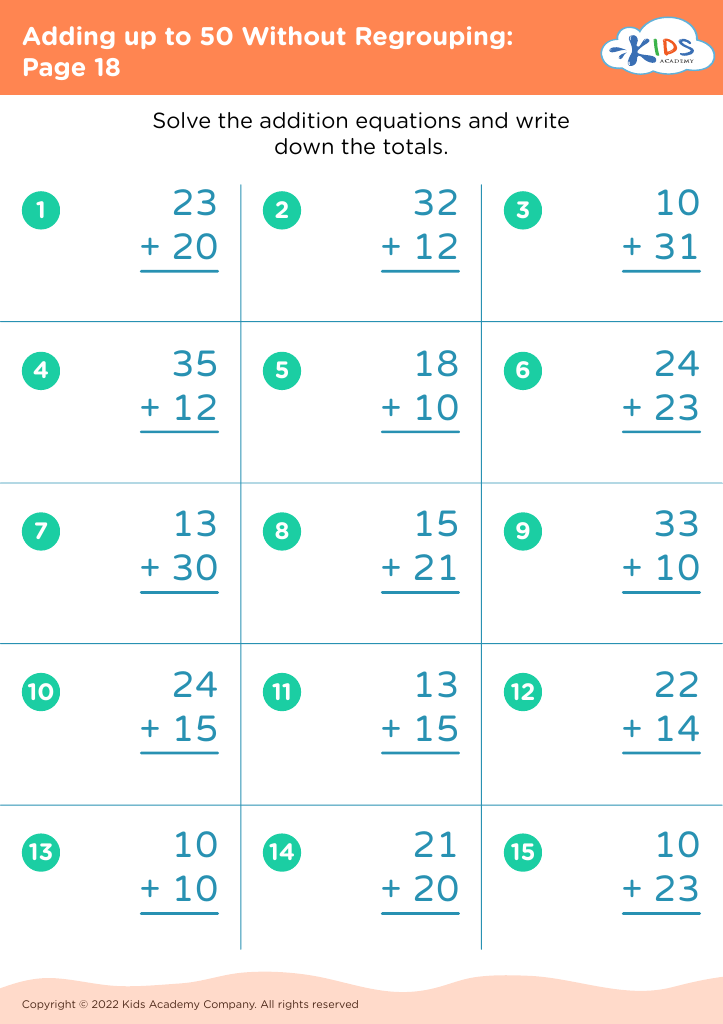
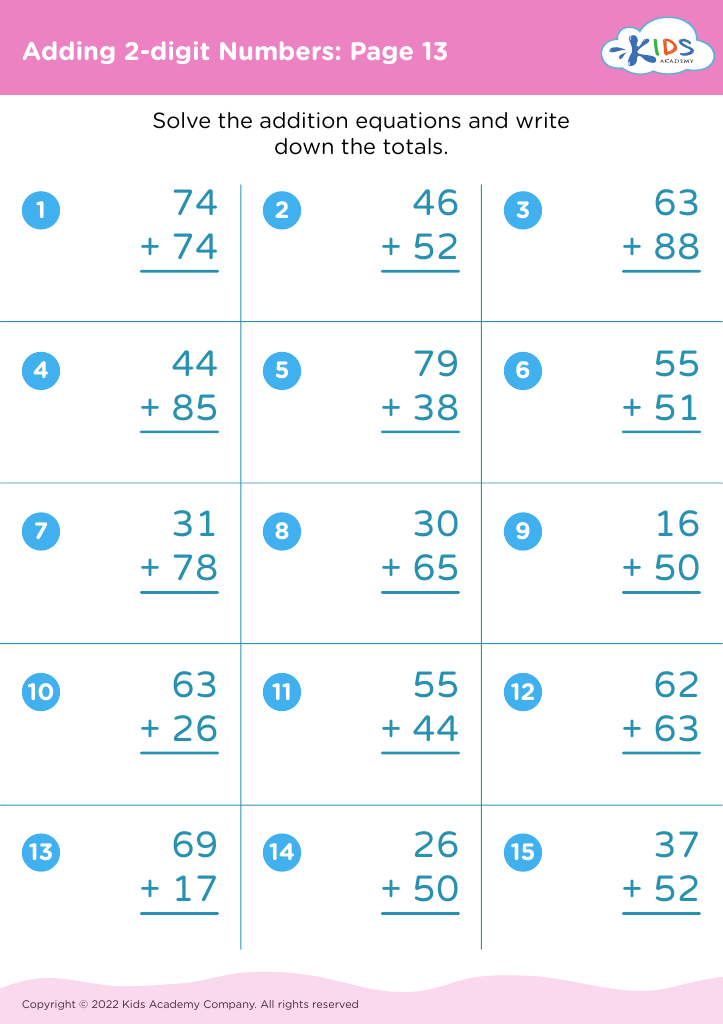
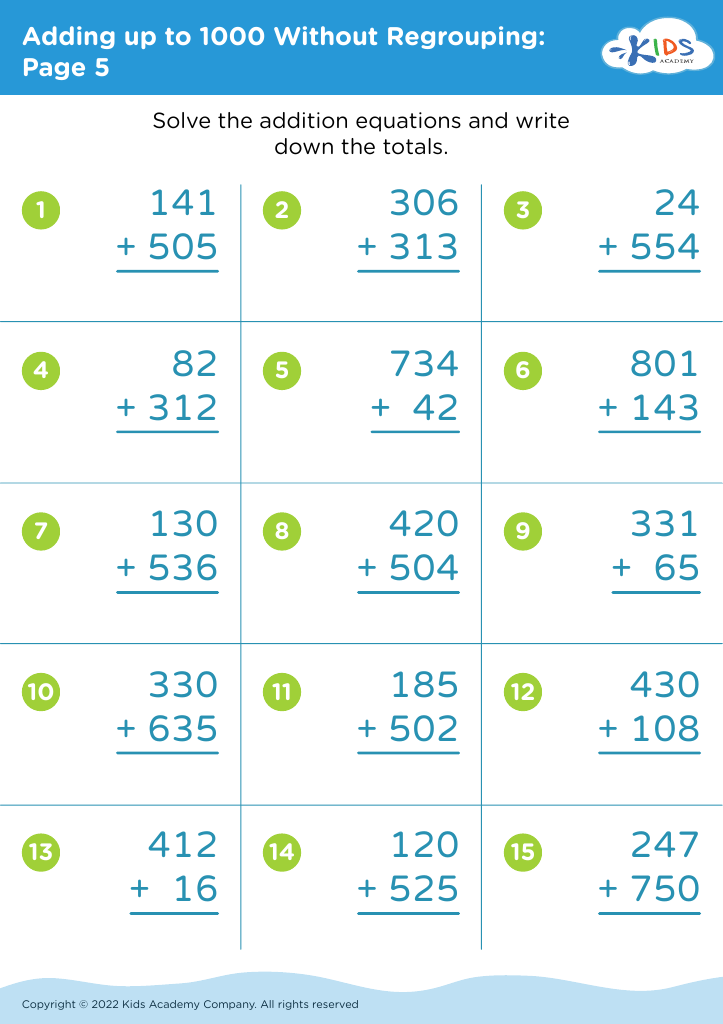
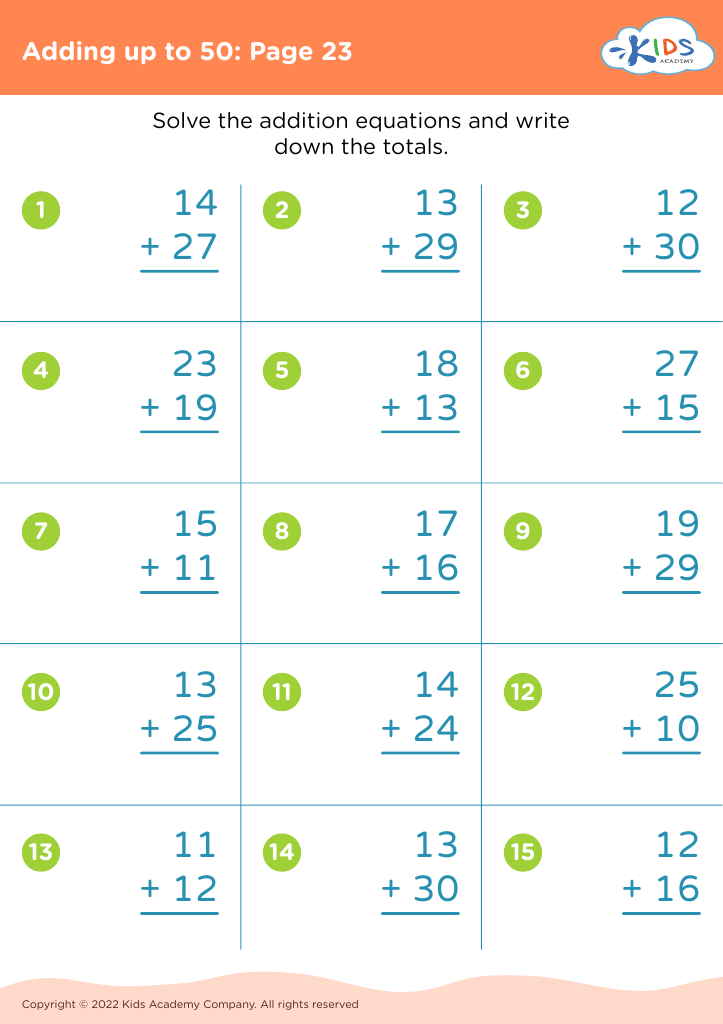
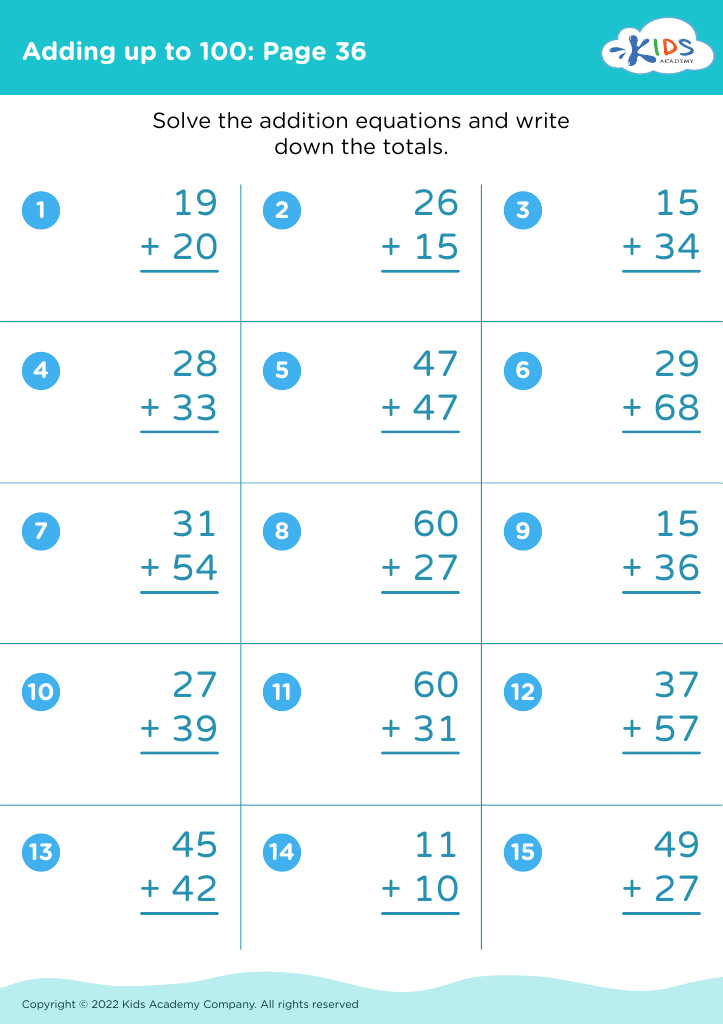








Visual representation comprehension in addition is crucial for children aged 7-9 as it significantly enhances their understanding of mathematical concepts. At this developmental stage, children are transitioning from concrete to more abstract thinking. By employing visual aids such as diagrams, number lines, or manipulatives, educators and parents can provide children with tangible methods for grasping addition. These visual tools not only illustrate the operation's mechanics but also aid in bridging the gap between visualizations and numerical symbols.
Visual comprehension helps children develop problem-solving skills as they learn to interpret and analyze arrangements of numbers and their relationships. This understanding promotes a deeper retention of concepts, as children can visualize the meaning behind addition rather than relying solely on memorization. Furthermore, mastering visual representations fosters a positive attitude towards math, reducing anxiety and encouraging further exploration.
For teachers and parents, investing in visual addition strategies cultivates a supportive learning environment that accommodates diverse learning styles. Ultimately, by prioritizing visual representation comprehension, caregivers empower children to build a strong mathematical foundation that will benefit them throughout their academic careers and enhance their overall cognitive development.








