
Understanding graphs Graphs Worksheets for Ages 7-9
5 filtered results
Difficulty Level
Grade
Age
-
From - To
Subject
Activity
Standards
Discover fun and engaging "Understanding Graphs" worksheets tailored for children aged 7-9 at Kids Academy. These worksheets provide a foundational understanding of graphs, helping young learners interpret and create bar graphs, pictographs, and line plots. Designed to align with educational standards, the activities promote critical thinking and data analysis skills through interactive tasks and vibrant illustrations. Each worksheet fosters essential math abilities, ensuring a deeper comprehension of graphing concepts. Support your child’s educational journey with these valuable resources and watch their confidence soar as they master reading and constructing various types of graphs.
Favorites
With answer key
Interactive
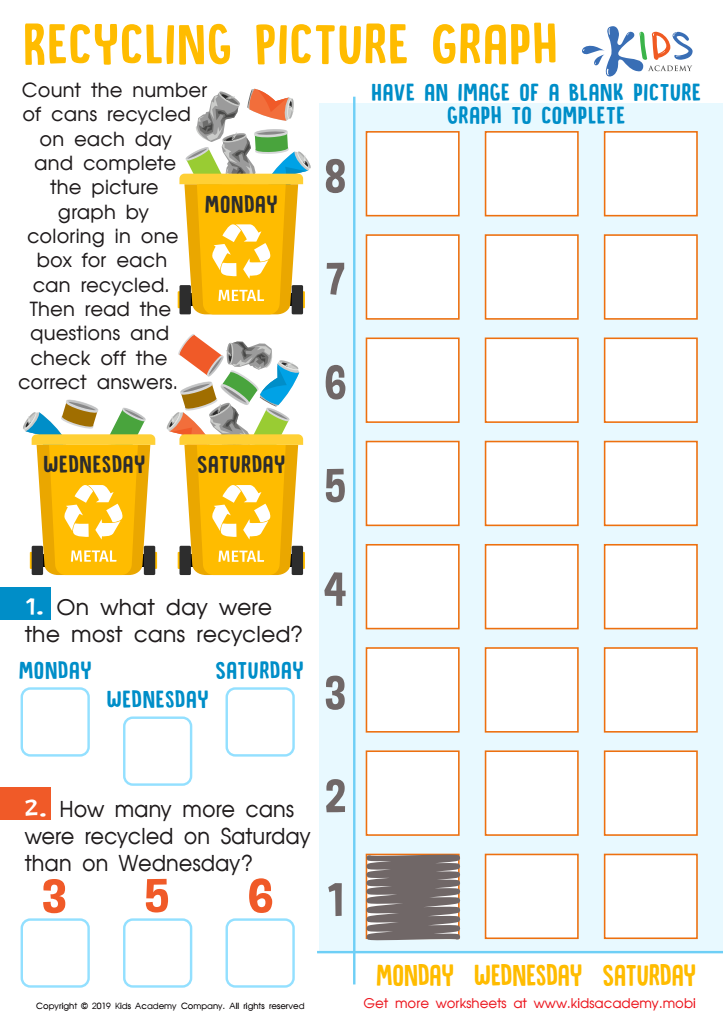
Recycling Picture Graph Worksheet
This worksheet can help kindergartners learn numbers and why recycling is important. After using items and materials, they can turn them into new materials instead of throwing them away. Guide your students to follow the instructions and answer the questions at the end. Help them understand how recycling benefits our environment.
 Assign to My Students
Recycling Picture Graph Worksheet
Worksheet
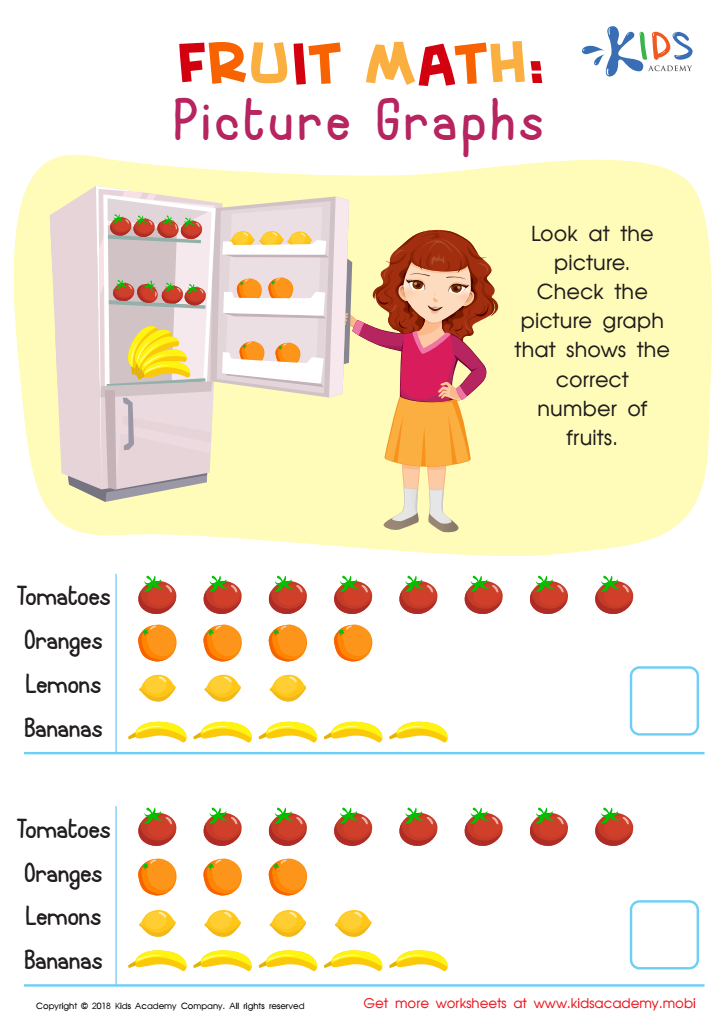
Fruit Math: Picture Graphs Worksheet
Help your child learn to draw graphs by having them look at pictures. Ask them to identify a graph that accurately portrays the data and have them explain why. This will prepare them to easily draw more complex graphs in the future. For example, have them look at the picture with the number of fruits in the colorful worksheet and explain why the graph is accurate.
Fruit Math: Picture Graphs Worksheet
Worksheet
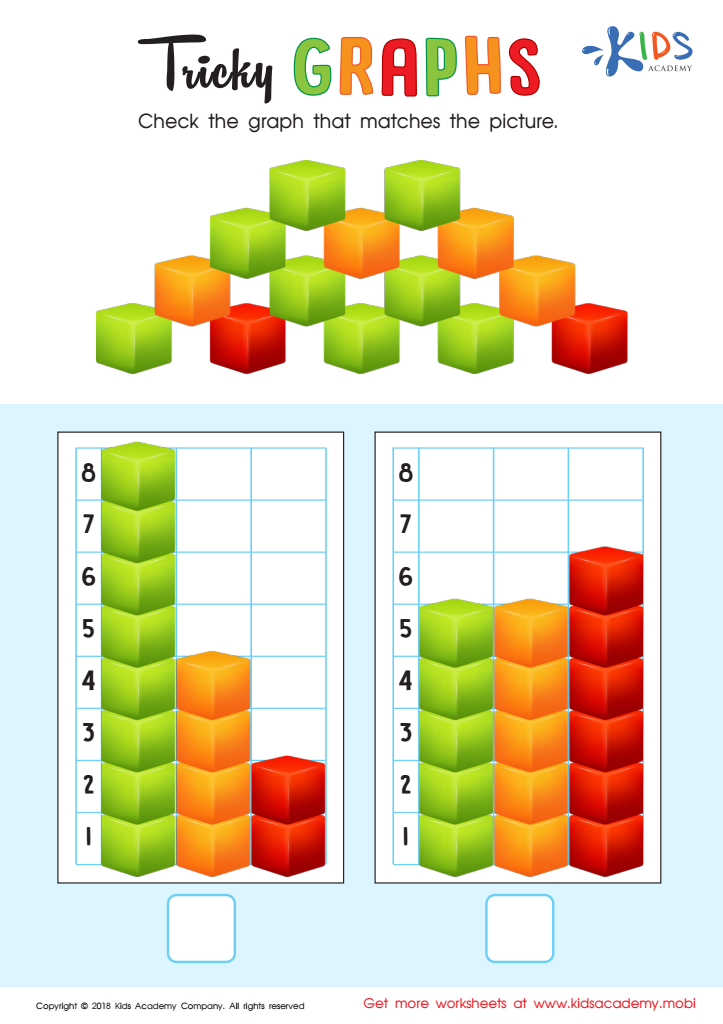
Tricky Graphs Worksheet
Looking for a fun way to sharpen your kid's graphing skills? Get this colorful PDF worksheet! They'll get to practice visual discrimination, counting, and creating bar graphs. Plus, graphing and reading graphs are essential for problem-solving in math.
Tricky Graphs Worksheet
Worksheet
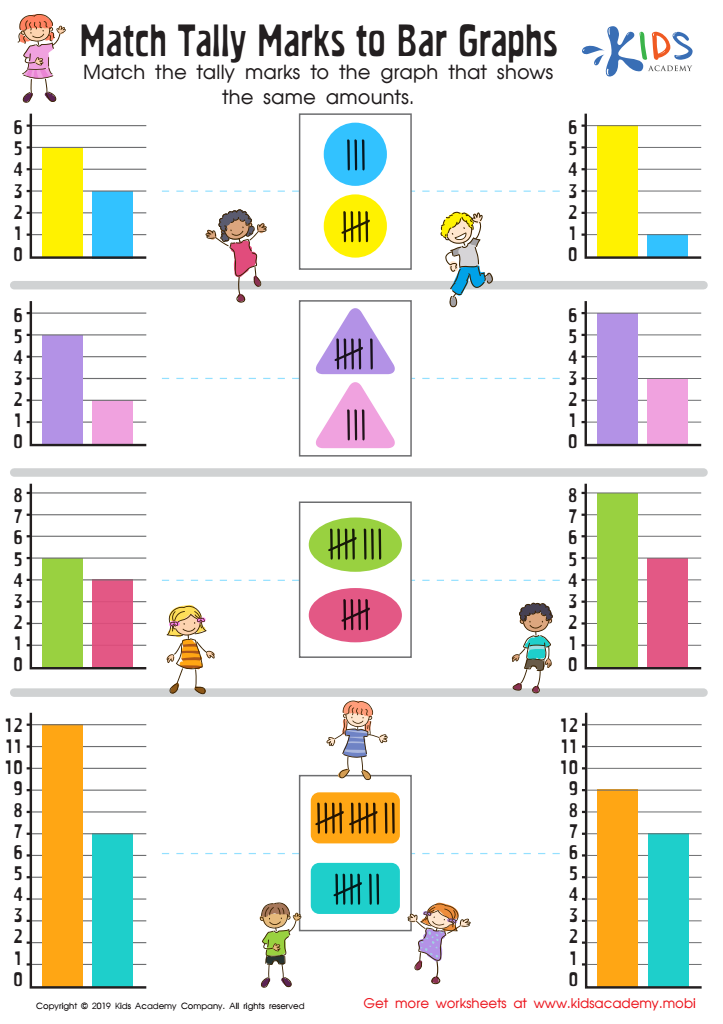
Match Tally Marks to Bar Graphs Worksheet
Learning math can be tough for kids. Rules and formulas can be confusing. Don't worry, this worksheet can help them understand graphs better. Show them how to match the tally marks with the graph that shows the same amount. It will help them grasp the basics and prepare them for more complex equations.
Match Tally Marks to Bar Graphs Worksheet
Worksheet
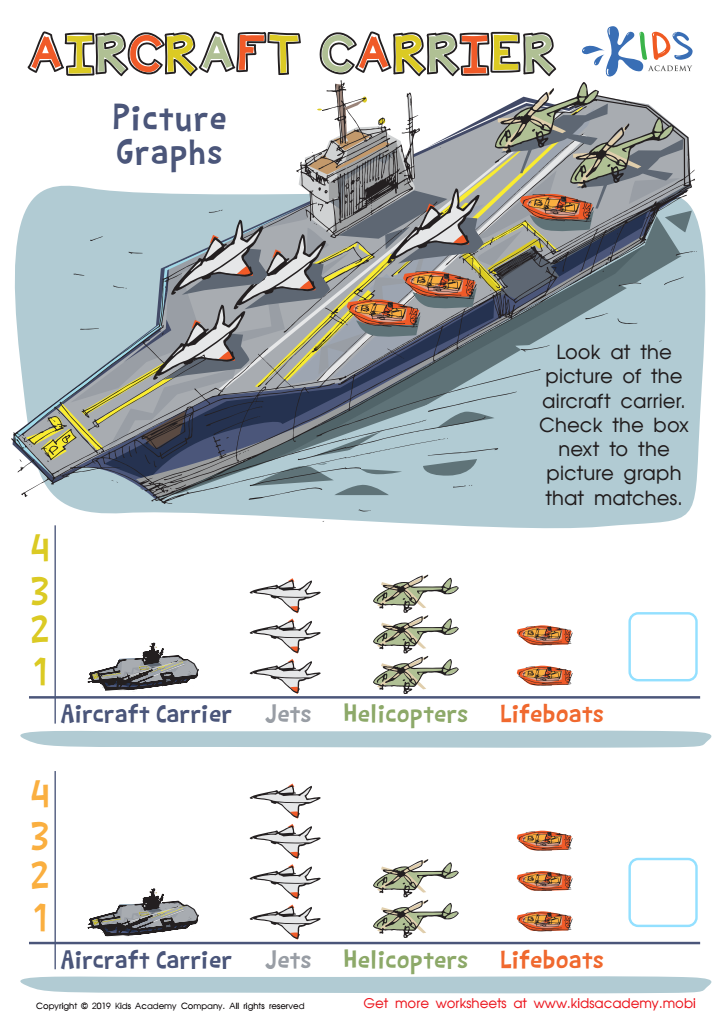
Aircraft Carrier Picture Graphs Worksheet
Kids love learning about jets and boats with this awesome worksheet! It's a great way to engage them as they work on picture graphs. Representing numerical values with pictures, this free PDF requires them to choose which picture graph and representation best match the carrier in the picture. It's also great practice for visual discrimination!
Aircraft Carrier Picture Graphs Worksheet
Worksheet
Join Kids Academy for Free
Who is primarily going to use this learning content?







Understanding graphs is crucial for children aged 7-9 as it lays foundational skills for lifelong learning and problem-solving. At this impressionable age, children are curious and eager to explore patterns and relationships in their world. Graphs help them visualize data, making abstract concepts more tangible. This visual aspect can empower children to grasp complex information more easily, supporting their mathematical development and literacy.
For parents and teachers, investing time in teaching graphs establishes critical thinking and analytical skills early on. When children learn to interpret and create graphs, they engage with key STEM concepts that foster academic achievement across disciplines, from mathematics to science. Graphs encourage a more interactive and hands-on approach to learning, which can captivate young minds and foster a love for these subjects.
Moreover, early exposure to graphs can enhance communication skills. As children learn to represent data visually, they also become better equipped to present information clearly and concisely. Encouraging this skill helps build their confidence in public speaking and collaboration, essential traits for future success.
In sum, understanding graphs enables children to better parse the world around them, boosting mental agility and practical skills that serve them well into adulthood. Thus, parents and teachers should prioritize this aspect of education to support their overall cognitive and personal development.








