Drawing skills Math Worksheets for Ages 7-9
6 filtered results
-
From - To
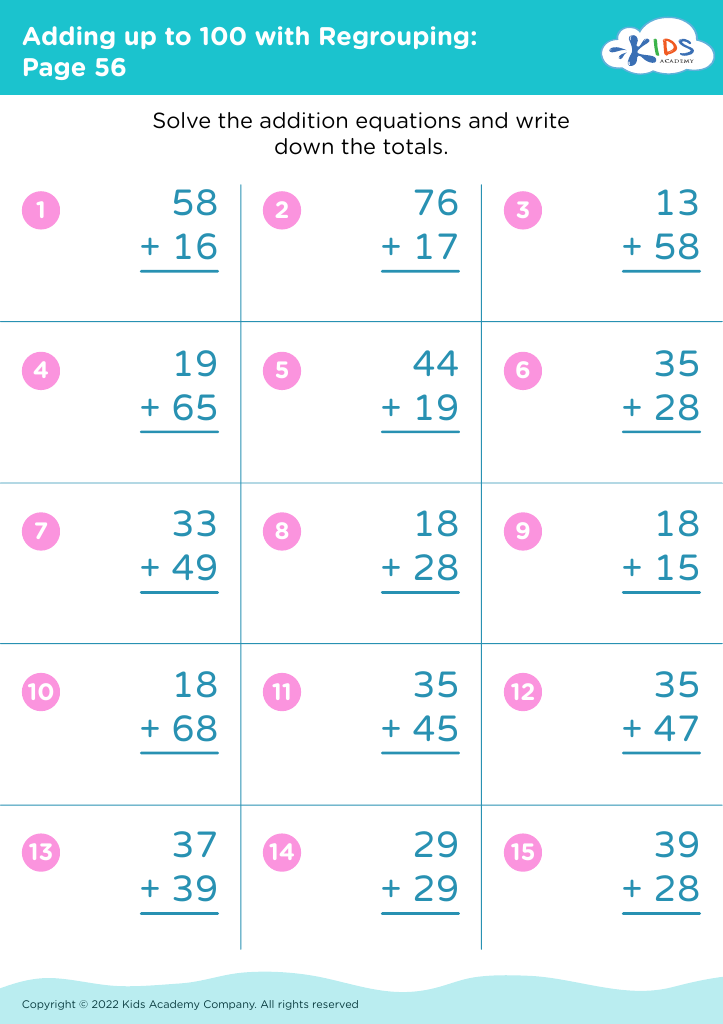
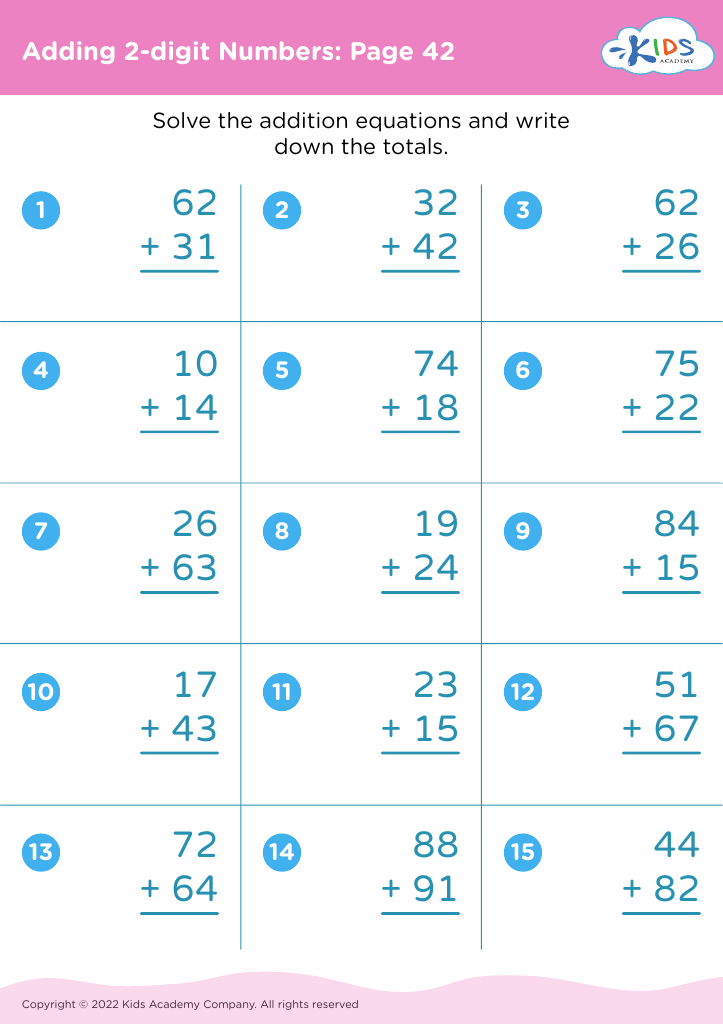
Unlock your child's creativity and math skills with our engaging Drawing Skills Math Worksheets for ages 7-9! These specially designed worksheets blend art and mathematics, helping young learners develop essential cognitive abilities while having fun. Each worksheet encourages kids to practice drawing shapes, patterns, and objects, reinforcing their understanding of geometry and spatial awareness. With colorful illustrations and easy-to-follow instructions, your child will enjoy enhancing their drawing skills while solving math-related challenges. Perfect for home or classroom use, these worksheets promote critical thinking and creativity, ensuring a well-rounded educational experience. Help your child master math concepts while exploring their artistic side today!







Drawing skills play a crucial role in enhancing math understanding for children aged 7-9, making them particularly significant for parents and teachers. At this developmental stage, children are transitioning from concrete to more abstract thinking, and drawing can serve as a bridge to facilitate this shift.
One of the primary benefits of integrating drawing into math is that it encourages visualization. When children draw shapes, graphs, or models, they engage with mathematical concepts actively, which deepens their understanding. Visual representations can help them better grasp complex ideas like geometry, fractions, and spatial relationships.
Moreover, drawing promotes creativity and critical thinking, allowing young learners to experiment and explore mathematical concepts in a relaxed, enjoyable manner. It can also help to reduce math anxiety, offering a more playful approach to the subject.
Additionally, drawing fosters communication skills. When children explain their drawings, they practice articulating their thought processes, reinforcing their math vocabulary and reasoning skills. By encouraging drawing in math, parents and teachers are not only enhancing numeric skills but also aiding in the development of overall cognitive abilities, problem-solving skills, and self-expression. This holistic approach lays a solid foundation for future learning, making it essential for well-rounded education.








