Enhances number recognition Math Worksheets for Ages 7-9
4 filtered results
-
From - To
Unlock your child's math potential with our Enhances Number Recognition Math Worksheets, specially designed for ages 7-9. These engaging and interactive worksheets provide a fun and effective way for young learners to master number recognition and improve their counting skills. Developed by educational experts, our worksheets cover various math topics, including number sequencing, understanding place value, and recognizing patterns. Perfect for classroom use or at-home practice, they help build a strong mathematical foundation and boost confidence. Start their journey to math success today with Kids Academy's expertly crafted number recognition worksheets!
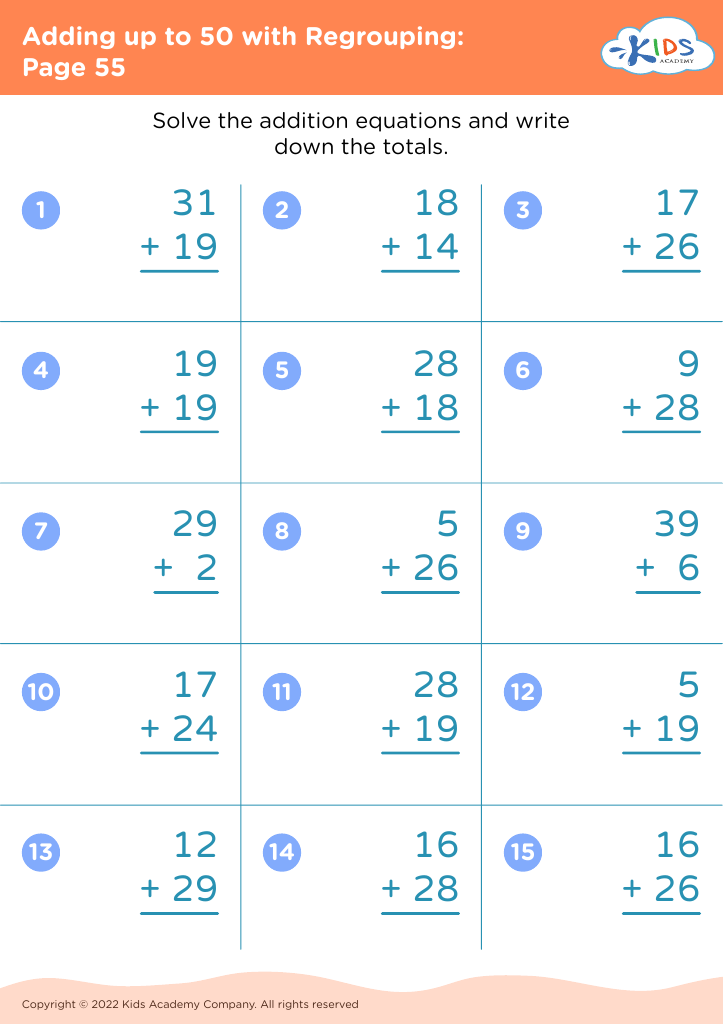
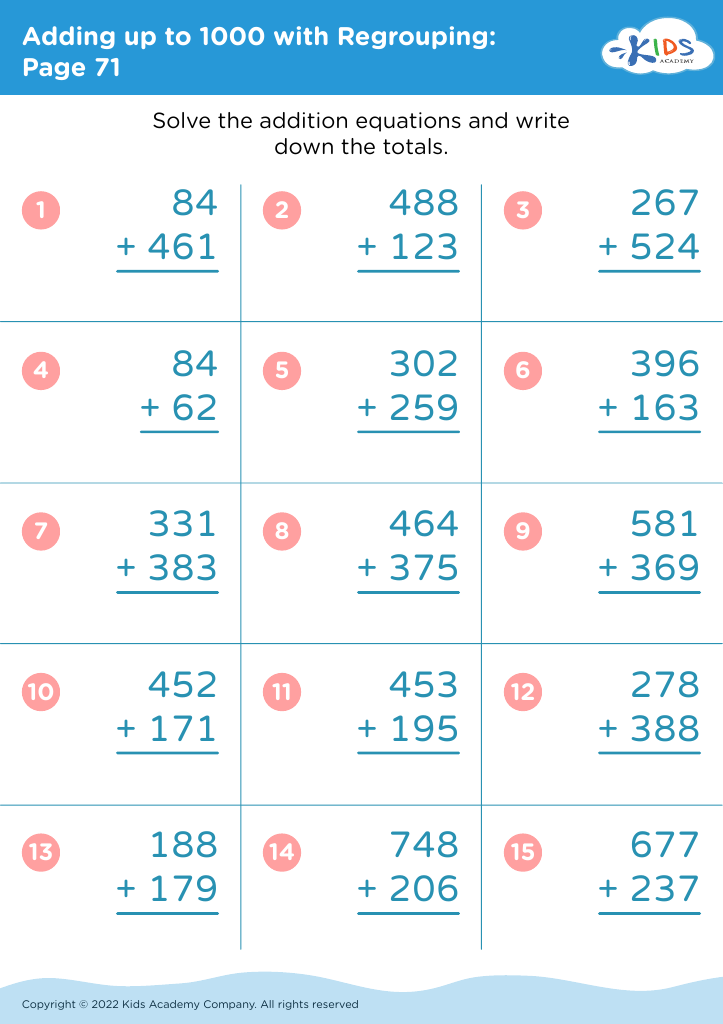
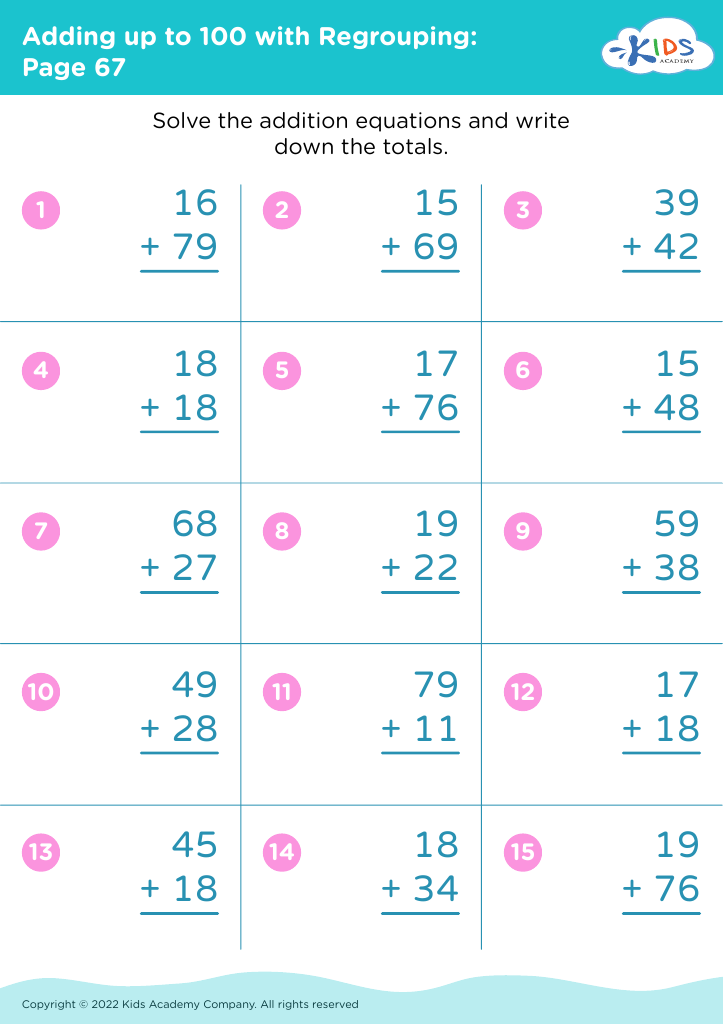
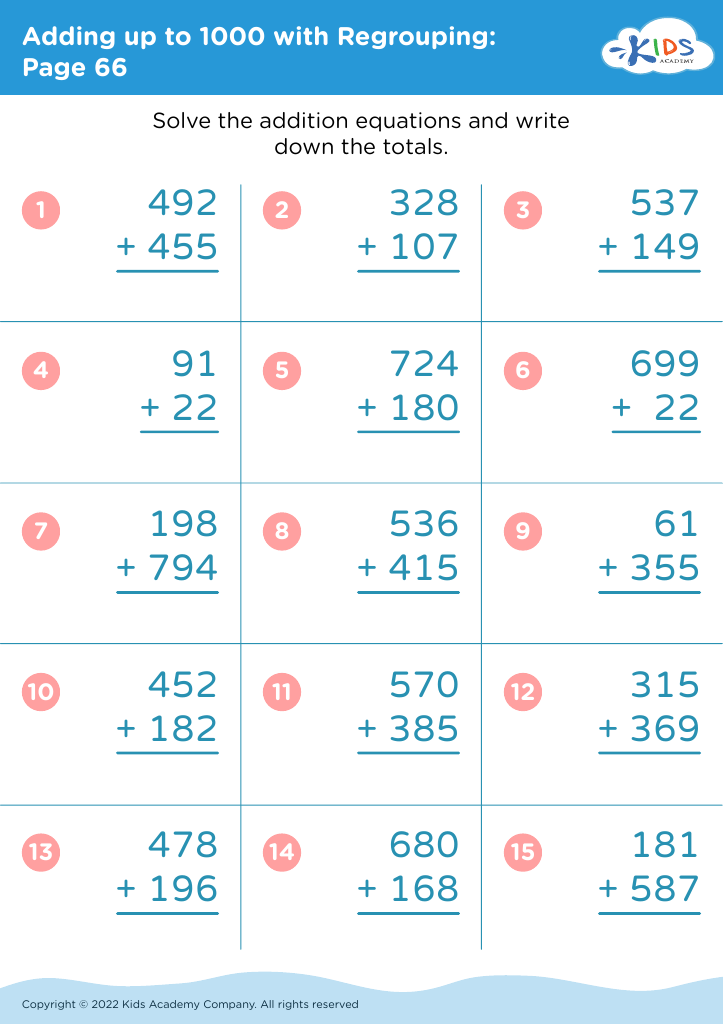








Parents and teachers should prioritize enhancing number recognition in children aged 7-9 because it forms the foundation for all future mathematical learning. At this crucial developmental stage, children transition from simple counting to more complex operations such as addition, subtraction, multiplication, and division. Strong number recognition skills are essential as they enable children to understand numerical relationships, patterns, and place value concepts, which are critical for these advanced calculations.
Enhancing number recognition also boosts confidence in students, making them more likely to approach math with a positive attitude. Improved number sense helps children to grasp other subjects tied to math, including science, technology, and even elements of literacy, where sorting and categorization play a role.
Moreover, early math skills are strong predictors of later academic success. Children who can recognize and manipulate numbers effectively are better prepared for higher-level math and problem-solving tasks, fostering critical thinking and logical reasoning. These skills are not only vital academically but are also crucial for everyday decision-making and financial literacy.
Thus, emphasizing number recognition in young learners sets the groundwork for their academic achievement and lifelong learning capabilities, making it a fundamental focus for educators and caregivers alike.








