Fine motor skills (writing) Math Worksheets for Ages 7-9
9 filtered results
-
From - To
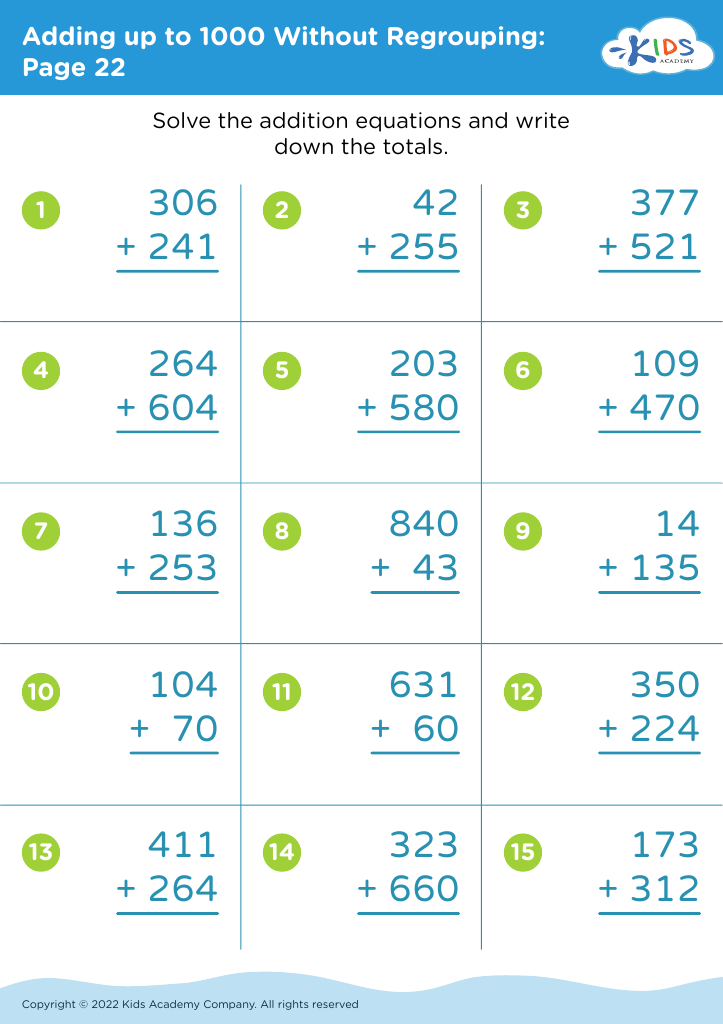
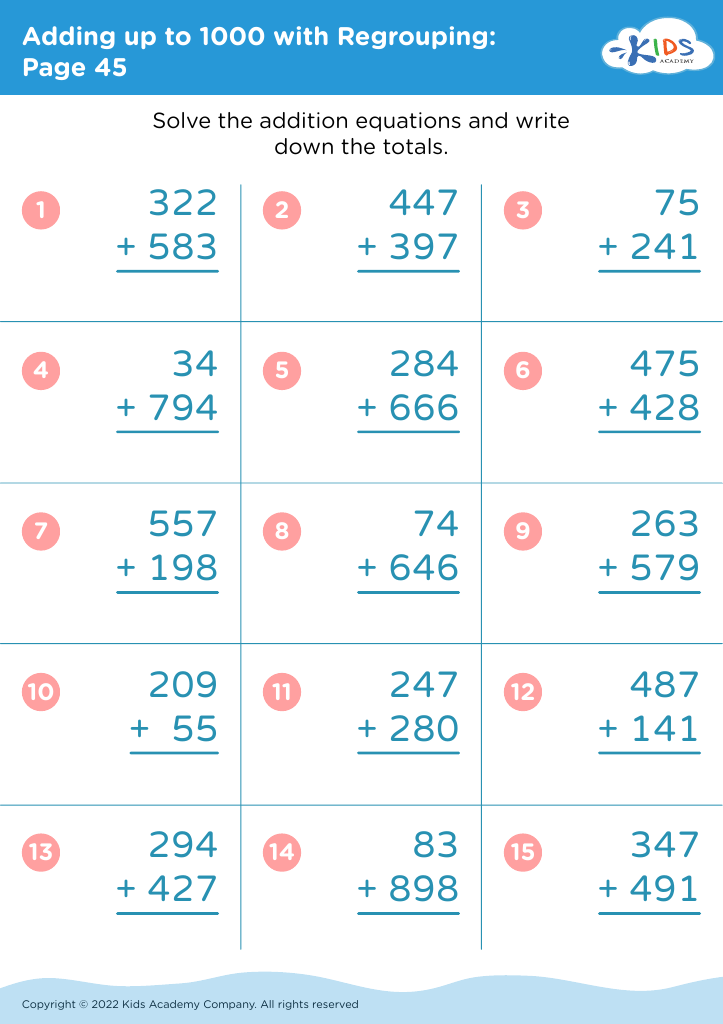
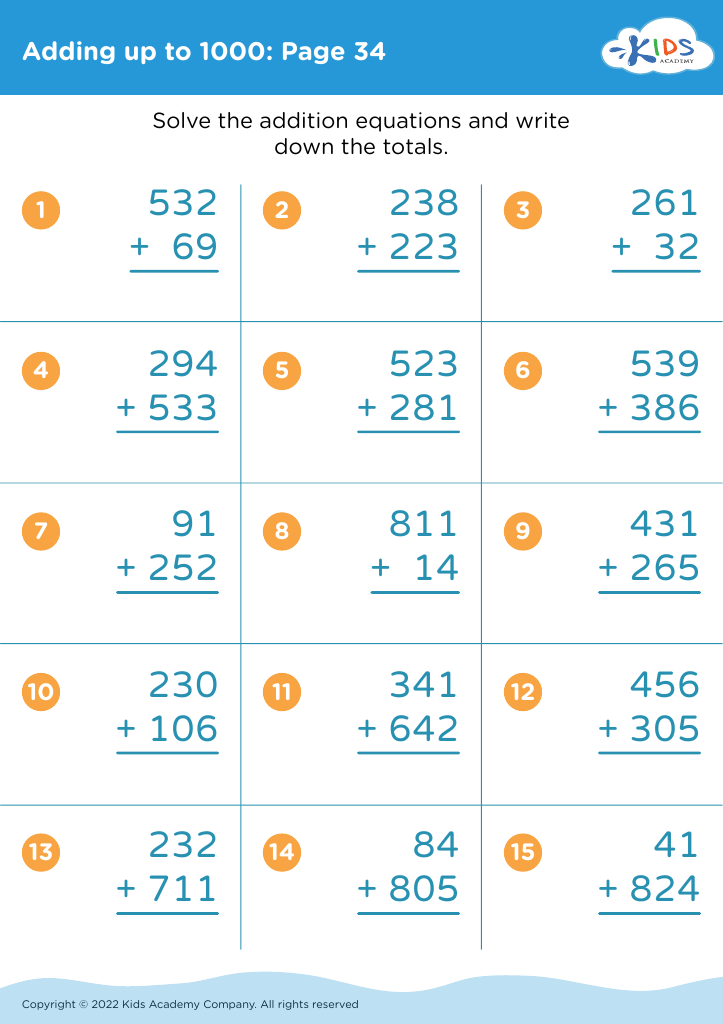
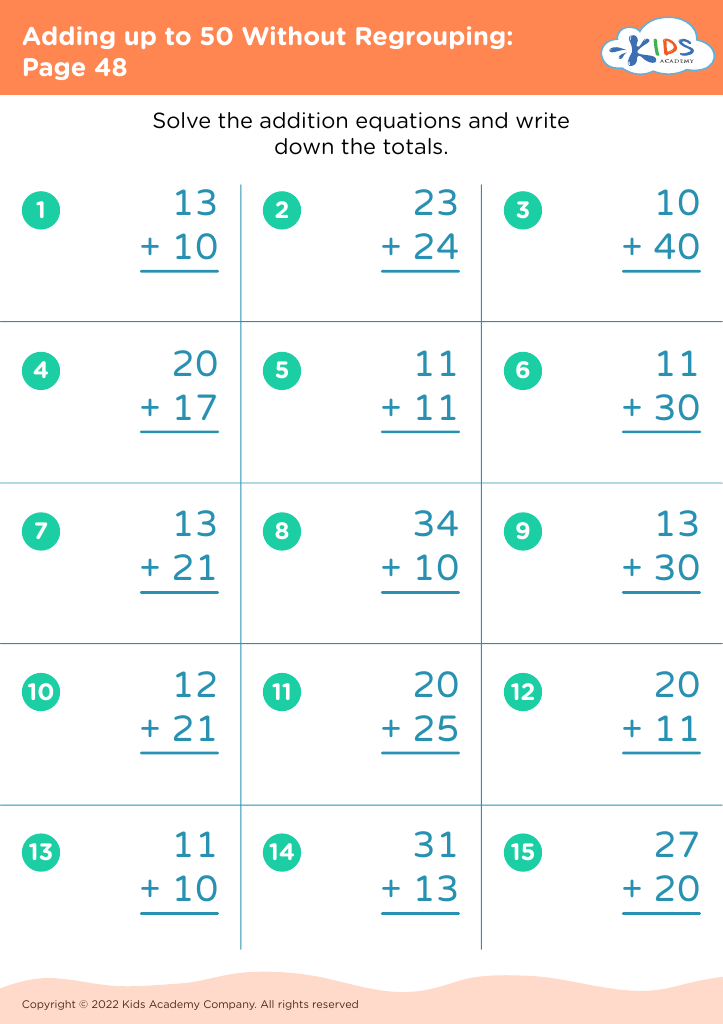
Enhance your child's math learning experience with our Fine Motor Skills (Writing) Math Worksheets for Ages 7-9 from Kids Academy. Designed to integrate essential writing practice with engaging math activities, each worksheet helps young learners improve their precision and coordination while mastering addition, subtraction, multiplication, and division. These activities nurture crucial fine motor skills crucial for writing efficiency, including proper pencil grip and handwriting legibility. Whether for classroom enrichment or extra practice at home, our expertly crafted worksheets ensure that learning remains fun and effective. Unlock your child's mathematical and motor potential with tailored exercises that cater to their developmental needs.

Starstruck Addition Printable
 Assign to My Students
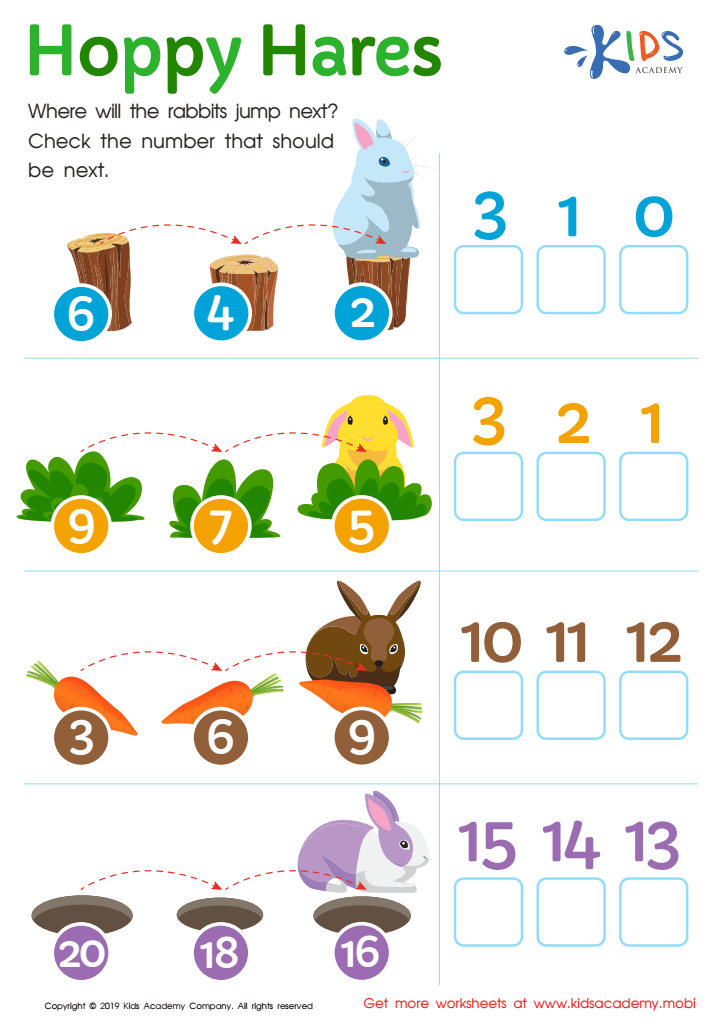
Hoppy Hares Worksheet
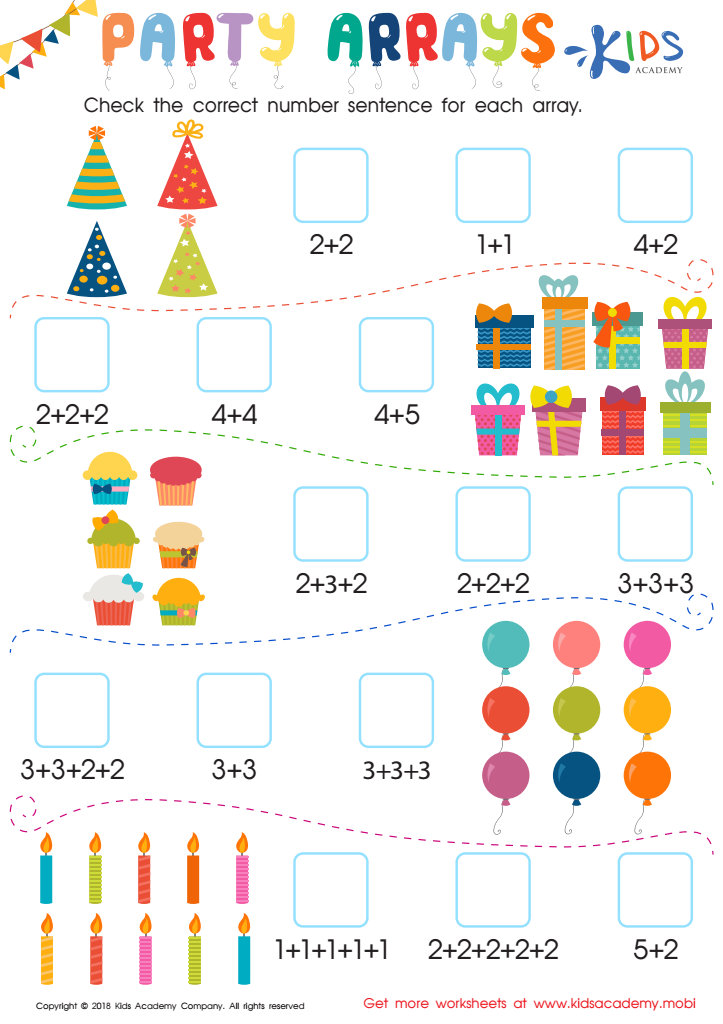
Party Arrays Worksheet



.jpg)




Fine motor skills, particularly those used in writing, and foundational math skills are essential for children aged 7-9 as they greatly influence academic success and daily functioning. Firstly, fine motor skills lay the groundwork for clear, legible handwriting, which is crucial as children progress through school. Good handwriting fosters confidence and allows kids to express their ideas effectively, which in turn encourages active participation in learning activities.
Additionally, neat writing is essential for completing written assignments, whether they involve narratives, mathematical word problems, or science notes. These skills also contribute to dexterity needed for other educational tasks such as drawing diagrams, using computers, and performing various arts and crafts activities.
On the math front, basic arithmetic skills cultivated at this age serve as the building blocks for more complex problem-solving and abstract thinking required later on. Competence in early math establishes a robust foundation that’s critical for understanding more advanced concepts in algebra, geometry, and beyond.
Integrating fine motor skills with math can also enhance cognitive development. For example, tracing numbers or constructing shapes aids in better conceptual understanding through visualization and physical interaction. Therefore, nurturing these areas not only improves academic performance but also assists in developing cognitive, social, and practical life skills crucial for holistic growth and future endeavors.








