Number pattern recognition Math Worksheets for Ages 7-9
3 filtered results
-
From - To
Discover our engaging Number Pattern Recognition Math Worksheets designed specifically for children aged 7-9! These worksheets provide an exciting way for young learners to develop their mathematical skills through fun and interactive patterns. Each activity focuses on recognizing, completing, and extending numerical sequences, enabling students to bolster critical thinking and problem-solving abilities. With a range of colorful illustrations and varied difficulty levels, kids will enjoy mastering patterns while building a strong foundation for future mathematical concepts. Perfect for classroom use or homeschooling, our worksheets make learning mathematics enjoyable and effective. Transform math time into a fun adventure with Number Pattern Recognition!
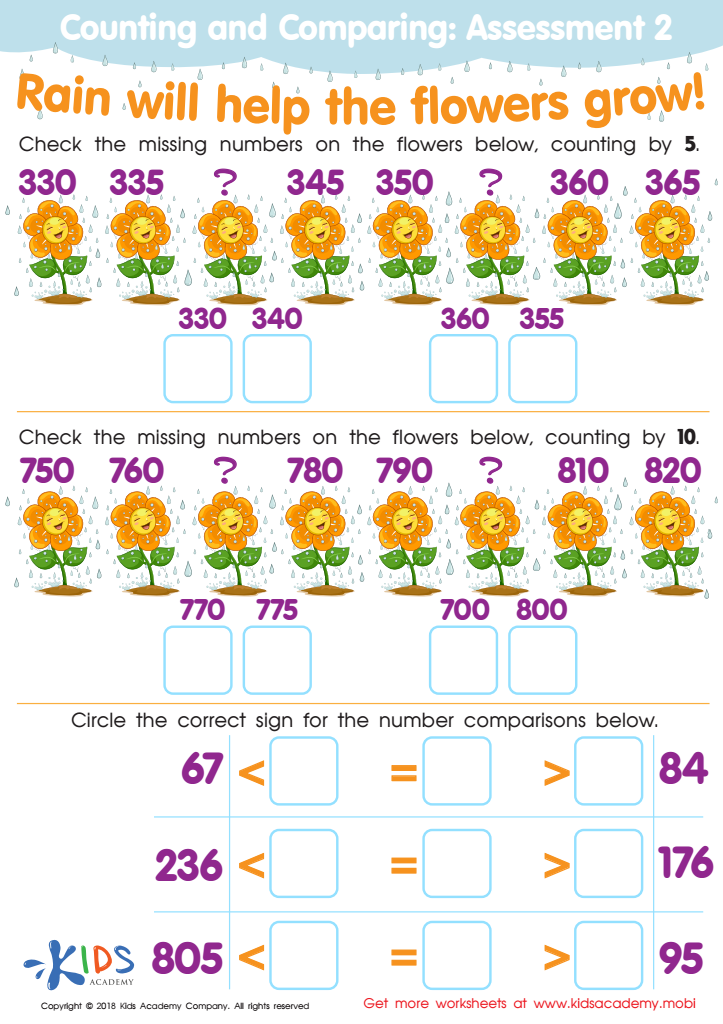
Counting and Comparing: Assessment 2 Worksheet
 Assign to My Students
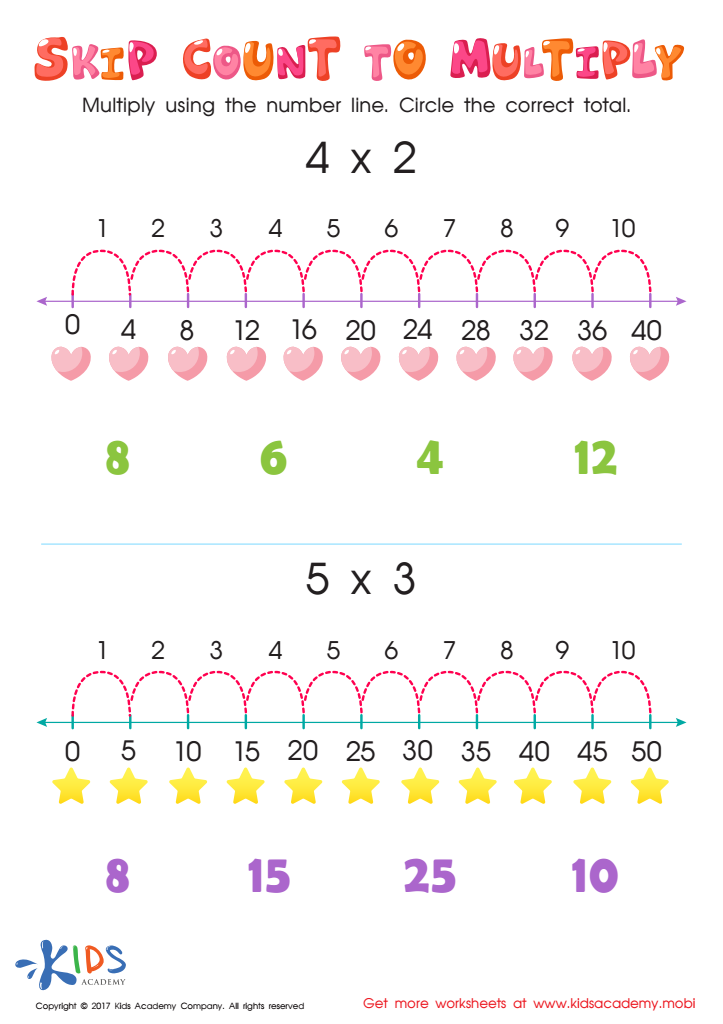
Skip Count Multiplication Worksheet
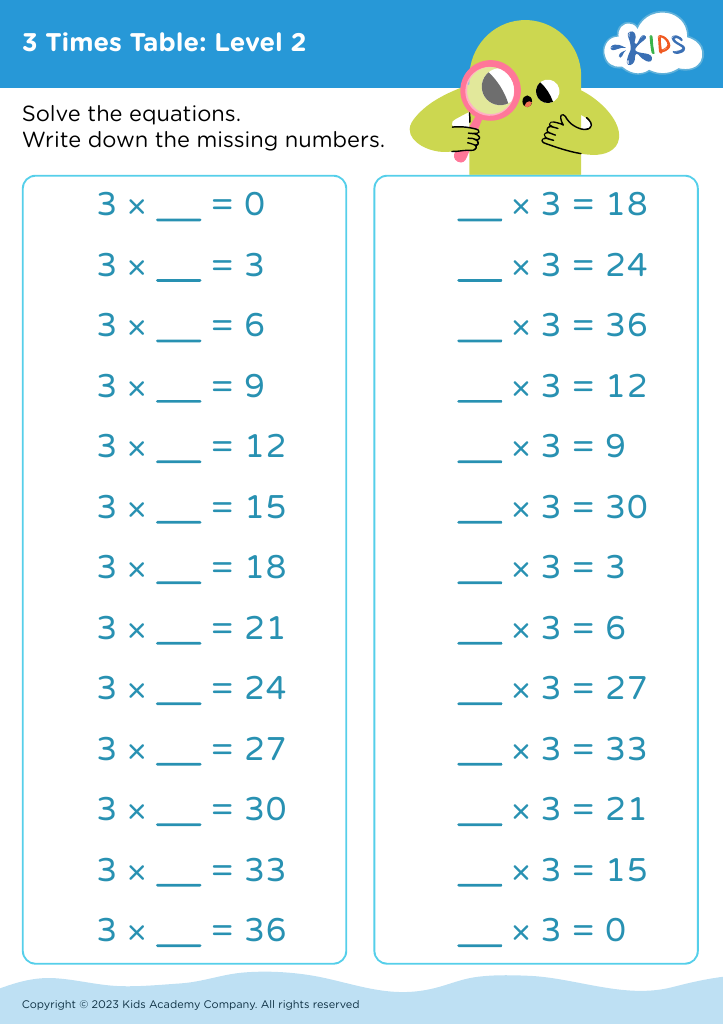








Number pattern recognition is a crucial mathematical skill for children aged 7-9, as it lays a strong foundation for more advanced mathematical concepts. Understanding patterns helps children to develop critical thinking and problem-solving skills, as they learn to identify relationships and predict outcomes based on observed sequences. This ability is essential not only in mathematics but also in everyday situations, fostering logical reasoning that enhances overall cognitive development.
For parents and teachers, nurturing this skill is important because it promotes engagement with math learners. When children can recognize and replicate patterns, their confidence in tackling mathematical problems increases, making math more approachable and enjoyable. Furthermore, pattern recognition is closely linked to arithmetic skills, aiding in understanding concepts such as addition, subtraction, multiplication, and division.
Additionally, identifying patterns paves the way for algebraic thinking, as children begin to comprehend variables and equations in later grades. Providing opportunities for practice with number patterns can lead to improved academic performance. Ultimately, focusing on number pattern recognition fosters a positive attitude towards math, encourages curiosity, and prepares children for future learning challenges, making it a worthwhile investment for both parents and educators.








