Understanding number relationships Math Worksheets for Ages 7-9
5 filtered results
-
From - To
Unlock your child’s potential with our "Understanding Number Relationships" math worksheets for ages 7-9. These engaging activities are crafted to help kids grasp essential math concepts, enhancing their ability to recognize patterns, compare numbers, and understand place value. Perfect for classroom use or extra practice at home, our worksheets boost confidence and foundational skills through hands-on learning experiences. Designed by educational experts and aligned with curriculum standards, they ensure a fun and effective learning journey. Support your child's math journey and watch them develop critical thinking and problem-solving skills crucial for future math success!
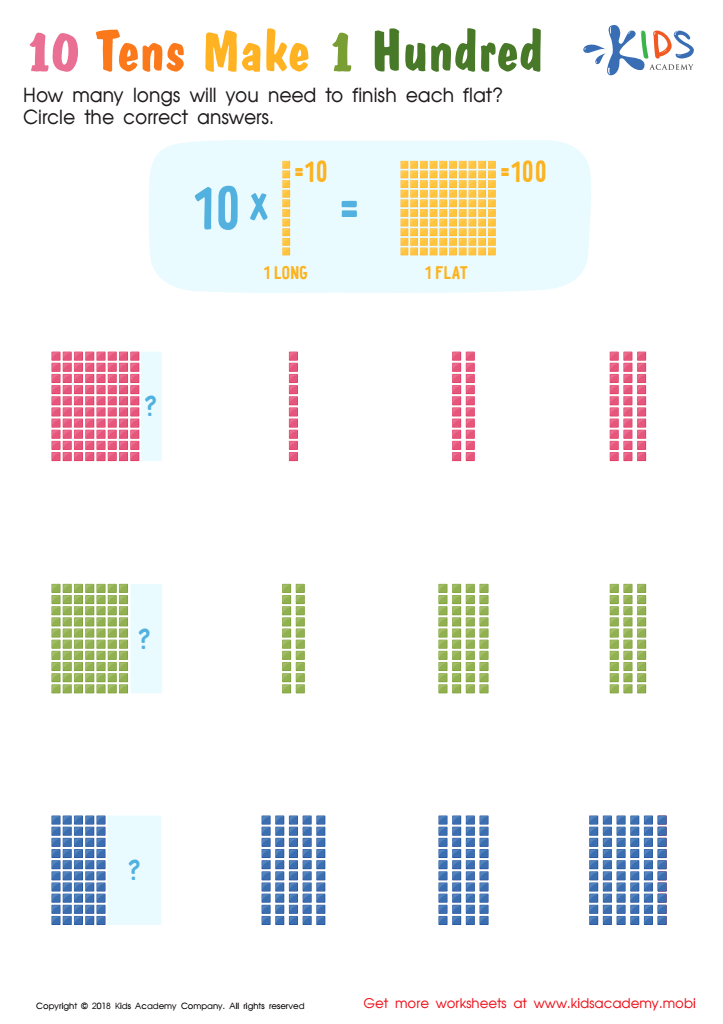
10 Tens Make 1 Hundred Worksheet
 Assign to My Students
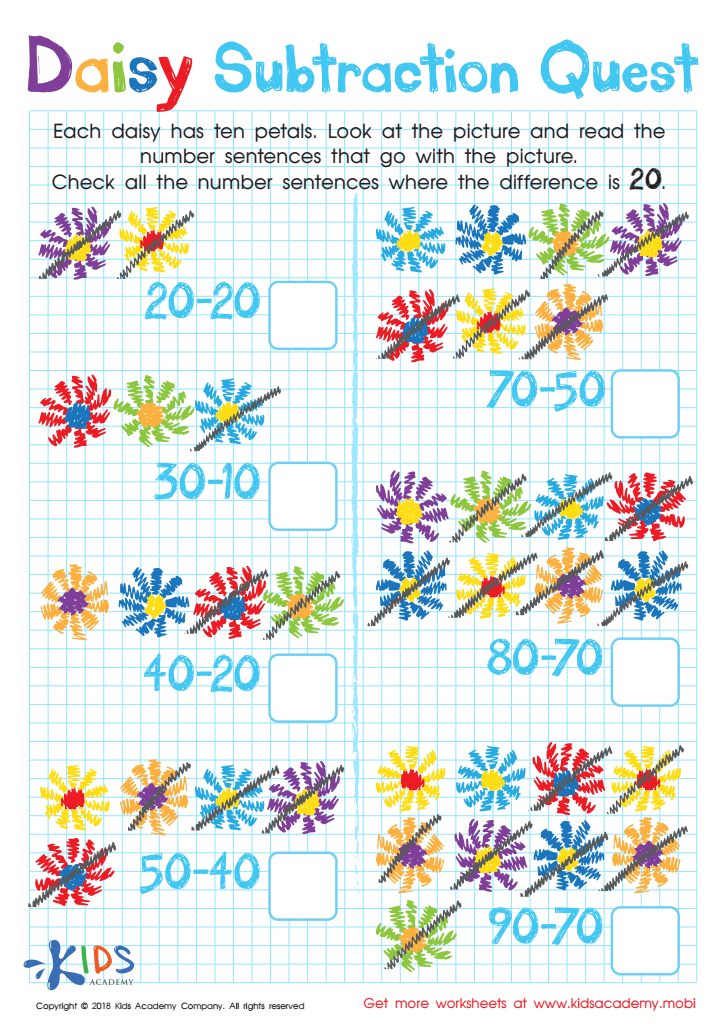
Daisy Subtraction Quest Worksheet
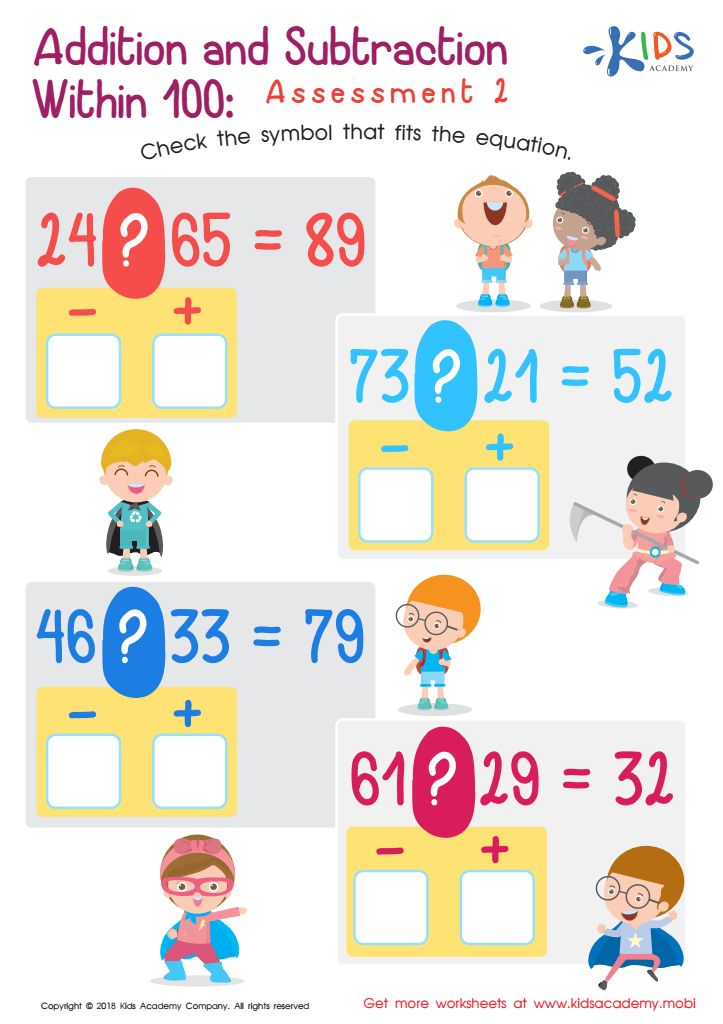
Addition and Subtraction Within 1: Assessment 2 Worksheet
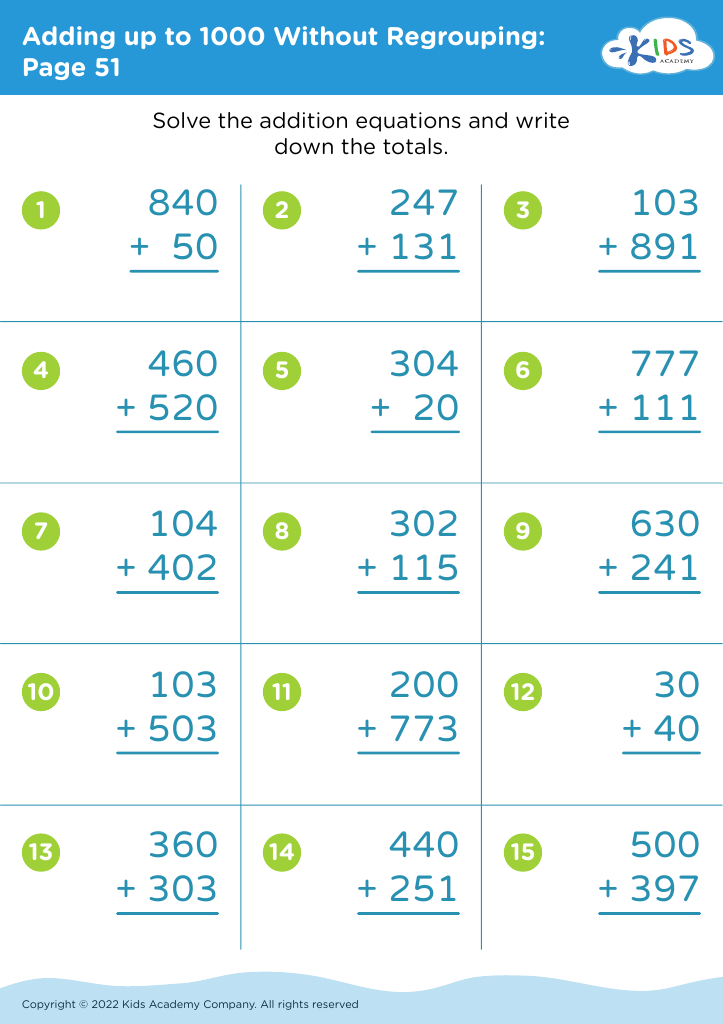
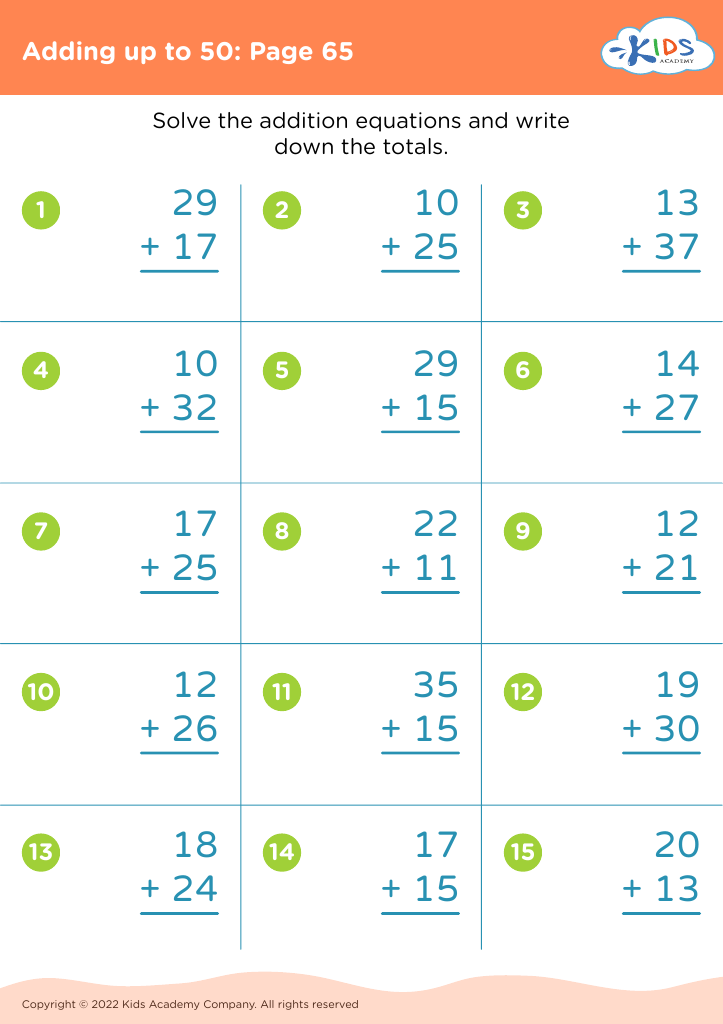








Understanding number relationships is essential for children aged 7-9 because it lays the groundwork for complex math skills and real-life problem-solving abilities. At this developmental stage, kids transition from basic counting to more advanced concepts like addition, subtraction, multiplication, and division. Comprehending how numbers relate to one another fosters strong number sense, crucial for mental arithmetic and estimation. Such proficiency aids in grasping more intricate math topics in later years, such as algebra and geometry.
For parents, encouraging number relationship skills helps children develop logical reasoning and critical thinking abilities. These skills are vital not just for mathematics but also for understanding patterns, making predictions, and making informed decisions. Parents can integrate number concepts into daily activities, making learning relevant and engaging.
Teachers play a crucial role in this developmental phase by introducing creative and hands-on activities that illustrate these relationships. Visual aids, interactive games, and real-world applications can make abstract concepts more tangible. This not only caters to different learning styles but also keeps young learners engaged and motivated.
By prioritizing this foundational knowledge, both parents and teachers set children on a path toward academic success, fostering confidence and a positive attitude toward learning that benefits them throughout their educational journey and beyond.








