Understanding seasons Math Worksheets for Ages 7-9
4 filtered results
-
From - To
Explore our "Understanding Seasons" math worksheets for ages 7-9! Designed to engage young learners, these worksheets combine fun and educational exercises, helping children grasp the concepts of seasons while enhancing their math skills. Students will solve problems related to measuring temperature, tracking seasonal changes, and analyzing patterns in nature. Each worksheet fosters critical thinking and problem-solving abilities, making math enjoyable and relevant to everyday life. Perfect for both classroom and home enrichment, these resources cater to various learning styles and competency levels. Dive into this exciting educational journey and help your child develop a deeper understanding of both math and the world around them!
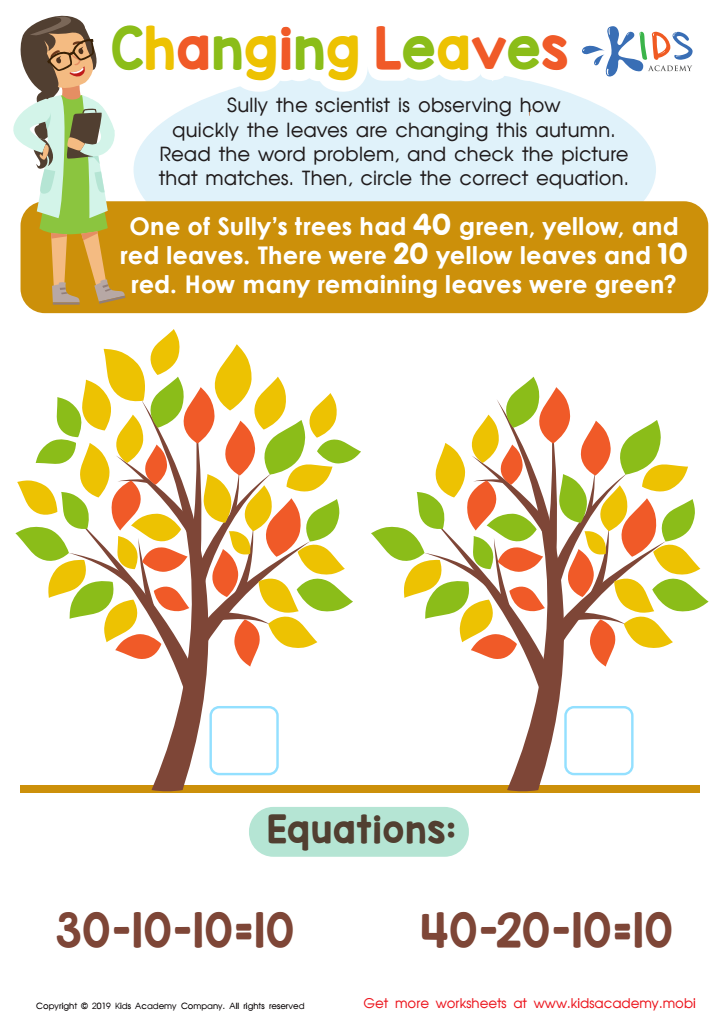
Changing Leaves Worksheet
 Assign to My Students







Understanding seasons and their mathematical concepts is crucial for children aged 7-9 for several reasons. First, it connects math to the real world, making learning more relevant and engaging. As children observe changes in weather, daylight, and nature during different seasons, they can embrace math operations through hands-on activities like measuring temperature patterns, counting seasonal changes, or collecting data on activities varying by season.
Second, it fosters critical thinking and observation skills. Math related to seasons can involve patterns, data collection, and basic graphs, reinforcing analytical skills that are vital as they progress through their education. These topics also encourage discussions about time management, helping kids learn the importance of planning and preparing for activities linked to seasonal changes.
Lastly, it promotes environmental awareness. By connecting math to the cycles of nature, kids develop a sense of curiosity about their surroundings, fostering a respect for the environment. This understanding can enrich their educational experience, encourage teamwork through group projects, and instill a love for learning.
Therefore, both parents and teachers should prioritize teaching mathematical concepts related to seasons, cultivating an enjoyable and holistic approach to education.








