
Understanding Sequences Math Worksheets for Ages 7-9
16 filtered results
Difficulty Level
Grade
Age
-
From - To
Subject
Activity
Standards
Unlock your child's potential with our "Understanding Sequences Math Worksheets" designed for ages 7-9. These engaging worksheets help young learners master the concept of sequences through fun and interactive exercises. From identifying patterns to completing number lines, each worksheet is tailored to enhance problem-solving skills and logical thinking. Ideal for classroom or home use, our materials cater to various learning styles, ensuring that your child builds a strong foundation in mathematics. Encourage curiosity and critical thinking, while making math enjoyable! Perfect for educators and parents looking to provide valuable resources that promote learning through play. Discover the joy of learning with us today!
Favorites
With answer key
Interactive
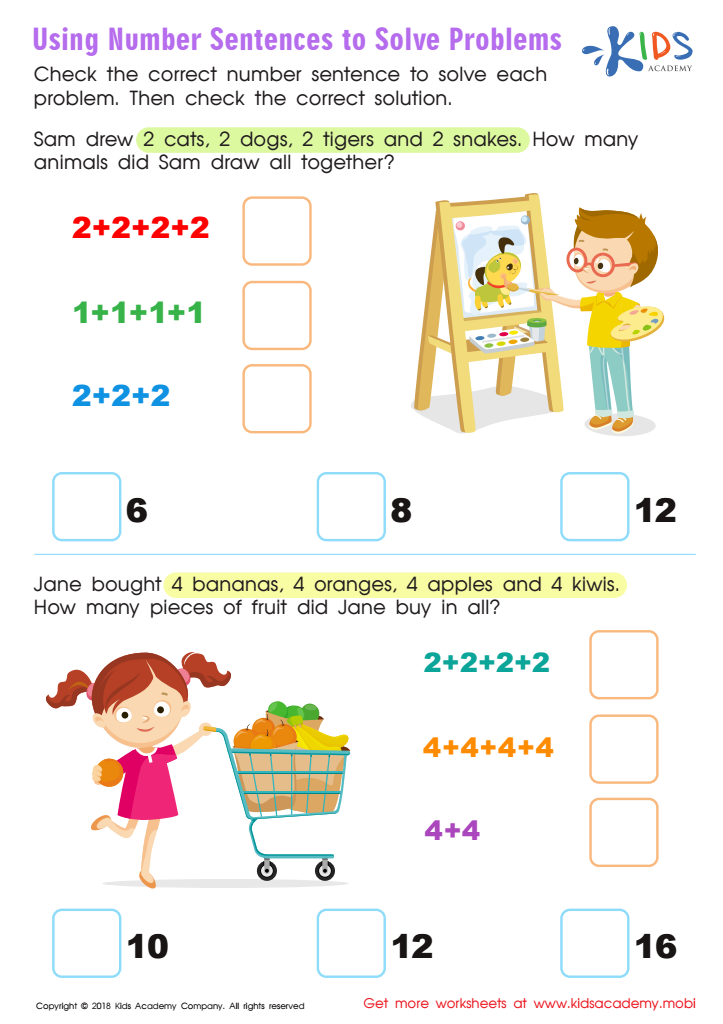
Using Number Sentences to Solve Problems Worksheet
Solving math problems requires an efficient strategy. Picture representation can help young mathematicians with basic addition problems, especially when it involves repeated addends. As they gain confidence, they'll be able to apply their number sentence solving abilities to more complex equations.
 Assign to My Students
Using Number Sentences to Solve Problems Worksheet
Worksheet
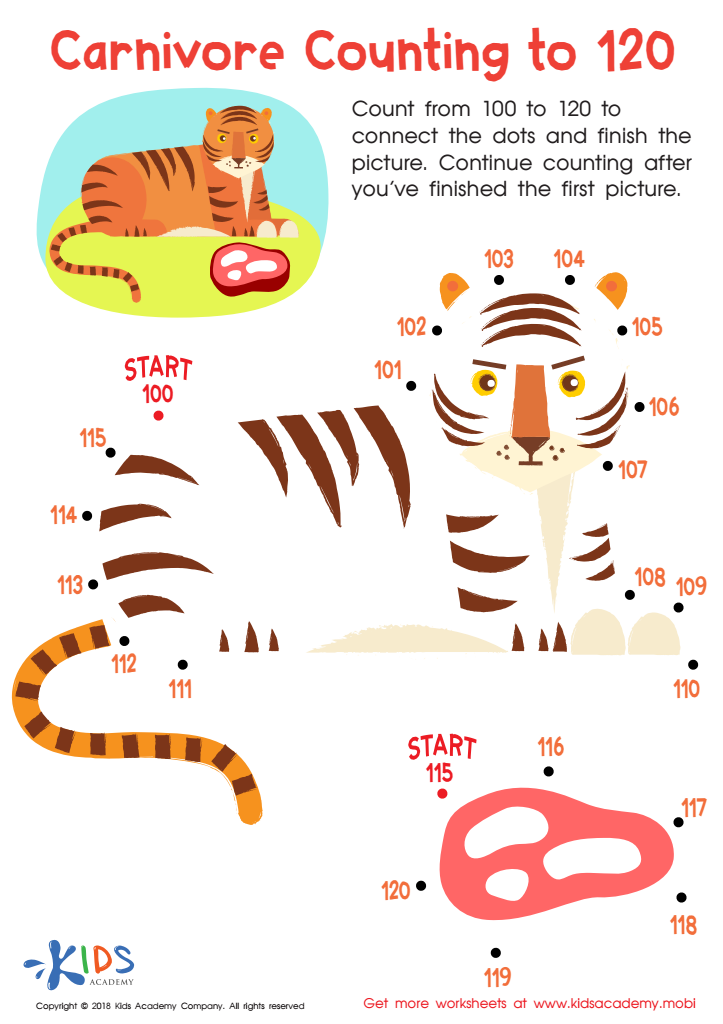
Carnivore Counting to 120 Worksheet
Ask your child to name some popular carnivores. Can they tell you what the animal in the worksheet is? A Tiger? Get them to count from 100 to 120 to connect the dots. After they finish the first picture, keep counting to help them practice!
Carnivore Counting to 120 Worksheet
Worksheet
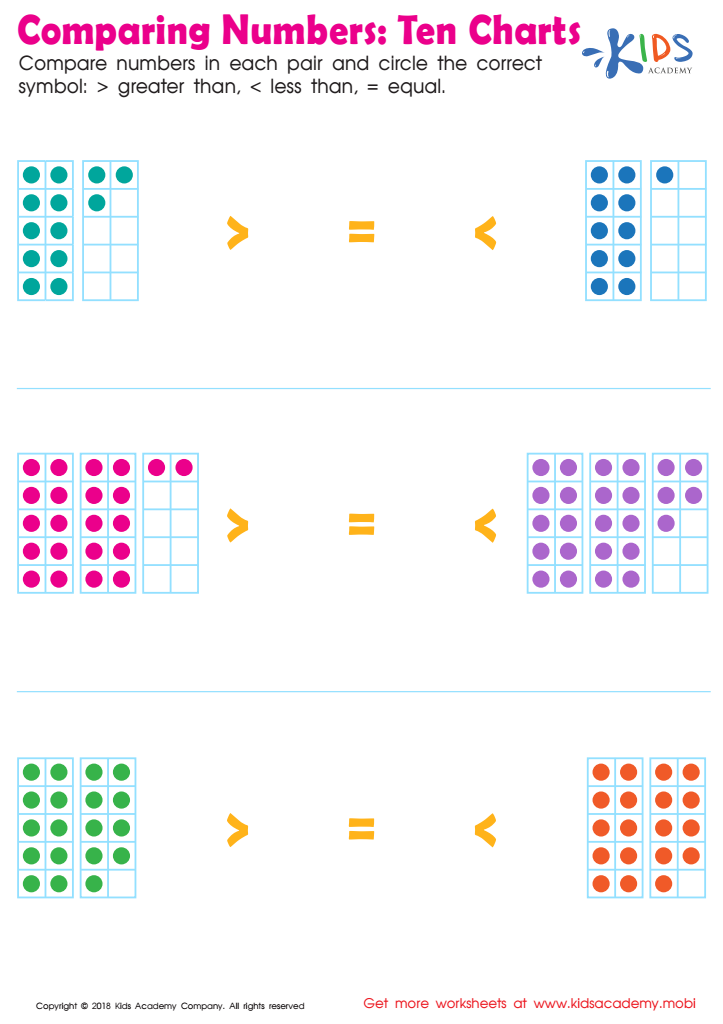
Ten Charts Worksheet
Help your child learn numbers in a creative way using this printable worksheet. They'll learn the difference between numbers, how to add them, and the symbols of "greater than", "less than" and "equals to". They can compare two sides, and identify which is greater, less or equal. Let their maths knowledge bloom!
Ten Charts Worksheet
Worksheet
Join Kids Academy for Free
Who is primarily going to use this learning content?








Understanding sequences in mathematics is crucial for children aged 7-9 as it sets the foundation for a wide array of mathematical concepts. At this stage, children begin to recognize patterns and develop critical thinking skills that are essential for problem-solving. Sequences introduce concepts such as order, logic, and the ability to predict future events based on established patterns, all of which are vital skills not just in mathematics, but in daily life and other subjects.
Parents and teachers should care about this learning because mastering sequences enhances a child's ability to grasp more complex mathematical ideas in the future, such as functions and algebra. Moreover, recognizing numerical relationships fosters confidence and encourages students to engage with math rather than shy away from it.
An understanding of sequences also nurtures creativity and innovation, as children learn to envision and manipulate numbers in various ways, laying the groundwork for advanced topics in the later grades. By supporting their children’s grasp of sequences, parents and teachers help equip students with invaluable skills that transcend mathematics, preparing them for success in a rapidly evolving world where logical reasoning and analytical skills are key.








