Visual fraction representation Math Worksheets for Ages 7-9
3 filtered results
-
From - To
Discover engaging Visual Fraction Representation Math Worksheets designed for children aged 7-9. Our carefully curated worksheets help young learners grasp the concept of fractions effortlessly through vibrant, visual aids and interactive activities. Students can strengthen their understanding of halves, thirds, quarters, and other common fractions while boosting their problem-solving skills. Perfect for both classroom and home use, these worksheets provide hands-on practice to enhance mathematical confidence. Explore how visual learning can make math fun and intuitive with Kids Academy. Foster a solid foundation for future math success today!
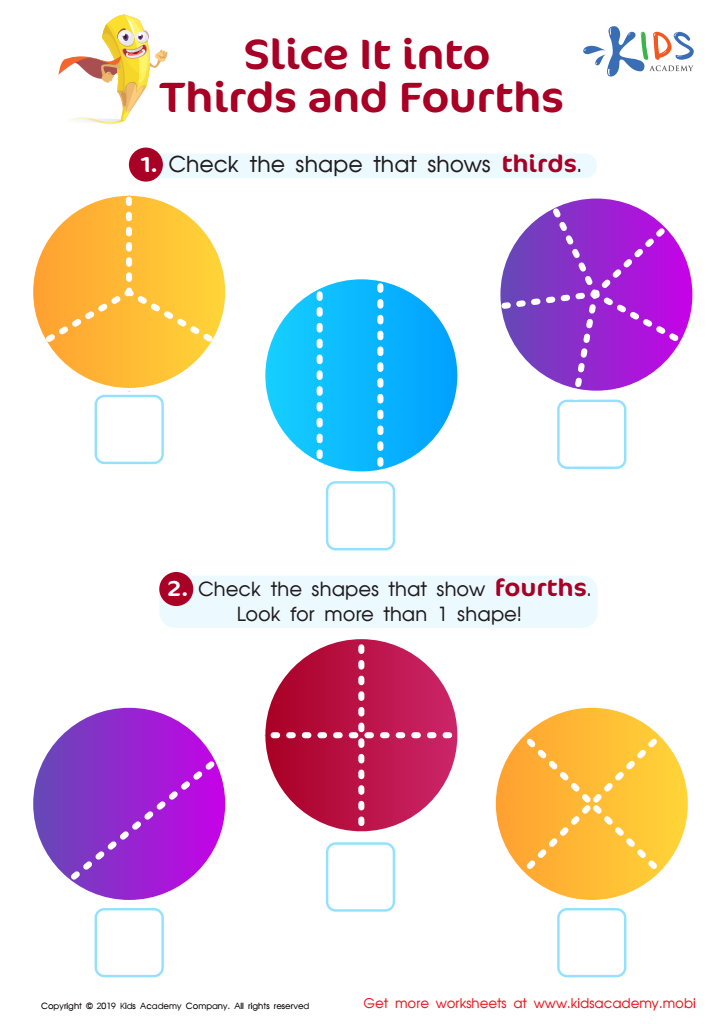
Slice in Thirds Fourths Worksheet
 Assign to My Students
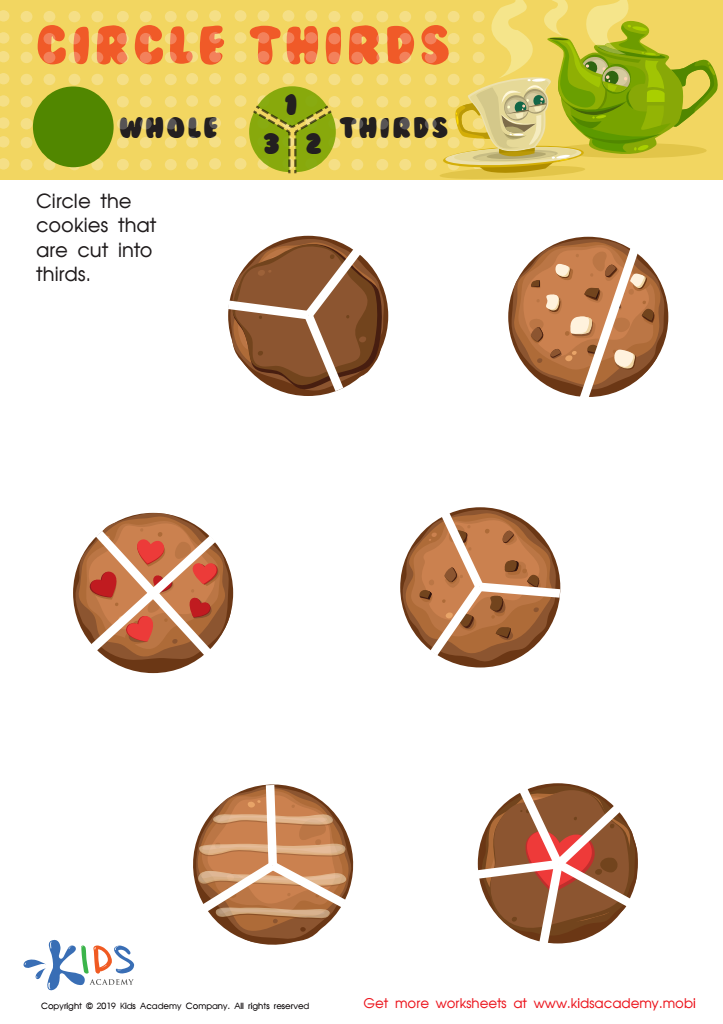
Circle Thirds Worksheet








Visual fraction representation is a crucial element in early math education, particularly for children between the ages of 7 and 9, as it significantly enhances understanding and retention. At this developmental stage, many kids are concrete thinkers who grasp concepts better when they can see and manipulate them. Visual representations—such as pie charts, number lines, and fraction bars—transform the abstract concept of fractions into concrete images that kids can easily understand.
By employing visual tools, students are more likely to recognize fractions as parts of a whole, compare sizes, and comprehend equivalence and improper fractions. Visuals can demystify seemingly complex operations, such as addition and subtraction of fractions, by providing intuitive, step-by-step illustrations.
Moreover, incorporating visual fraction models helps bridge the gap between conceptual understanding and procedural fluency. When students can visualize what ½ or ¾ looks like, they're better equipped to solve problems correctly and confidently. This foundation in fractions is not just essential for higher-level math and science, but it also aids everyday tasks, such as cooking, dividing items, and managing finances.
For parents and teachers, nurturing a strong grasp of fractions through visual representation ensures that children develop a positive attitude toward math, paving the way for future academic success. Encouraging this skill at an early age can spark a lifelong interest in learning and problem-solving.








