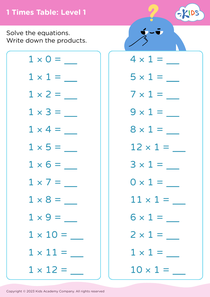
Mental math skills Mixed Times Tables Worksheets for Ages 7-9
3 filtered results
-
From - To
Enhance your child's mental math skills with our engaging Mixed Times Tables Worksheets, specifically designed for ages 7-9. These thoughtfully crafted worksheets aim to boost multiplication fluency, enabling kids to quickly and accurately recall their times tables. Aimed at fostering confidence in mathematics, they blend fun exercises with essential practices to ensure knowledge retention. As students tackle diverse multiplication challenges, they will develop critical problem-solving abilities and a solid foundation for future math success. Explore our vibrant, interactive materials that make learning math enjoyable and effective! Perfect for both classroom use and homeschooling, these resources will inspire a love for learning.
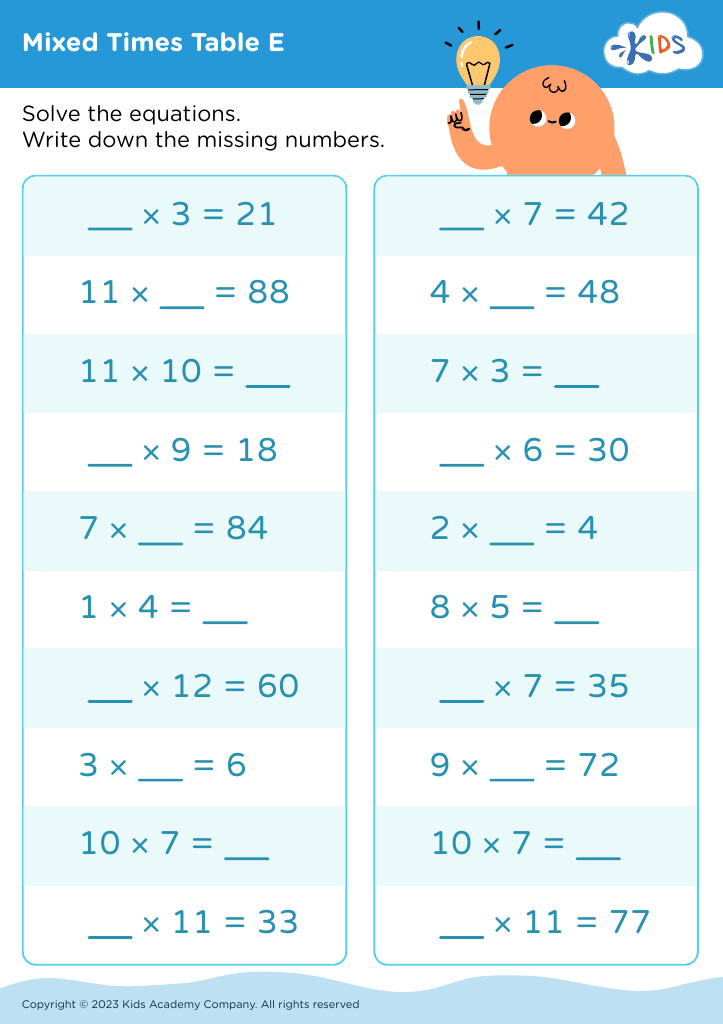
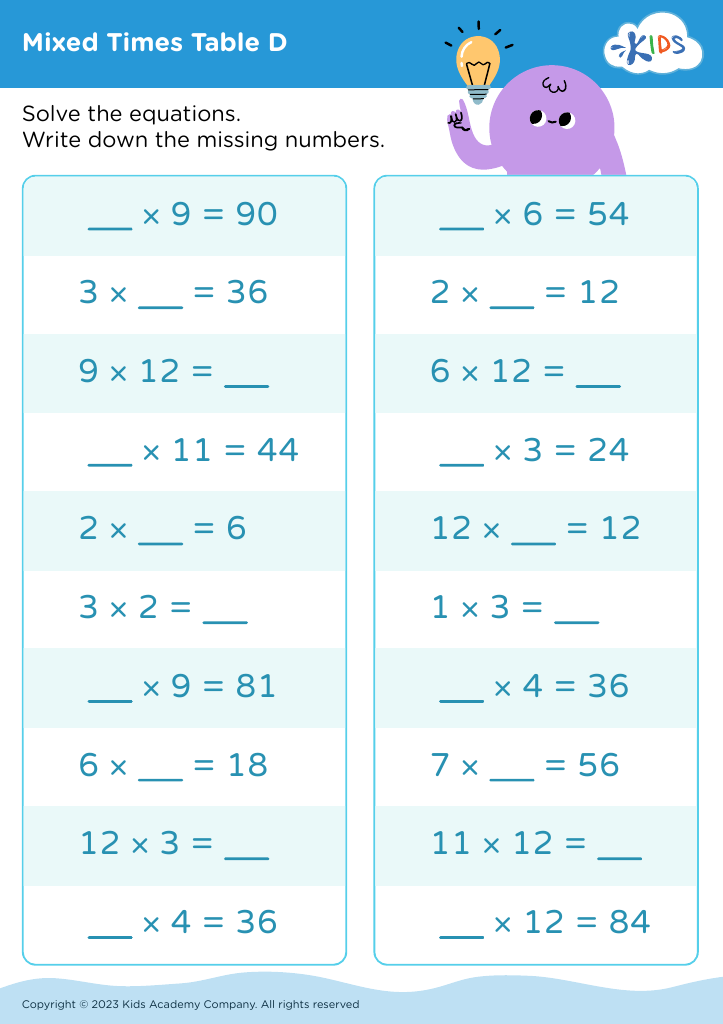
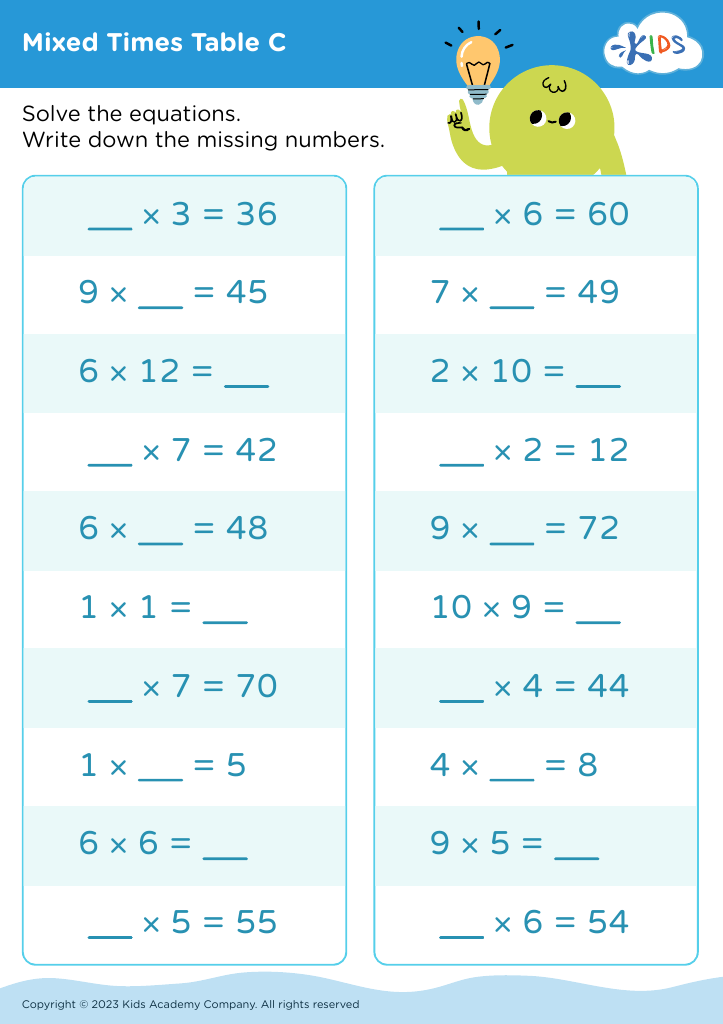


Mental math skills, especially in mixed times tables, are crucial for children aged 7-9 as they form the foundation for more complex mathematical concepts. These skills enhance numerical fluency, enabling students to perform calculations efficiently without relying on calculators. Mastering mixed times tables improves cognitive abilities by fostering problem-solving skills and promoting critical thinking.
Parents and teachers should prioritize mental math because it encourages children to engage actively in their learning process. It helps build confidence, as quick multiplication can lead to a sense of accomplishment. Moreover,strong mental math skills facilitate better performance in various subjects, not just math, as these skills can be applied to everyday situations, reinforcing logical reasoning and analytical thinking.
Additionally, developing these skills can minimize math anxiety, a common issue among children. By practicing mental math, kids learn to tackle challenges head-on, approaching problems with a positive mindset. This growth mindset is invaluable as they move on to more advanced topics. Lastly, fostering an environment where mental math is valued helps create a culture of arithmetic understanding, which is essential for lifelong learning. Overall, emphasis on mental math lays a solid groundwork for future academic success.