Understanding times tables Times Tables Worksheets for Ages 7-9
6 filtered results
-
From - To
Unlock the secrets of multiplication with our engaging Times Tables Worksheets designed for children ages 7-9! This resource helps young learners grasp the essential concepts behind times tables while making math fun and accessible. Through interactive activities and visually appealing exercises, kids will develop essential multiplication skills, build confidence, and enhance their arithmetic fluency. Our printable worksheets cater to various learning styles, ensuring that every child can excel. Whether used in the classroom or at home, these worksheets offer the perfect blend of practice and enjoyment. Start your journey to mastering times tables today and watch your child's math skills flourish!
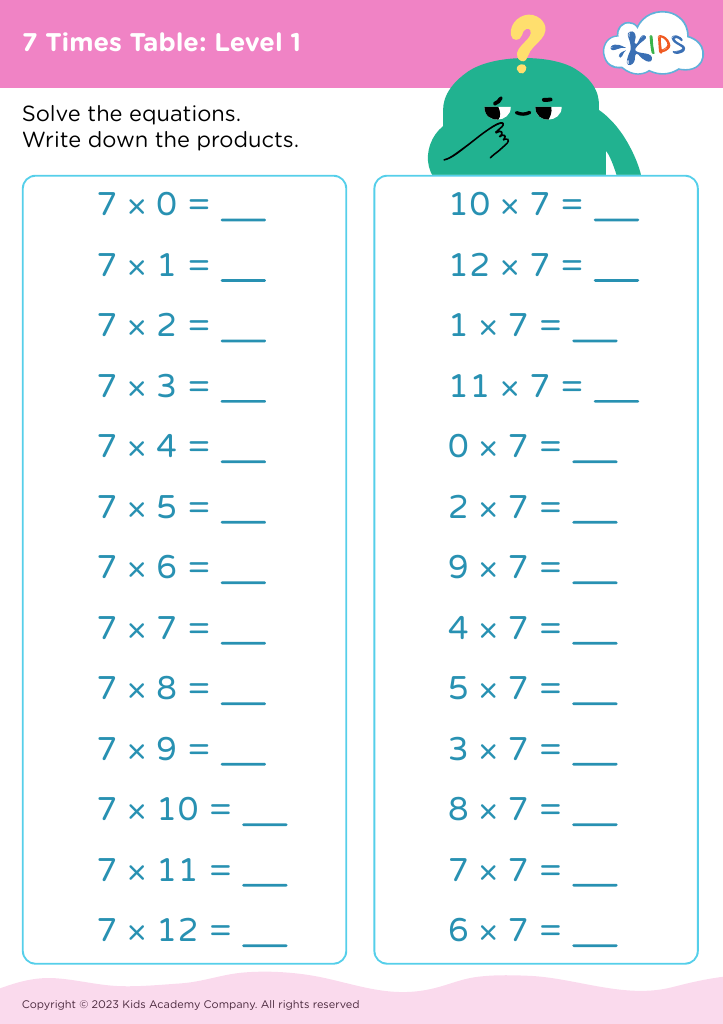
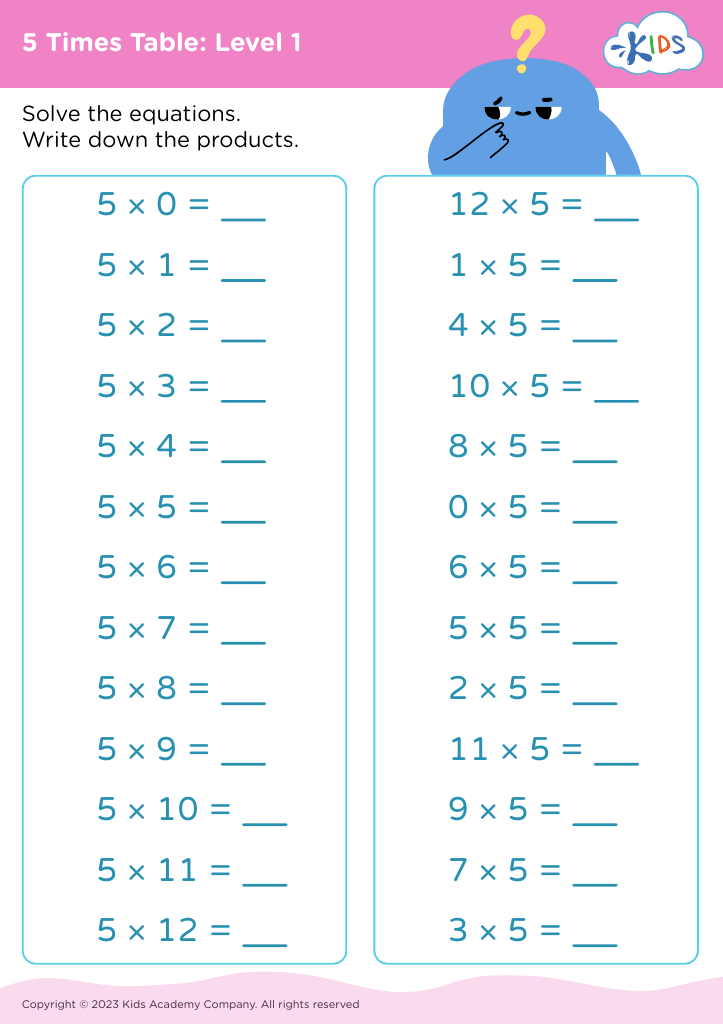
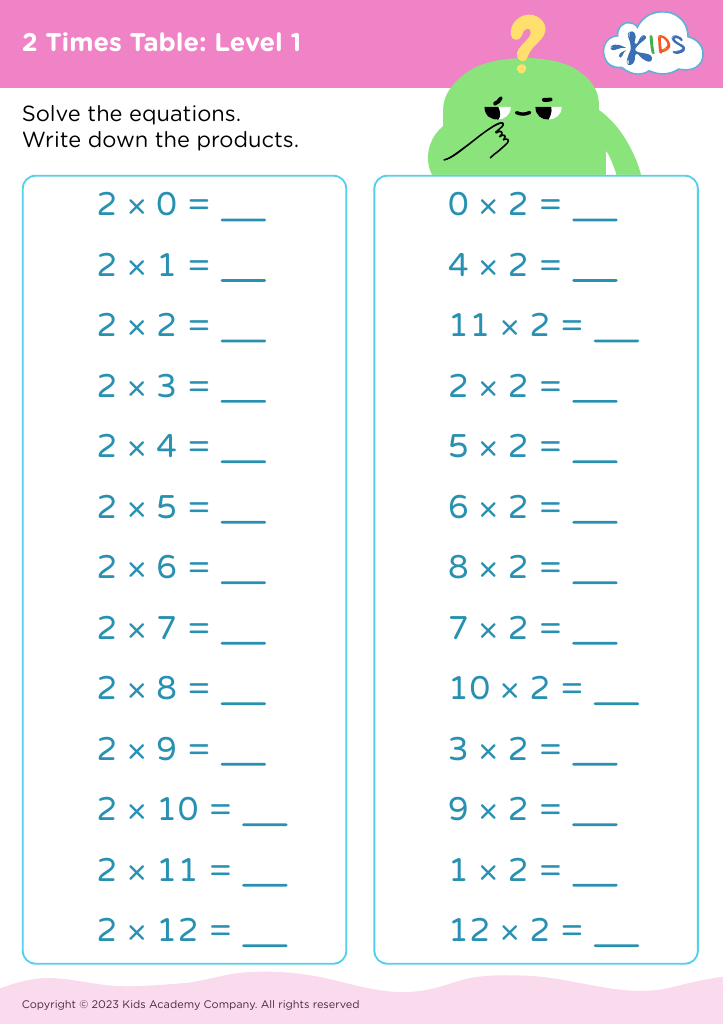
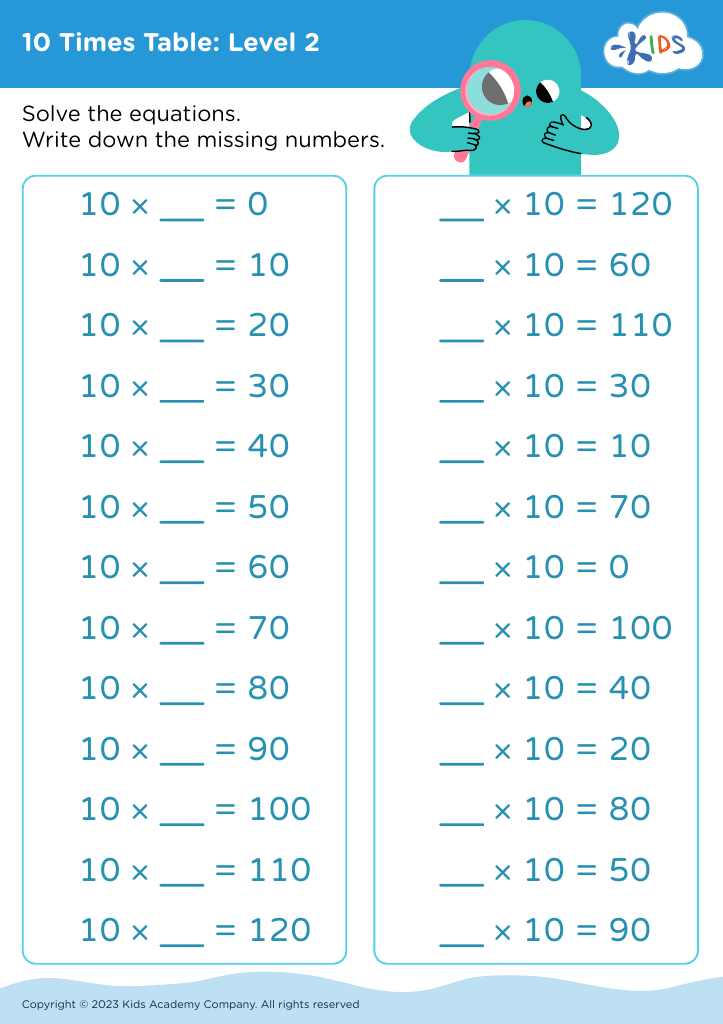
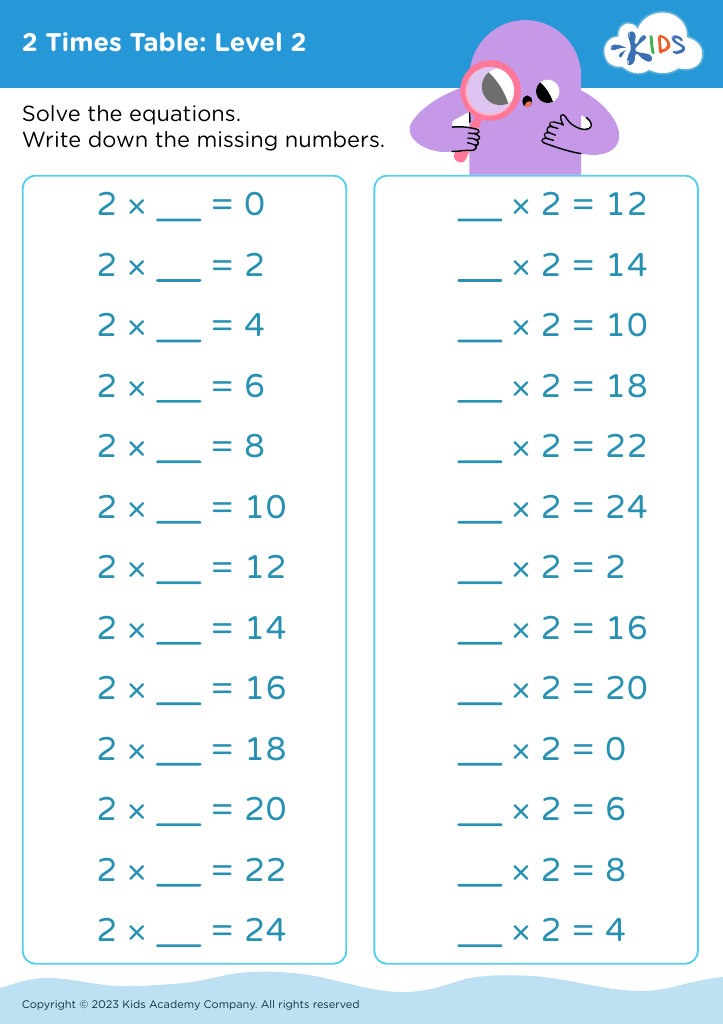
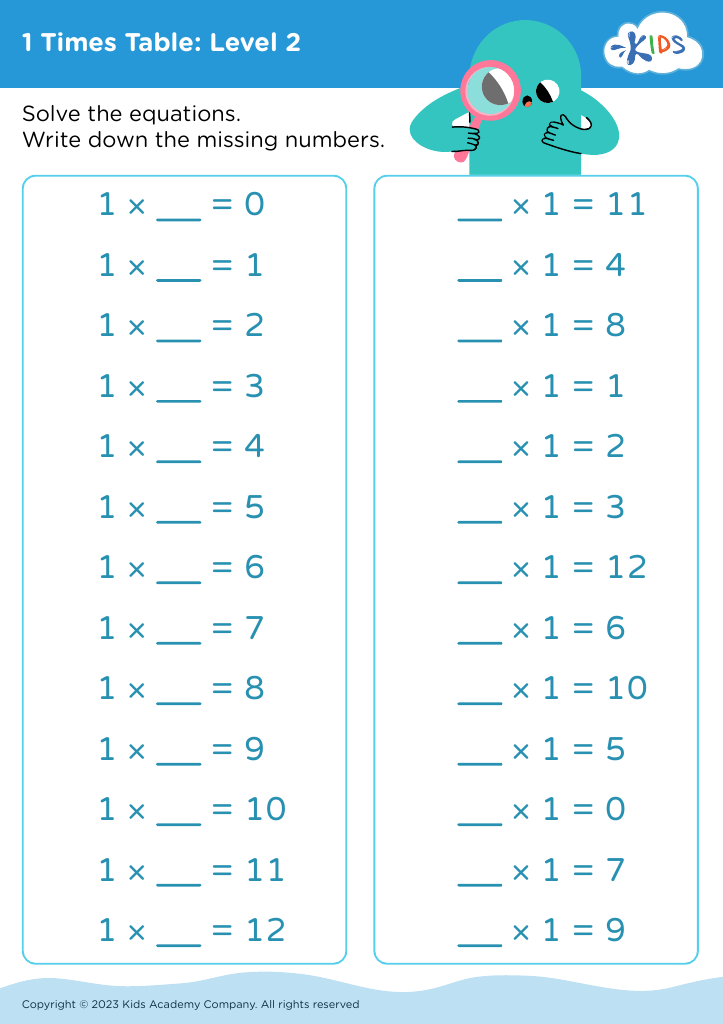





Understanding times tables is crucial for children aged 7-9 as it forms a foundational skill for their mathematical development. Mastering multiplication enhances their ability to tackle more complex math concepts in later grades, such as division, fractions, and algebra. This age group is also crucial for establishing a positive attitude towards math, making early successes in multiplication vital for building confidence.
Furthermore, learning times tables bolsters critical thinking and problem-solving skills. Children become adept at recognizing patterns and can apply this knowledge to real-life situations, such as calculating prices, measuring distances, or splitting tasks among friends. For teachers and parents, fostering this understanding ensures that children are not merely memorizing numbers but truly grasping the concepts behind them.
Additionally, proficiency in times tables encourages independence during homework and daily activities, reducing reliance on technology and fostering self-sufficiency. When they understand their times tables, students are more likely to engage actively in math conversations, enhancing their overall learning experience. By prioritizing this skill, teachers and parents are equipping children with the tools they need for future academic success and everyday problem-solving. Ultimately, investment in mastering times tables creates a strong foundation upon which further mathematical understanding can be built.








