
Analytical thinking Reading Non-Fiction Worksheets for Ages 7-9
3 filtered results
Difficulty Level
Grade
Age
-
From - To
Subject
Activity
Standards
Enhance your child's analytical thinking skills with our engaging Non-Fiction Reading Worksheets designed for ages 7-9. These worksheets encourage critical thinking as young readers explore informative texts, analyze content, and draw connections. Each activity encourages children to evaluate information, identify main ideas, and develop reasoning skills, laying a strong foundation for academic success. Perfect for classroom or home use, our resources are aligned with educational standards and promote independent learning. Watch as your child becomes more confident and proficient in understanding non-fiction material through fun and interactive exercises. Visit us to foster a love for learning today!
Favorites
With answer key
Interactive
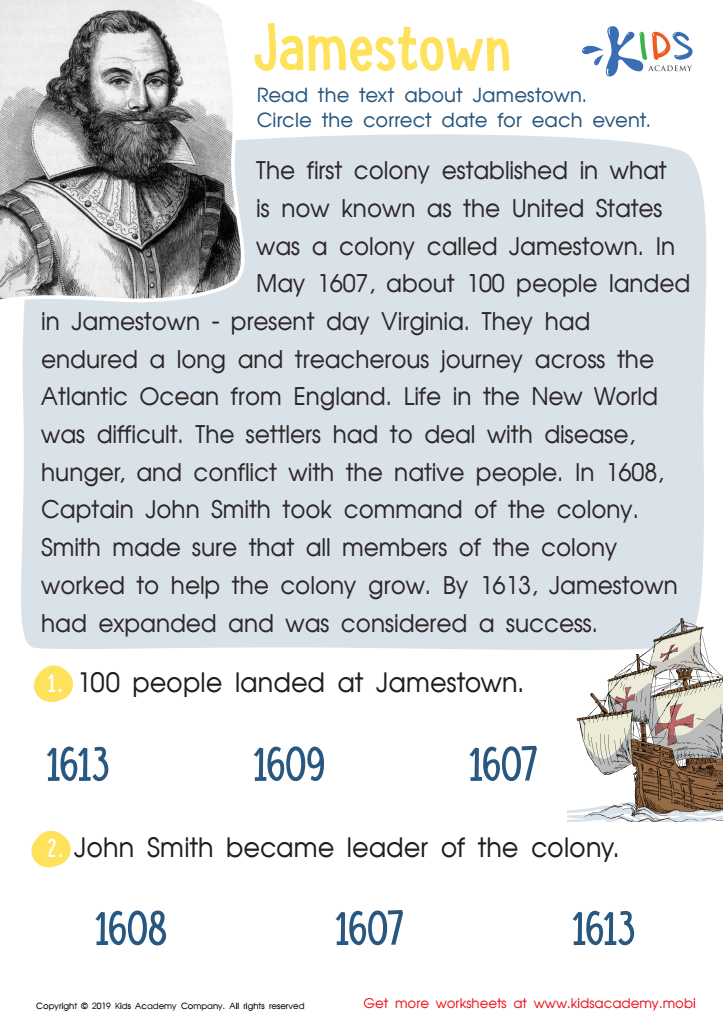
Jamestown Worksheet
Help your kids build vocabulary by reading simple texts and stories to them. This exercise helps them practice reading and grammar, and increases their knowledge of a topic. In this worksheet, kids learn about Jamestown: read text aloud and help them circle the correct date for each event.
 Assign to My Students
Jamestown Worksheet
Worksheet
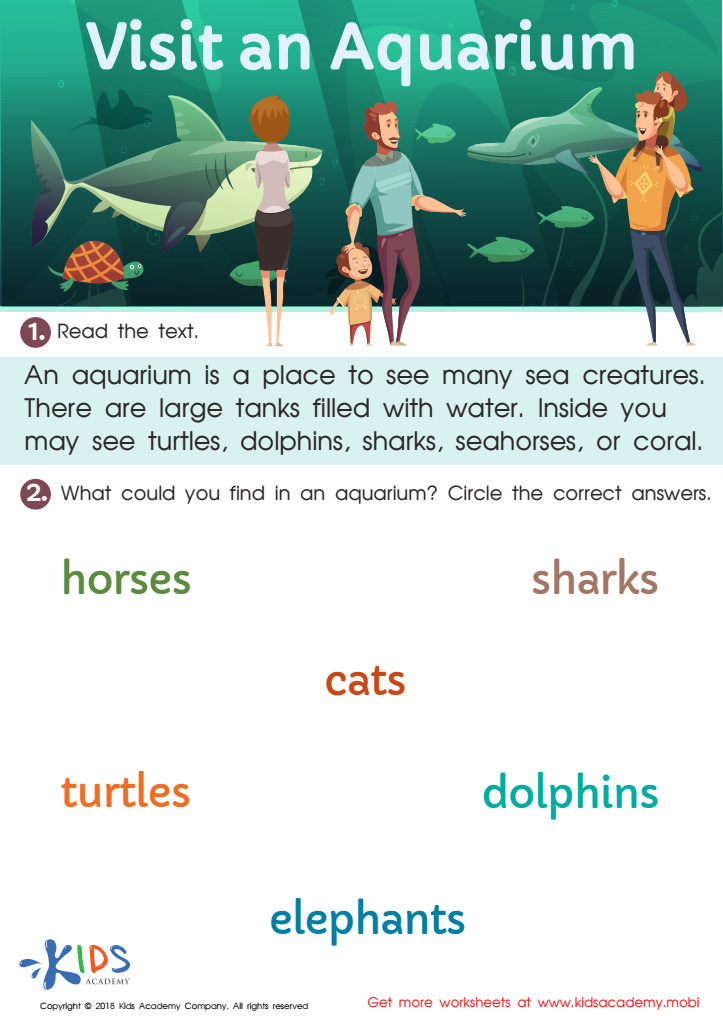
Visit an Aquarium Worksheet
Have your kids ever been to an aquarium? It's a great place to see a variety of sea creatures, like turtles, dolphins, sharks and fish. If they're fascinated by sea life, this worksheet is perfect! Help them circle the aquarium animals among the words in the picture.
Visit an Aquarium Worksheet
Worksheet
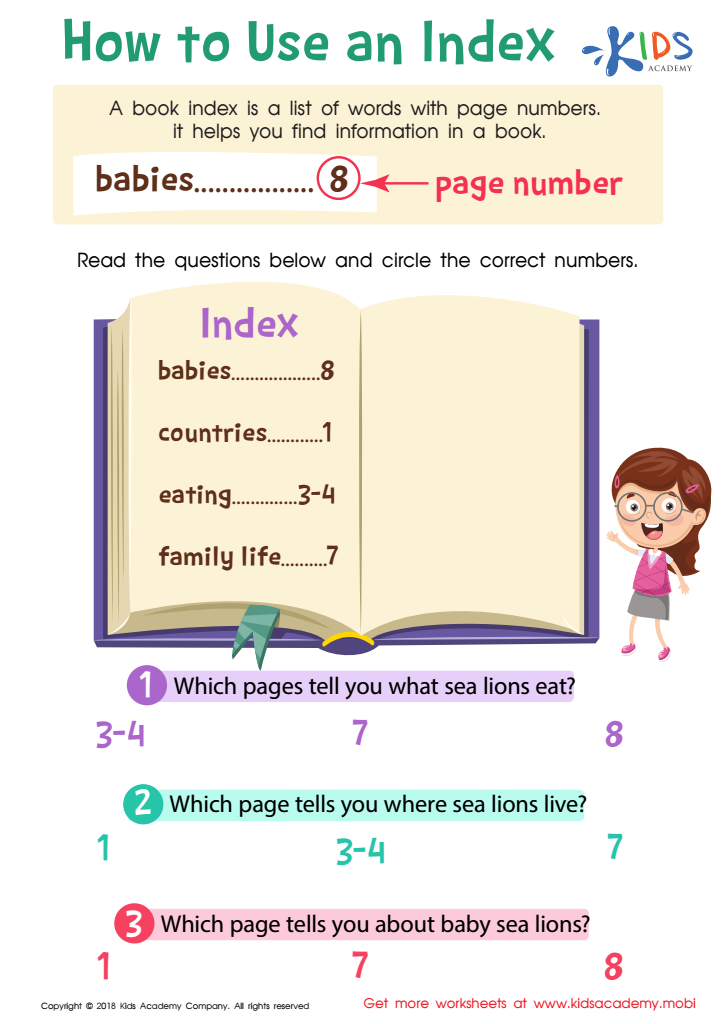
How Use Index Worksheet
Hand your kids a book, point out the index and explain that it's a list of words with page numbers. Ask them to look at the index in the worksheet and circle the correct number to the questions. Every book must have an index to help readers find chapters or information they need.
How Use Index Worksheet
Worksheet
Join Kids Academy for Free
Who is primarily going to use this learning content?








Parents and teachers should prioritize analytical thinking in reading non-fiction for children aged 7-9 for several compelling reasons. At this developmental stage, children begin to cultivate critical thinking skills, which are fundamental for academic success and informed decision-making in everyday life. Engaging with non-fiction texts allows children to explore diverse topics, understand the world around them, and develop a mindset geared towards inquiry and exploration.
Analytical thinking empowers young readers to evaluate information, discern facts from opinions, and recognize bias, thereby fostering media literacy—a crucial skill in today’s information-rich landscape. When children learn to ask questions about what they read, they enhance their comprehension and retention, making reading a valuable learning experience rather than mere rote memorization.
Moreover, analytical reading promotes curiosity and a love for learning. By discussing concepts and encouraging children to make connections with their own lives, parents and teachers can deepen their understanding of complex subjects. This holistic approach not only supports literacy development but also lays the groundwork for lifelong learning habits, resilience in problem-solving, and an ability to engage thoughtfully with the challenges they will face in the future. Engaging with non-fiction through analytical thinking is an investment in a child’s intellectual and personal growth.








