Historical Knowledge Reading Non-Fiction Worksheets for Ages 7-9
5 filtered results
-
From - To
Enhance your child's historical understanding with our "Historical Knowledge Reading Non-Fiction Worksheets" for ages 7-9. These expertly crafted resources delve into fascinating historical events and figures, promoting critical thinking and reading comprehension. Each worksheet is designed to captivate young learners, combining rich narratives with engaging activities that reinforce knowledge retention. Perfect for home or classroom use, our worksheets support curriculum standards and inspire a lifelong interest in history. Empower your child to develop crucial learning skills while exploring the past with our interactive and educational worksheets. Visit Kids Academy to download and start your historical adventure today!
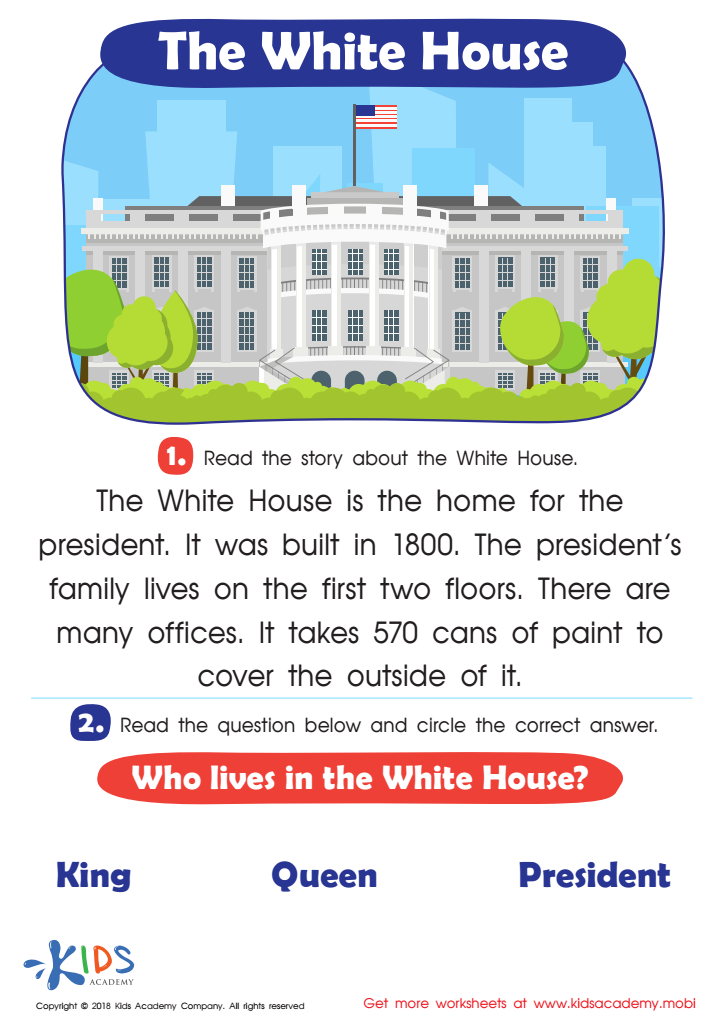
White House Worksheet
 Assign to My Students
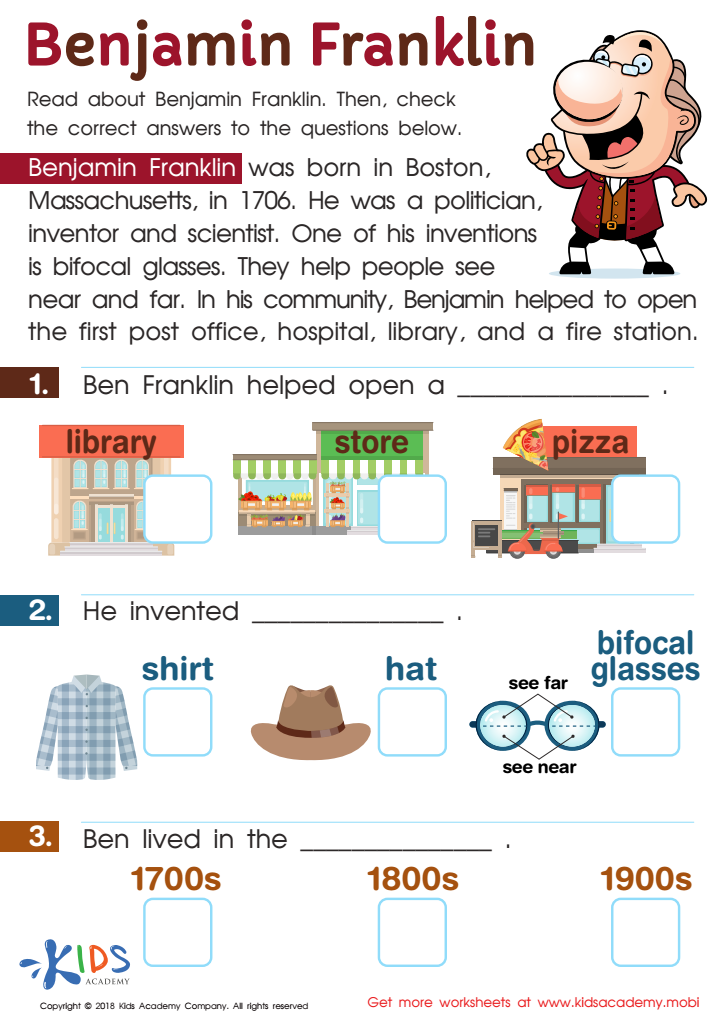
Benjamin Franklin Worksheet
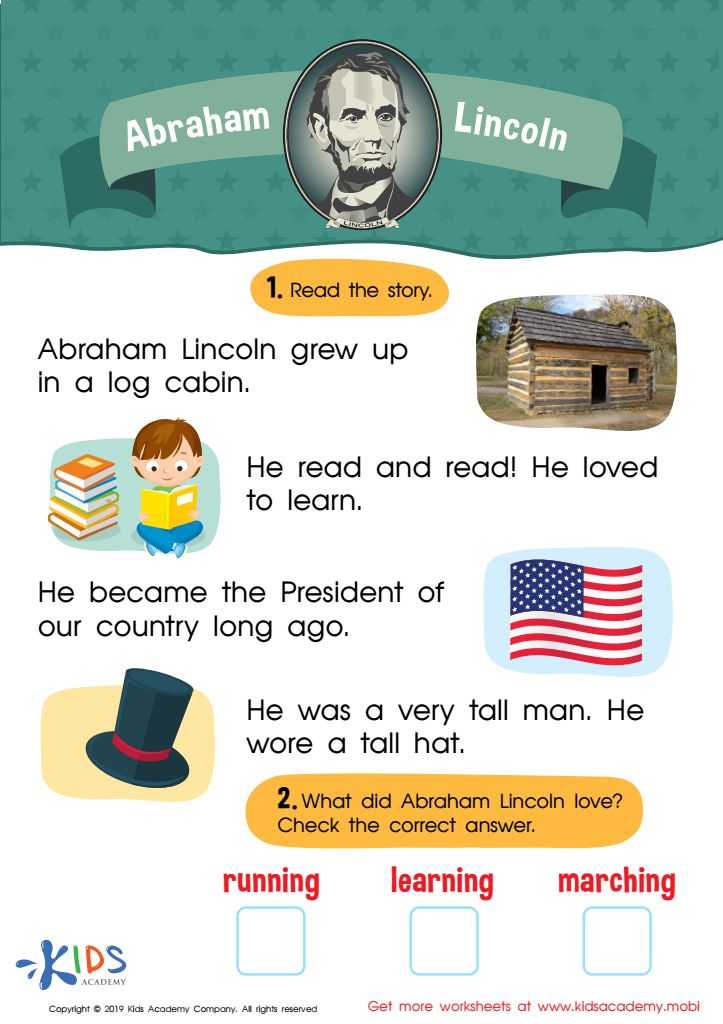
Abraham Lincoln Worksheet
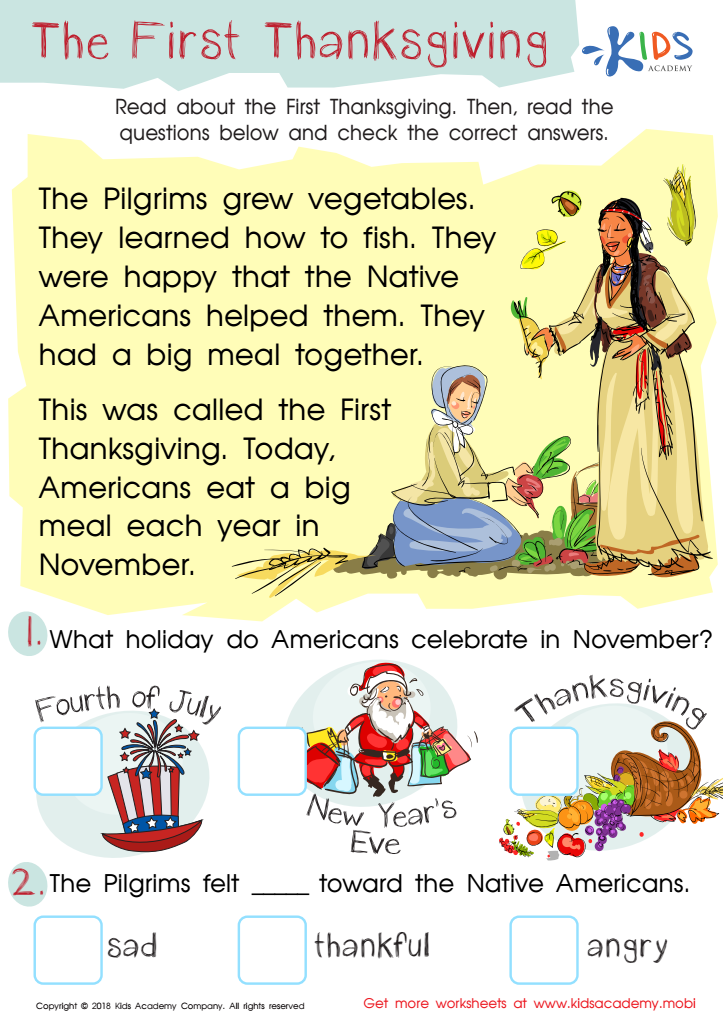
Assessment: First Thanksgiving Worksheet
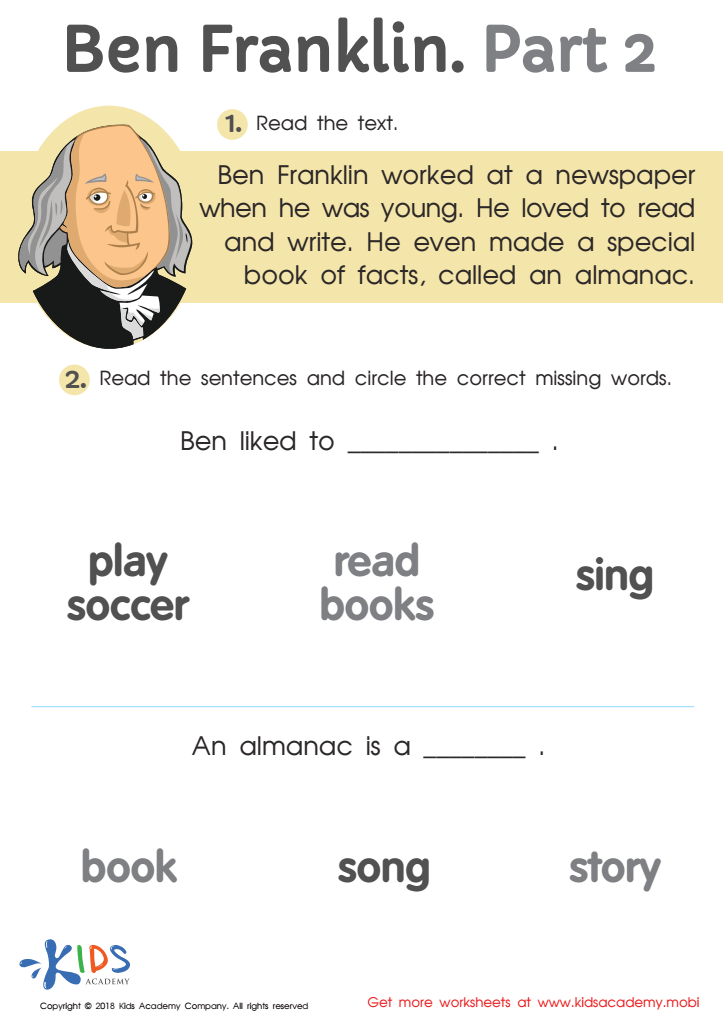
Ben Franklin Part 2 Worksheet








Cultivating historical knowledge through non-fiction reading for children aged 7-9 is crucial as it lays the foundation for a well-rounded education. At this formative stage, young minds are particularly receptive to new information, making it an ideal time to introduce them to the past events and figures that have shaped the world. This practice can enhance their understanding of the world they live in, making the connections between past and present more comprehensible and meaningful.
Reading historical non-fiction helps develop critical thinking skills, as children learn to analyze facts, understand cause and effect, and distinguish between different perspectives. It also enriches their vocabulary and comprehension abilities, as historical texts often introduce complex ideas and terminology.
Furthermore, engaging with history at a young age fosters empathy and cultural awareness. When children read about diverse cultures and historical periods, they gain an appreciation for the diversity and shared humanity that transcends time. This understanding can encourage them to become more compassionate and informed individuals.
For parents and teachers, promoting historical knowledge through non-fiction is not just about teaching dates and events; it is about cultivating informed, curious, and empathetic citizens who can better understand their roots and contribute positively to society.








