Logical Reasoning Reading Non-Fiction Worksheets for Ages 7-9
4 filtered results
-
From - To
Enhance your child's critical thinking with our "Logical Reasoning Reading Non-Fiction Worksheets" designed for ages 7-9! These engaging, educational worksheets foster essential logical reasoning skills by encouraging kids to analyze, infer, and draw conclusions from non-fiction texts. Each activity focuses on understanding and organizing information, supporting evidence-based critical thinking. Perfect for classroom or home use, our worksheets seamlessly blend fun with learning, ensuring your child develops a strong foundation in logical reasoning. Boost their reading comprehension and analytical abilities today with Kids Academy’s expertly crafted, printable worksheets!
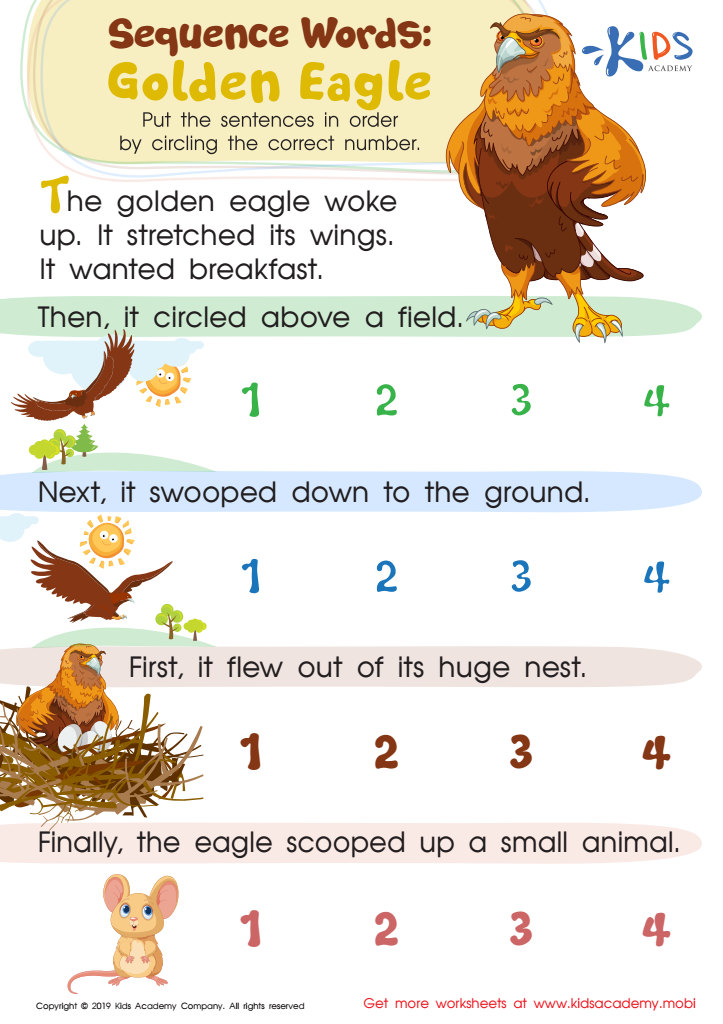
Sequence Word Eagle Worksheet
 Assign to My Students
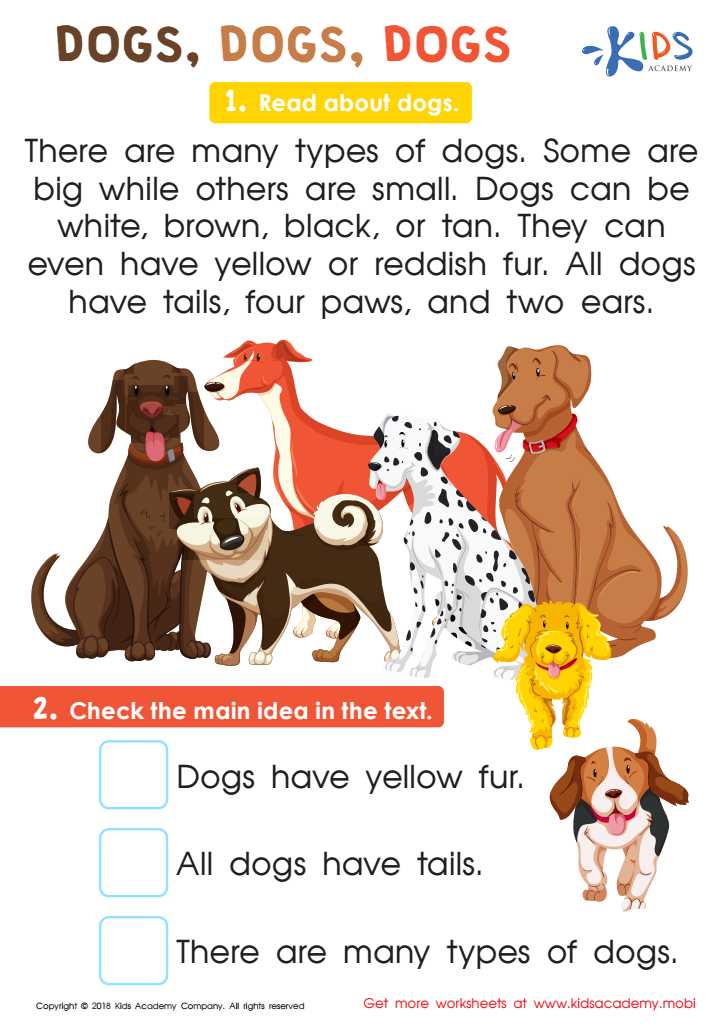
Dogs, Dogs Worksheet
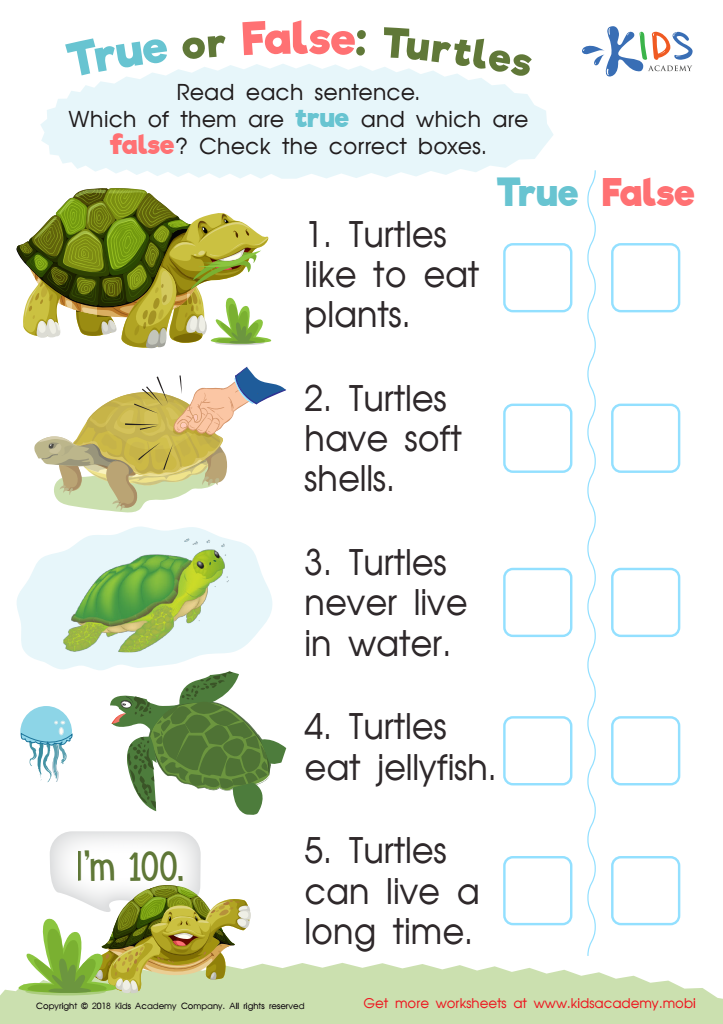
True or False: Turtles Worksheet
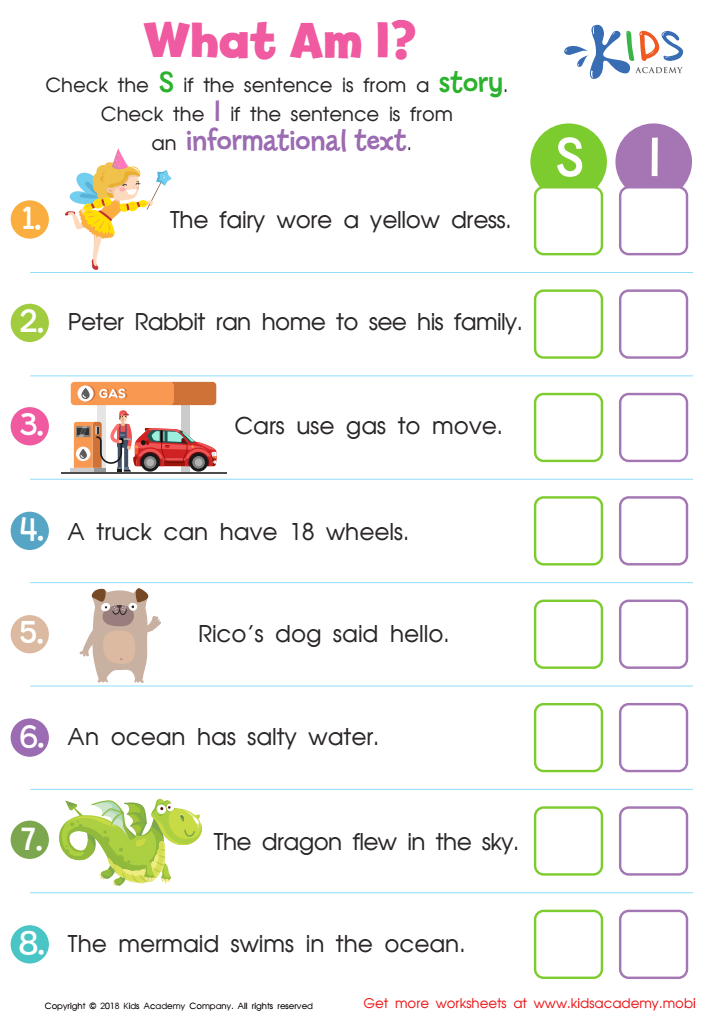
What Am I? Worksheet








Parents and teachers should prioritize logical reasoning and reading non-fiction for children aged 7-9 because these skills are foundational to critical thinking and lifelong learning. During this developmental stage, children's brains are highly receptive to new information and ways of thinking. Logical reasoning helps them understand cause and effect, make informed decisions, and solve problems systematically. It enhances their ability to follow instructions and sequences, all of which are essential skills in academic and everyday contexts.
Reading non-fiction exposes children to real-world knowledge and diverse topics, from science and history to biographies and technical subjects. This genre broadens their understanding of the world and encourages intellectual curiosity. Non-fiction reading also aids in the development of vocabulary, comprehension skills, and the ability to assimilate new information. As students engage with factual content, they learn to differentiate between opinion and evidence-based statements, fostering a more discerning mindset.
By integrating logical reasoning and non-fiction reading into early education, parents and teachers can equip children with critical tools for academic success and everyday decision-making. These skills not only support their current learning but also lay the groundwork for future educational and personal growth. Investing in these areas enhances a child's ability to think independently, understand complex concepts, and develop informed perspectives.








