Understanding life cycles Reading Non-Fiction Worksheets for Ages 7-9
3 filtered results
-
From - To
Explore the fascinating world of life cycles with our engaging "Understanding Life Cycles" reading non-fiction worksheets, designed specifically for children aged 7-9. These thoughtful resources aim to enhance reading comprehension through intriguing facts about the life processes of various organisms. Students will enjoy discovering plant and animal life cycles while developing essential literacy skills. Each worksheet includes captivating text, comprehension questions, and activities to reinforce learning, ensuring a fun and educational experience. Perfect for classroom settings or at-home learning, these worksheets will inspire young minds and foster a love for science and nature, all while improving reading abilities!
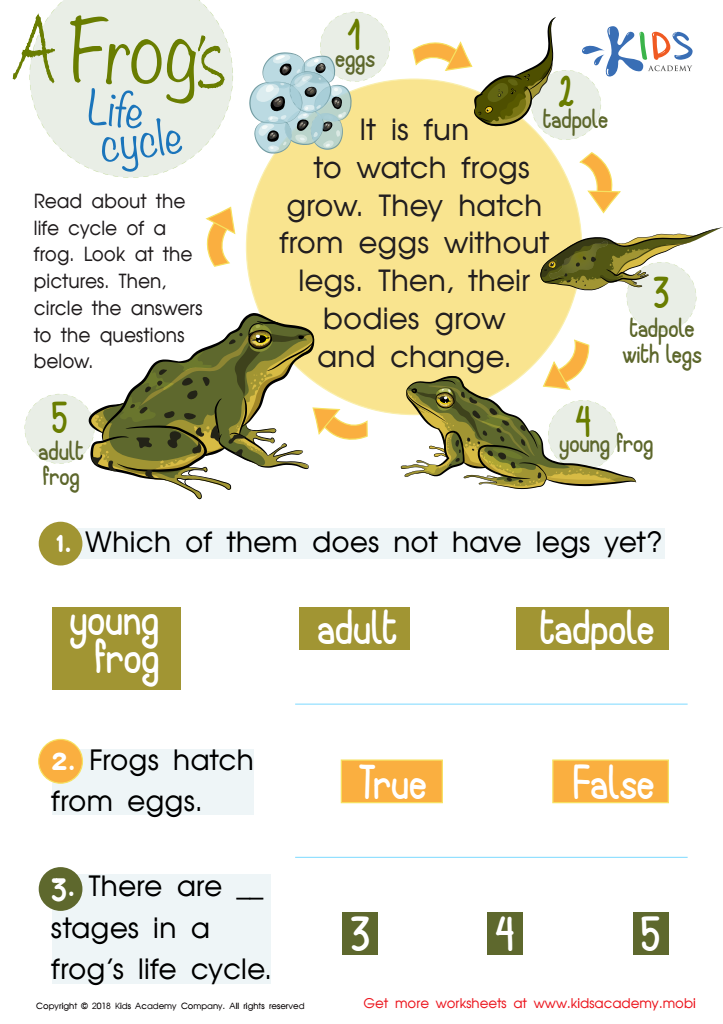
A Frog’s Life Cycle Worksheet
 Assign to My Students
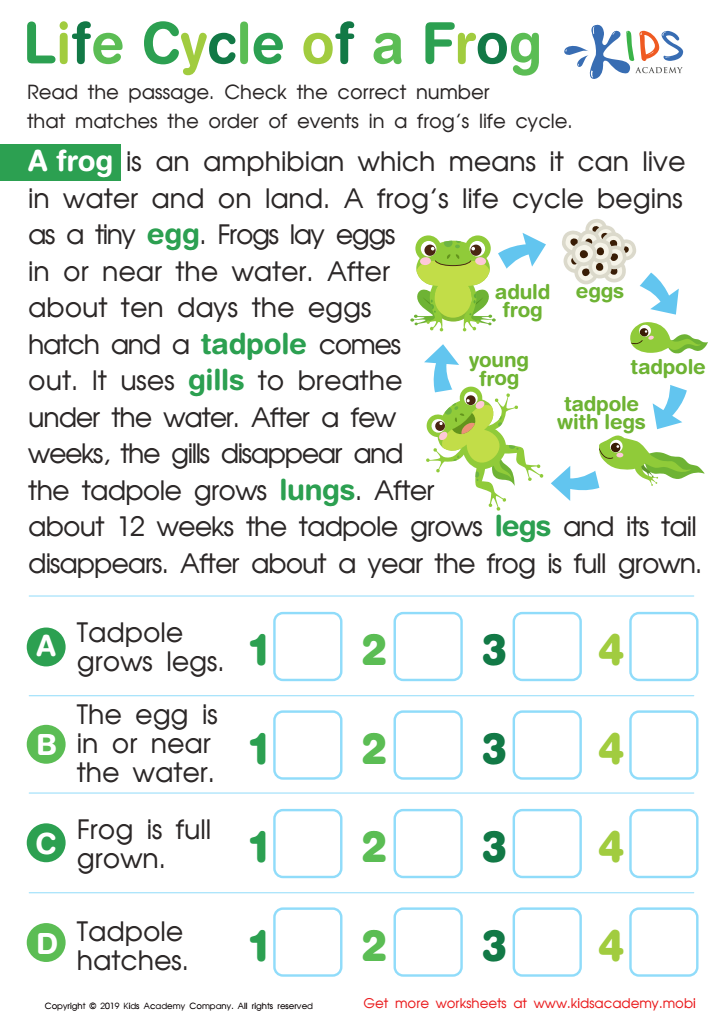
Life Cycle of a Frog Worksheet
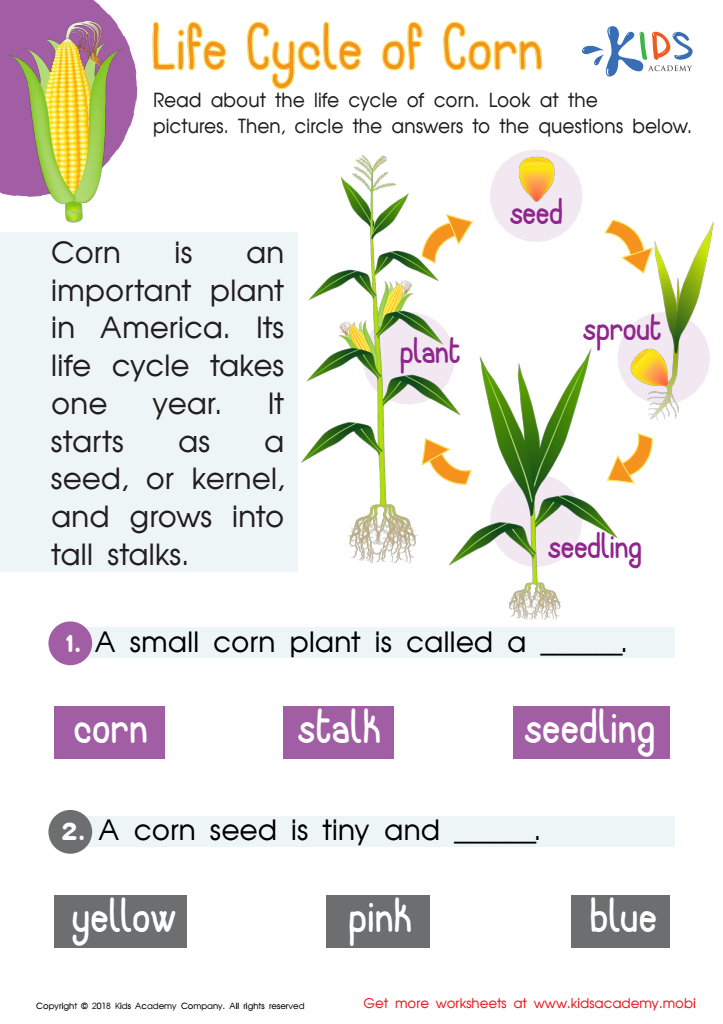
Life Cycle of Corn Worksheet







Understanding life cycles through reading non-fiction is crucial for children aged 7-9, and both parents and teachers should prioritize this. First, non-fiction texts engage young readers with factual information, enhancing their knowledge about the natural world. Learning about life cycles—such as those of plants, animals, and humans—encourages curiosity and observation, sparking a desire to explore biology further.
Additionally, non-fiction reading develops critical thinking and comprehension skills. Children learn to analyze and synthesize information, making connections between different life cycles and ecosystems. This foundation in scientific literacy is essential as they progress in their education.
Moreover, understanding life cycles fosters empathy and respect for living organisms, promoting awareness of environmental stewardship. By grasping the interconnectedness of life, children become more responsible global citizens.
Finally, these reading experiences invite discussions between parents and children or between teachers and students, strengthening communication and relationship-building. This dialogue not only solidifies understanding but also encourages an overall appreciation for learning.
In summary, fostering non-fiction reading about life cycles in young children equips them with knowledge, critical thinking skills, and a sense of responsibility—attributes that are invaluable for their development and future engagement with the world.








