Improve counting skills Sight Words Worksheets for Ages 7-9
4 filtered results
-
From - To
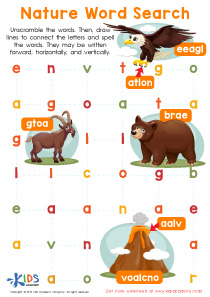
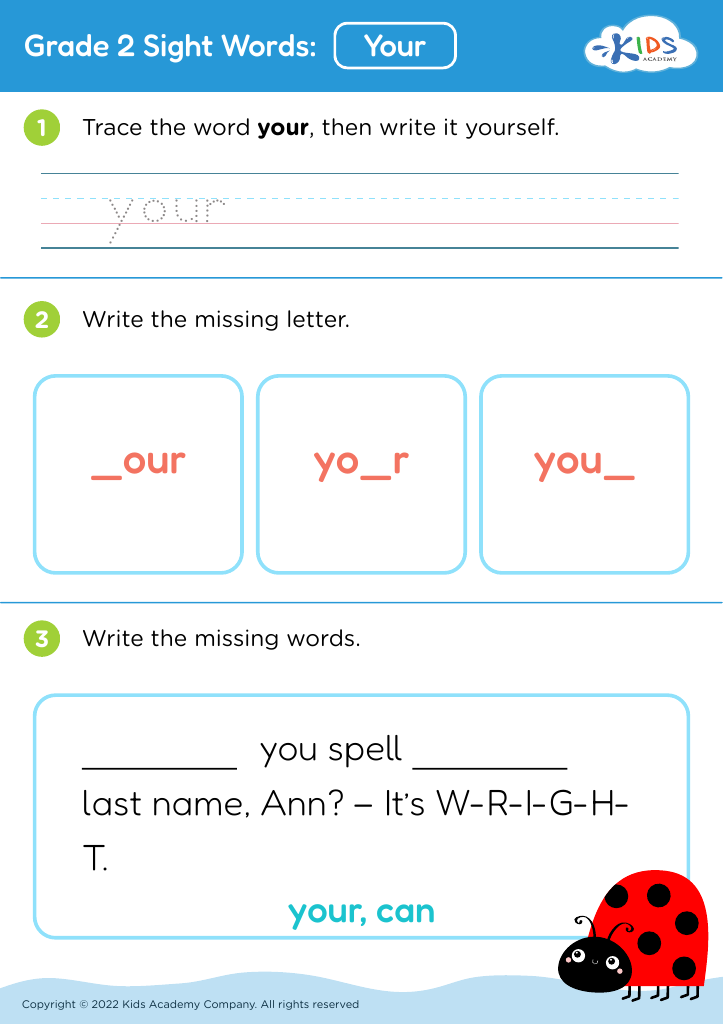
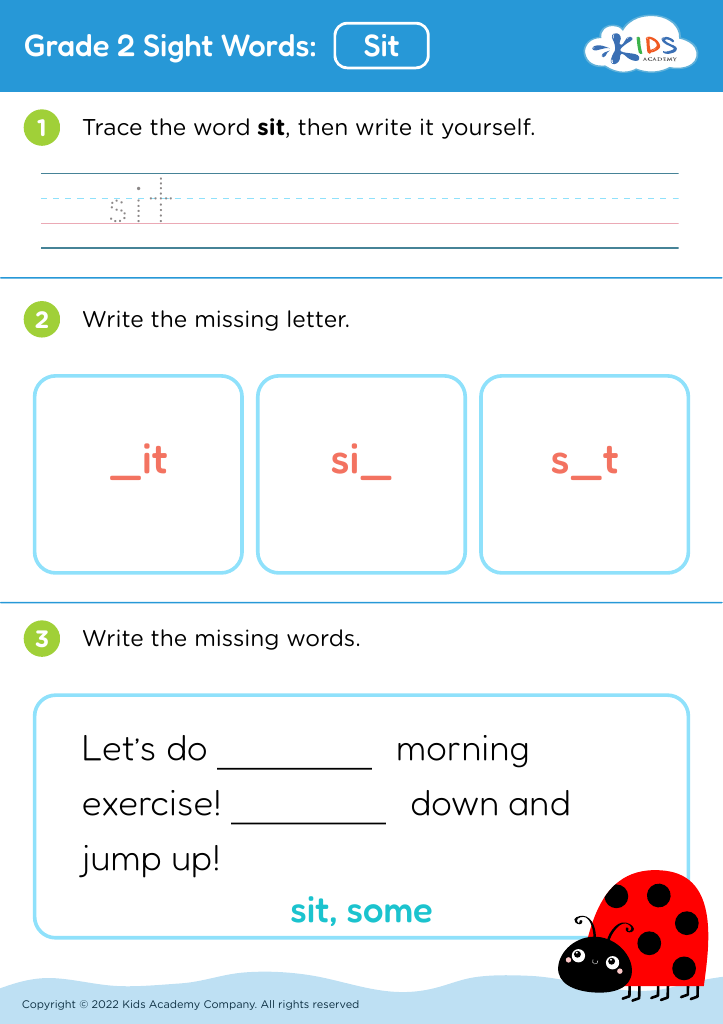
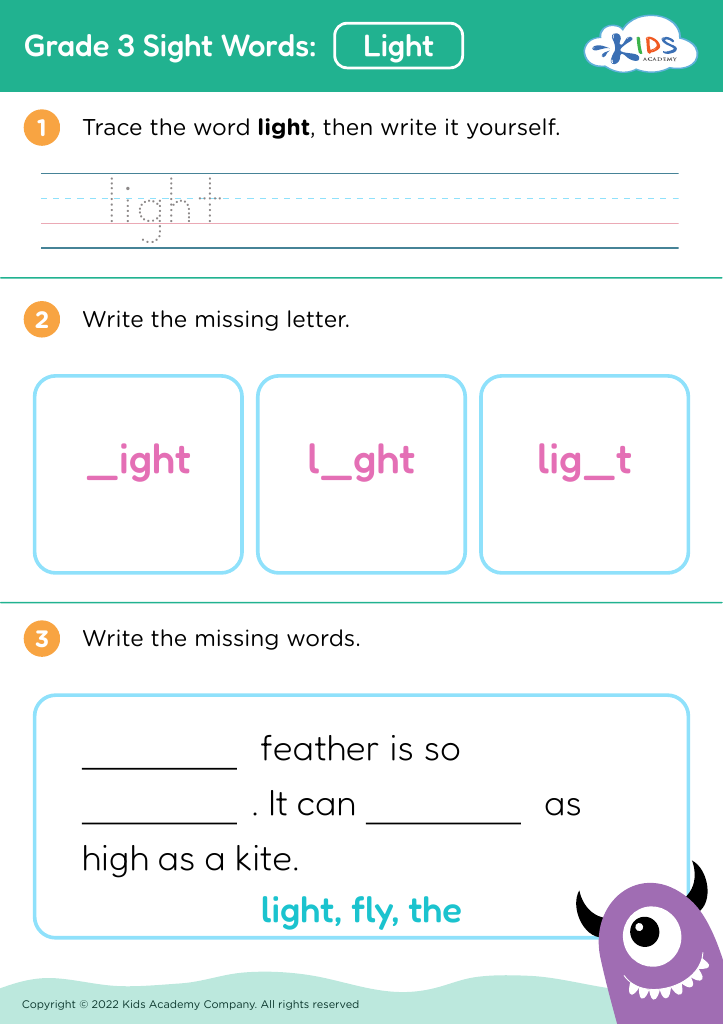
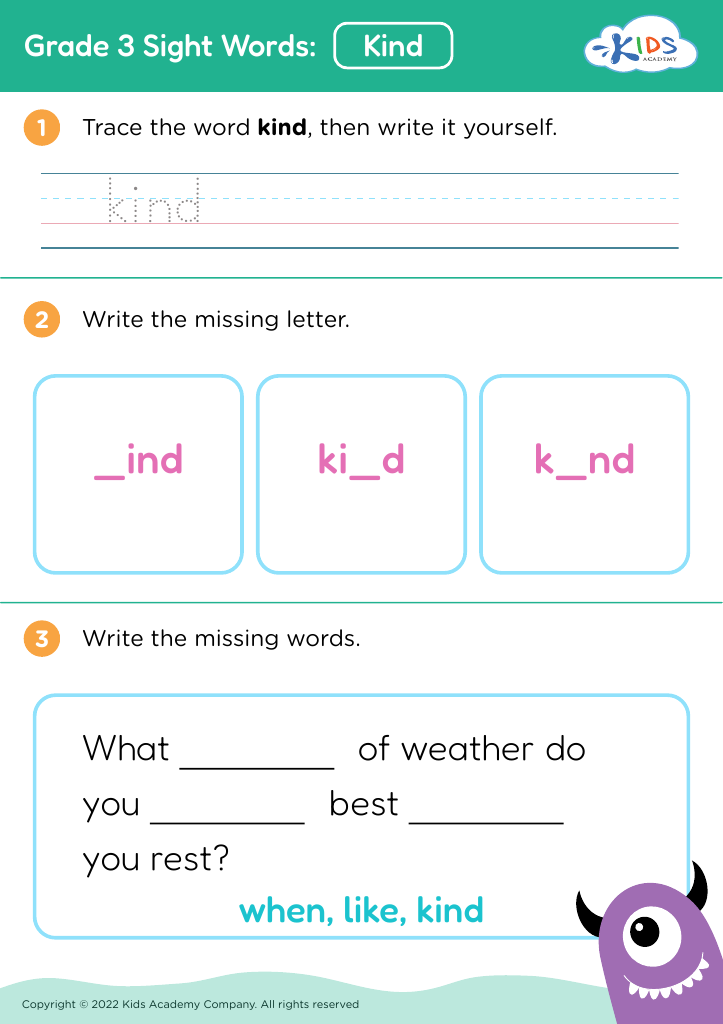
Enhance your child's counting abilities with our "Improve Counting Skills Sight Words Worksheets" tailored for ages 7-9. These engaging, fun-filled worksheets seamlessly integrate math proficiency with essential reading skills by focusing on sight words. Designed by educational experts, each activity fosters numerical understanding while promoting literacy development. Kids will enjoy practicing counting through captivating exercises, improving both their math accuracy and reading fluency. Perfect for classroom use or at-home practice, these printable worksheets are a valuable resource to boost your child's confidence and skills. Dive into the world of learning and make counting an exciting adventure!










.jpg)



Counting skills and sight words are fundamental components of a child's early education, directly impacting their academic success and life-long learning capabilities. For children ages 7-9, improving counting skills ensures a solid foundation in mathematics. This period is crucial as children transition from basic arithmetic to more complex problem-solving tasks. Strong counting abilities enable them to grasp concepts like addition, subtraction, multiplication, and division. Furthermore, proficiency in counting can boost a child’s confidence, fostering a positive attitude towards math that can last a lifetime.
On the other hand, sight words are high-frequency words that children encounter regularly in their reading and writing. Mastery of sight words around ages 7-9 is essential because it enhances reading fluency. When children can recognize these words instantly, they spend less time decoding and more time comprehending the text. This improved fluency facilitates better understanding and fosters a love for reading.
Parents and teachers who focus on these skills provide children with vital tools for academic achievement. Early intervention can identify and address learning gaps, ensuring that children do not fall behind. Overall, attentive development in these areas equips children with the necessary skills to excel both inside and outside the classroom, preparing them for future academic challenges.