Handwriting improvement ABC Letters Worksheets for 7-Year-Olds
3 filtered results
-
From - To
Enhance your child's handwriting skills with our engaging ABC Letters Worksheets designed specifically for 7-year-olds! These worksheets provide a fun and interactive way for young learners to practice writing letters clearly and confidently. With a variety of activities, including tracing and independent writing exercises, your child will develop their fine motor skills and letter recognition. Each worksheet is crafted to nurture a love for writing while boosting handwriting proficiency. Ideal for use at home or in the classroom, these resources support your child's educational journey. Download now to make handwriting practice enjoyable and effective with our comprehensive ABC worksheets!
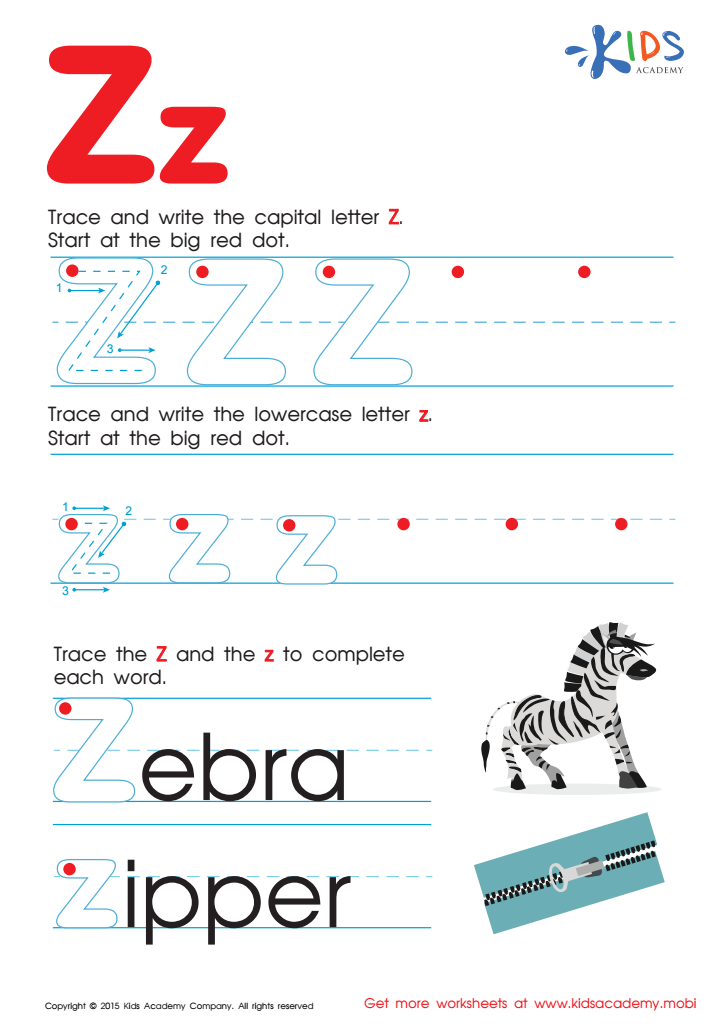
Letter Z Tracing Page
 Assign to My Students










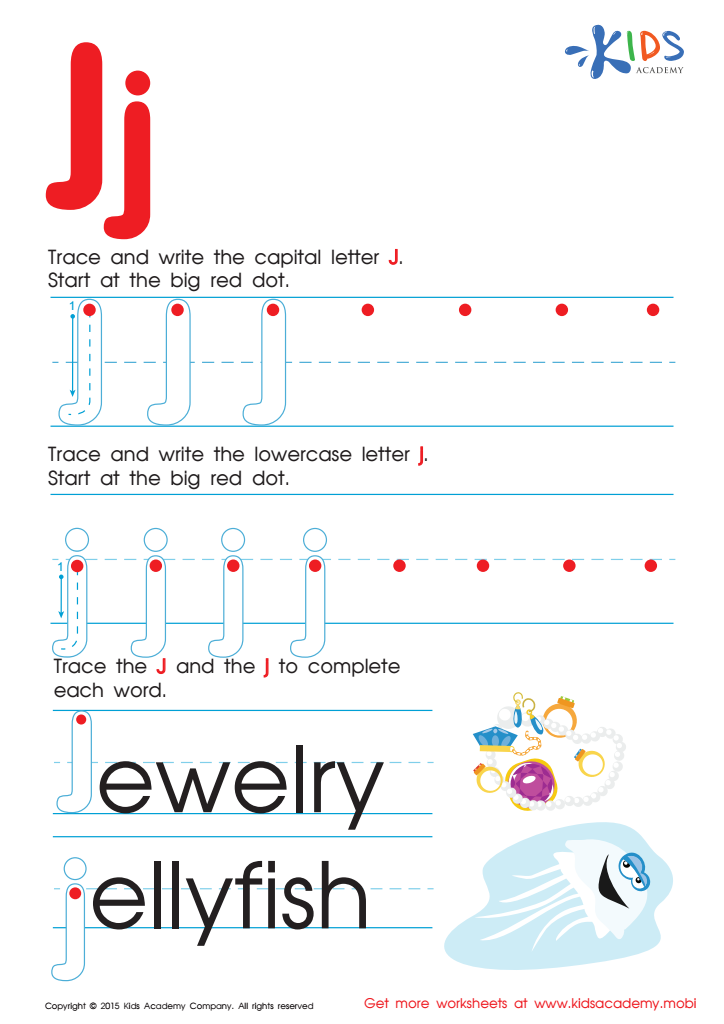
Letter J Tracing Page
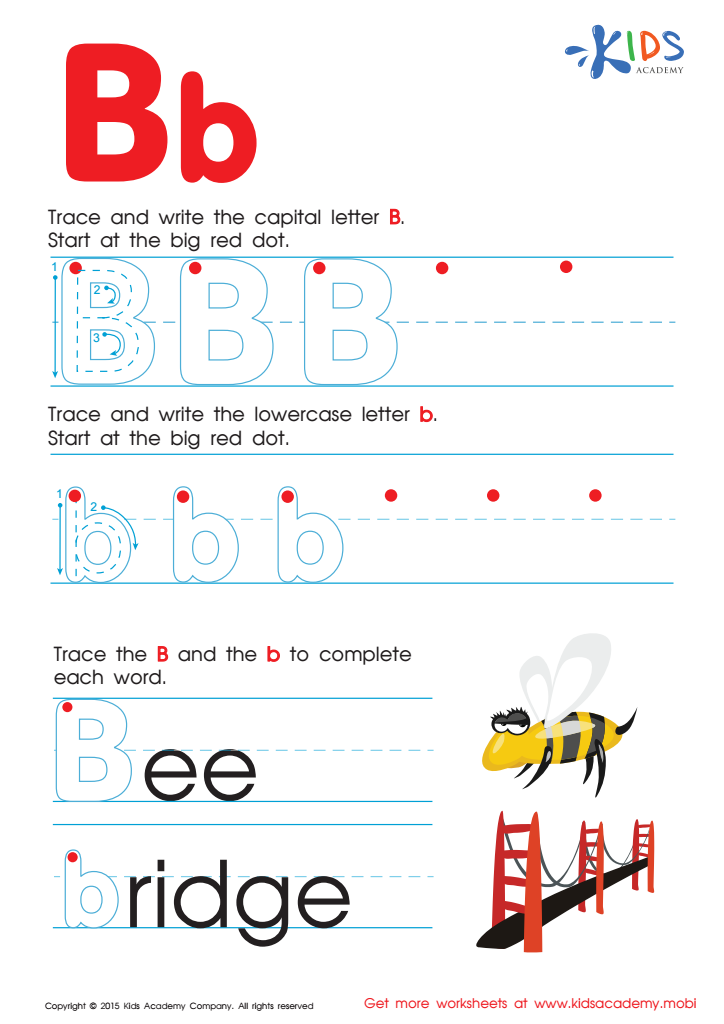
Letter B Tracing Page







Handwriting improvement in 7-year-olds is crucial for several reasons. First and foremost, developing clear and legible handwriting enhances a child's ability to express their thoughts and ideas effectively. At this age, children are transitioning from learning to write to writing to learn; this shift necessitates proficient handwriting skills, which can impact their overall academic performance. Poor handwriting can lead to frustration, diminishing a child’s confidence and enthusiasm for writing tasks.
Moreover, neat handwriting is often associated with discipline and attention to detail—qualities that serve students well beyond childhood. Encouraging handwriting improvement fosters fine motor skills, helping children develop essential coordination and control, which is vital for various activities, including art and sports.
Additionally, in an increasingly digital world, having strong handwriting skills cultivates a sense of connection to traditional forms of writing, such as letters, which is valuable for personal expression. Parents and teachers play a crucial role in nurturing these skills through consistent practice, positive reinforcement, and engaging activities. Supporting students in their handwriting development helps set a strong foundation for lifelong communication skills, ultimately contributing to their overall success in school and beyond.







