
Fine motor skills development Letter Recognition Worksheets for 7-Year-Olds
3 filtered results
Difficulty Level
Grade
Age
-
From - To
Subject
Activity
Standards
Help your 7-year-old master essential fine motor skills with our Letter Recognition Worksheets designed for young learners! These engaging printables promote proper letter formation, alignment, and spacing while strengthening finger dexterity. Each worksheet combines fun activities with hands-on practice to enhance handwriting abilities and letter identification, setting a solid foundation for successful reading and writing. Ideal for classroom use or homeschool, our carefully crafted materials ensure kids enjoy learning in an interactive, enjoyable manner. Unlock your child’s full potential and make letter recognition a delightful adventure with our expertly designed resources!
Favorites
With answer key
Interactive
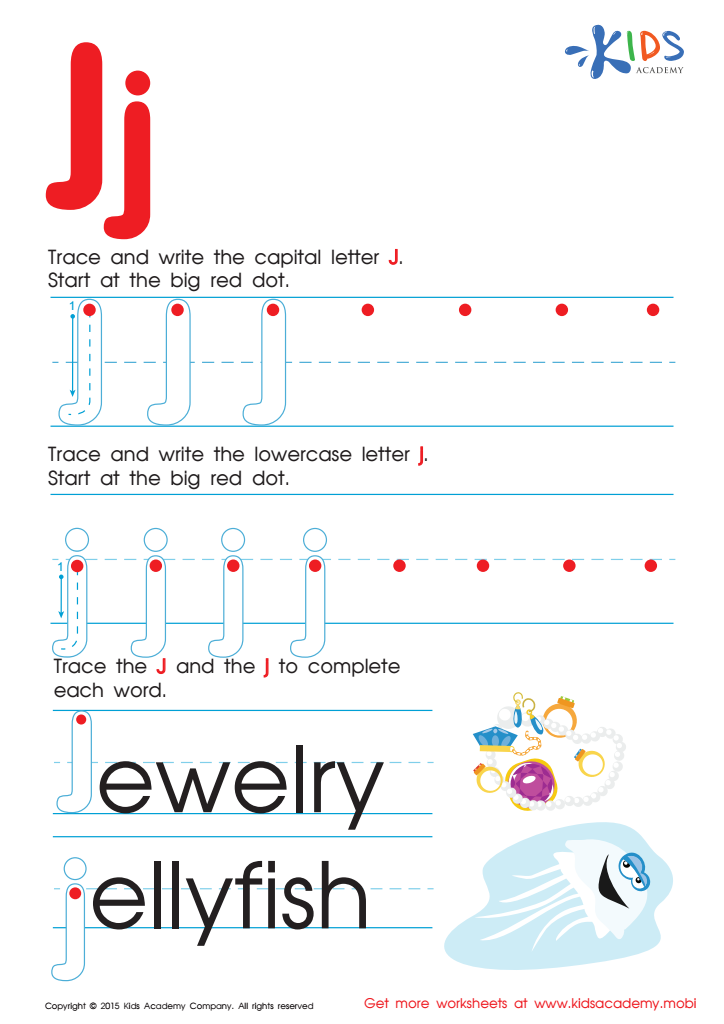
Letter J Tracing Page
Trace and write the letter "J" with our ABC worksheet - start at the big red dot! Have fun completing words like jewelry, jellyfish and more. Check out our kindergarten activities for more alphabet practice.
Letter J Tracing Page
Worksheet
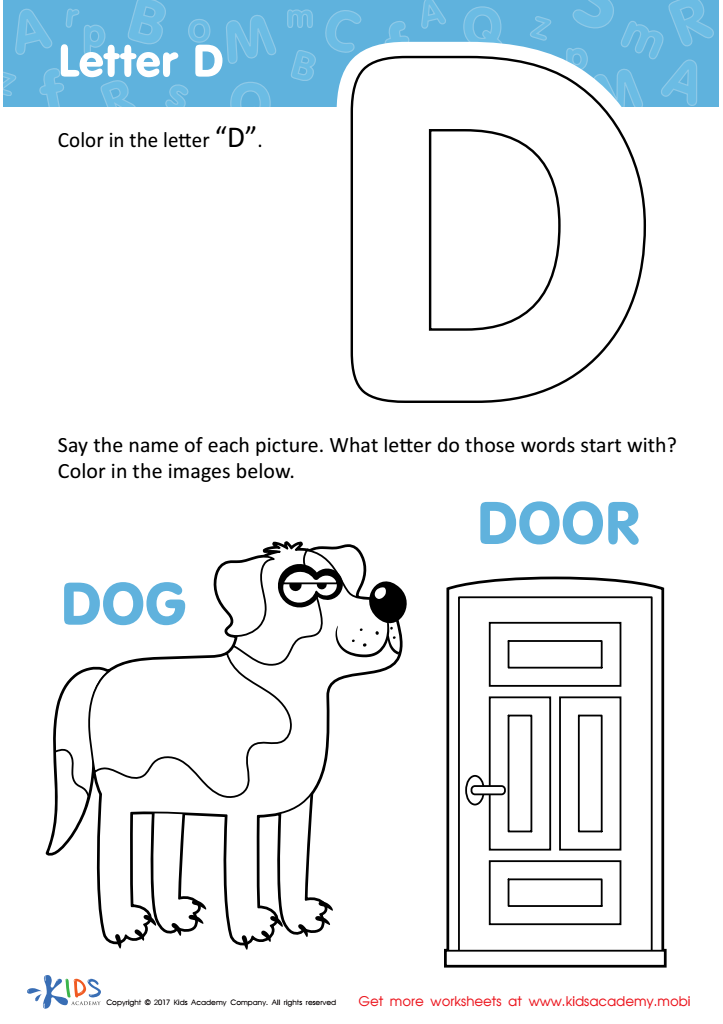
Letter D Coloring Sheet
Coloring with this letter "D" page is a great way to encourage your child's creativity while they learn the letter "D" and its sound. It's a fun activity to stimulate their imagination!
Download (PDF)
 Assign to My Students
Assign to My Students
Letter D Coloring Sheet
Worksheet
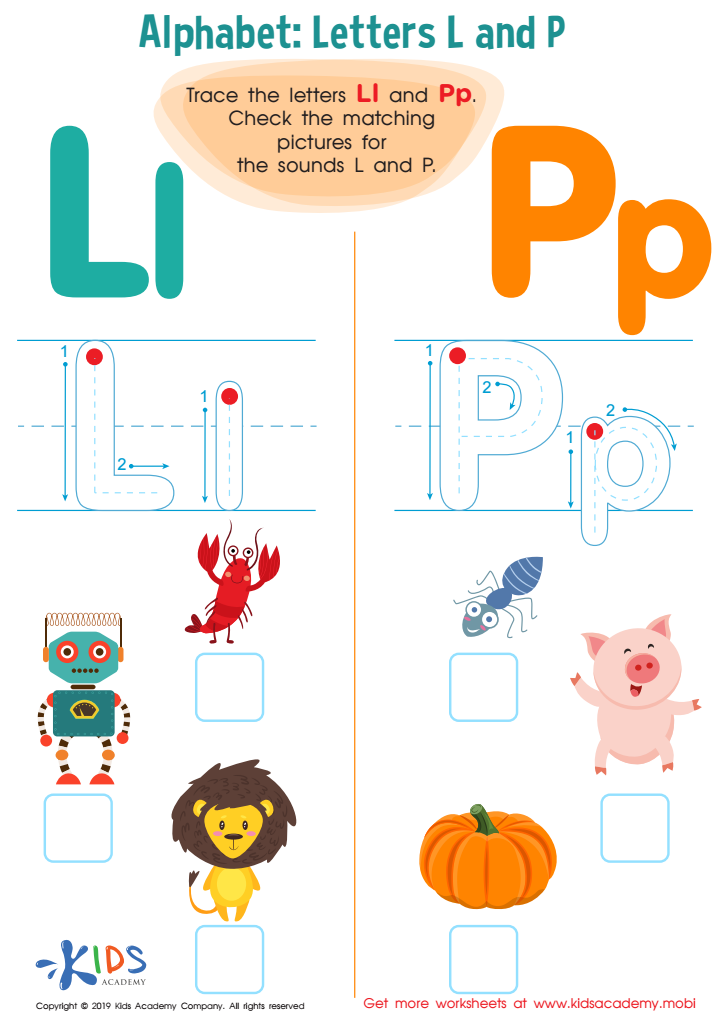
Letter L and P Tracing Worksheet
This traceable worksheet can motivate your students to learn and practice core skills. They'll trace the letters 'L' and 'P' and identify the pictures next to them. With this exercise, they'll unlock their learning abilities and excel in the subject!
Letter L and P Tracing Worksheet
Worksheet
Join Kids Academy for Free
Who is primarily going to use this learning content?








Fine motor skills development and letter recognition are critical for 7-year-olds, as they form the foundation for essential academic and daily life skills. Fine motor skills involve the coordination of small muscles in the hands and fingers, which is crucial for tasks like writing, drawing, buttoning clothes, and using utensils. As children grow, these skills continue to enhance their ability to perform more intricate tasks with precision and ease. When fine motor skills are undeveloped, children may struggle with these everyday activities, leading to frustration and a decrease in self-esteem.
Letter recognition, on the other hand, is a fundamental building block for literacy. At age 7, children are typically in the early stages of learning to read and write proficiently. Recognizing letters helps them understand the relationship between written and spoken language, making it easier to decode words and comprehend text. A strong grasp of letter recognition also aids in the development of proper pencil grip and handwriting, closely intertwining with fine motor skills.
Parents and teachers should prioritize the development of these skills because they collectively contribute to a child’s academic success and overall confidence. Early mastery of fine motor skills and letter recognition can set a positive trajectory in a child’s learning journey, ensuring they are well-prepared for more complex tasks in the future.







