
Letter tracing skills Letter Recognition Worksheets for 7-Year-Olds
3 filtered results
Difficulty Level
Grade
Age
-
From - To
Subject
Activity
Standards
Boost your 7-year-old's literacy skills with our engaging letter tracing and recognition worksheets! Designed to foster confidence and improve handwriting, these worksheets provide an interactive way for kids to familiarize themselves with the alphabet. Each activity encourages the perfect blend of learning and fun, helping children to recognize both uppercase and lowercase letters. With step-by-step tracing exercises, kids will enhance their motor skills while developing an essential foundation for reading and writing. Ideal for home or classroom use, our resources ensure that your child gains proficiency and enjoys the learning process. Download now and watch their skills soar!
Favorites
With answer key
Interactive
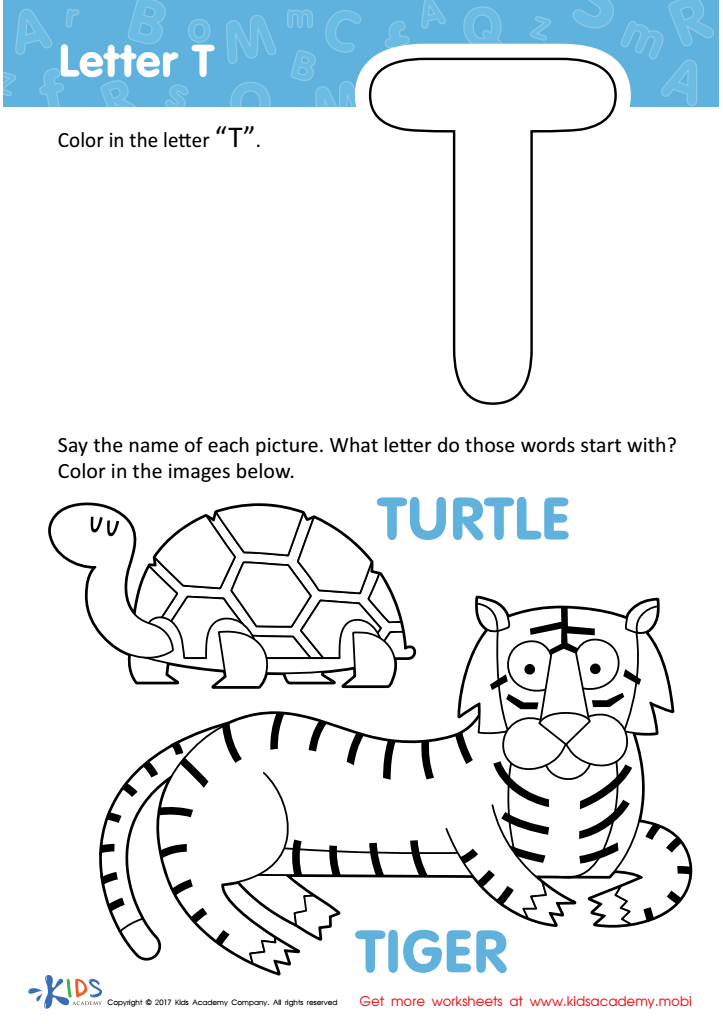
Letter T Coloring Sheet
Introduce your child to the letter "T" and its animals – turtles and tigers! With this coloring page, you can stimulate your child's imagination and creativity, while helping them recognize the letter "T". Have fun with your child and get coloring!
Download (PDF)
 Assign to My Students
Assign to My Students
Letter T Coloring Sheet
Worksheet
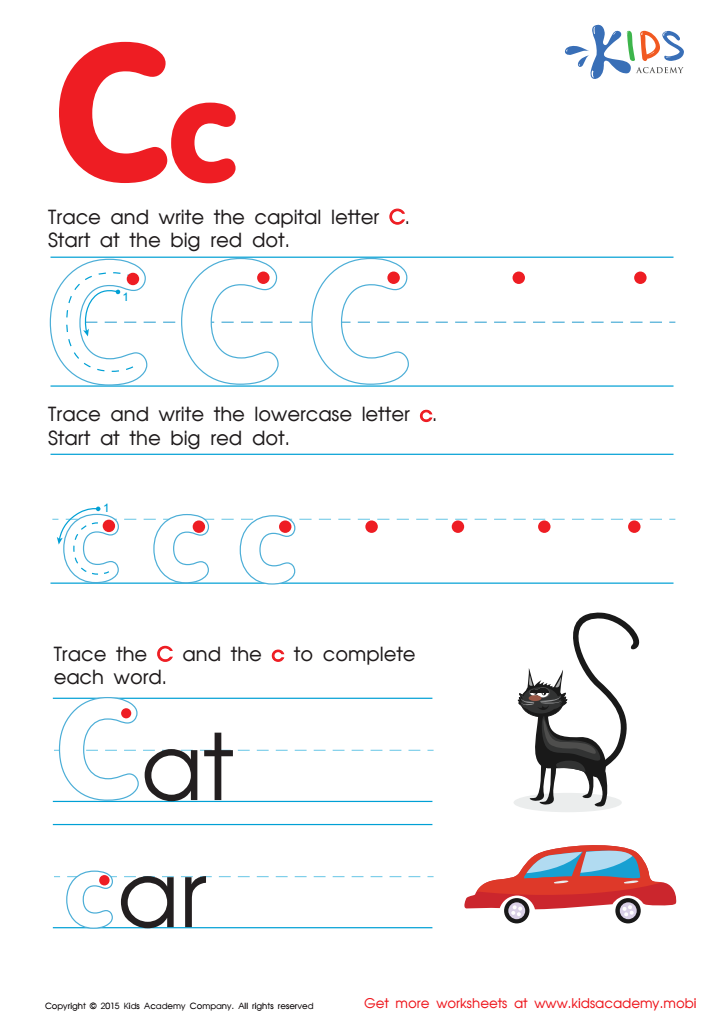
Letter C Tracing Page
Trace and write the letter 'C'! Put the pencil at the red dot then follow the lines – the capital letter first then the lowercase one. Cats love it and so will you! Get more free printables to practice tracing and writing.
Letter C Tracing Page
Worksheet
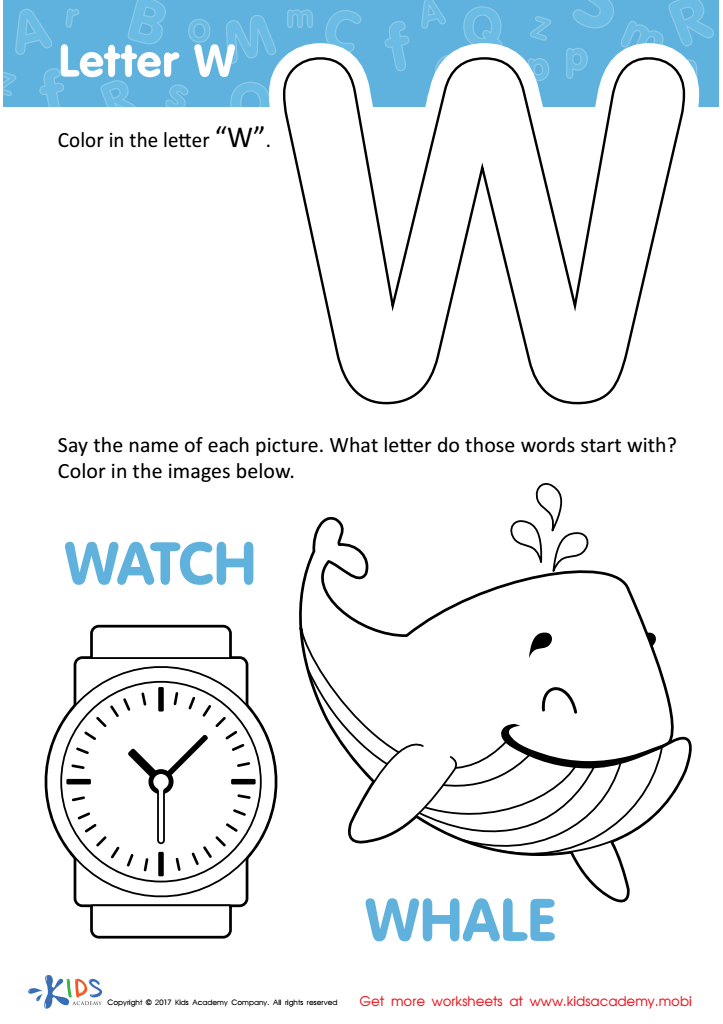
Letter W Coloring Sheet
Let your child have fun with this letter "W" coloring page! They can use their imagination to color the whale and discover the letter and its sound. Give them a helping hand to make it a whale of a time!
Download (PDF)
Assign to My Students
Assign to My Students
Letter W Coloring Sheet
Worksheet
Join Kids Academy for Free
Who is primarily going to use this learning content?








Letter tracing and recognition are fundamental skills for 7-year-olds as they form the foundation for literacy and effective communication. At this age, children transition from just learning letters to understanding their sounds and purposes in reading and writing. Mastering letter tracing helps reinforce fine motor skills, essential for handwriting proficiency. When children trace letters, they get a tactile experience that aids memory retention, making it easier to recall letter shapes and sounds.
Moreover, proficiency in letter recognition directly impacts reading fluency. Connections between letters and their corresponding sounds create the building blocks of phonics, facilitating the transition from decoding to comprehension. When parents and teachers prioritize these skills, they foster a love for reading and learning, which can motivate children to explore more complex texts.
Additionally, strong letter recognition boosts a child's confidence in the classroom, leading to increased participation and a willingness to tackle literacy challenges. Understanding these skills' critical role in a child's educational development can encourage caregivers and educators to implement effective tracing and recognition activities in their routines, ultimately helping children thrive academically and develop a passion for literacy that will last a lifetime.







