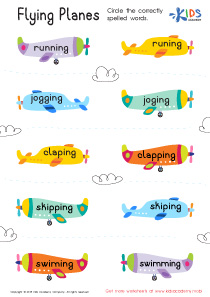
Vocabulary expansion Vowels and Consonants Worksheets for 7-Year-Olds
5 filtered results
-
From - To
Boost your child's reading and language skills with our engaging Vowels and Consonants Worksheets, specially designed for 7-year-olds! These interactive resources focus on vocabulary expansion, helping young learners identify, understand, and use vowels and consonants effectively. Through a variety of fun activities, including matching, filling in the blanks, and word hunts, children will build their vocabulary and enhance their phonemic awareness. Perfect for classroom or home use, these worksheets offer an enjoyable way to strengthen crucial literacy skills and foster a love for learning. Give your child the gift of language with these captivating and educational resources today!
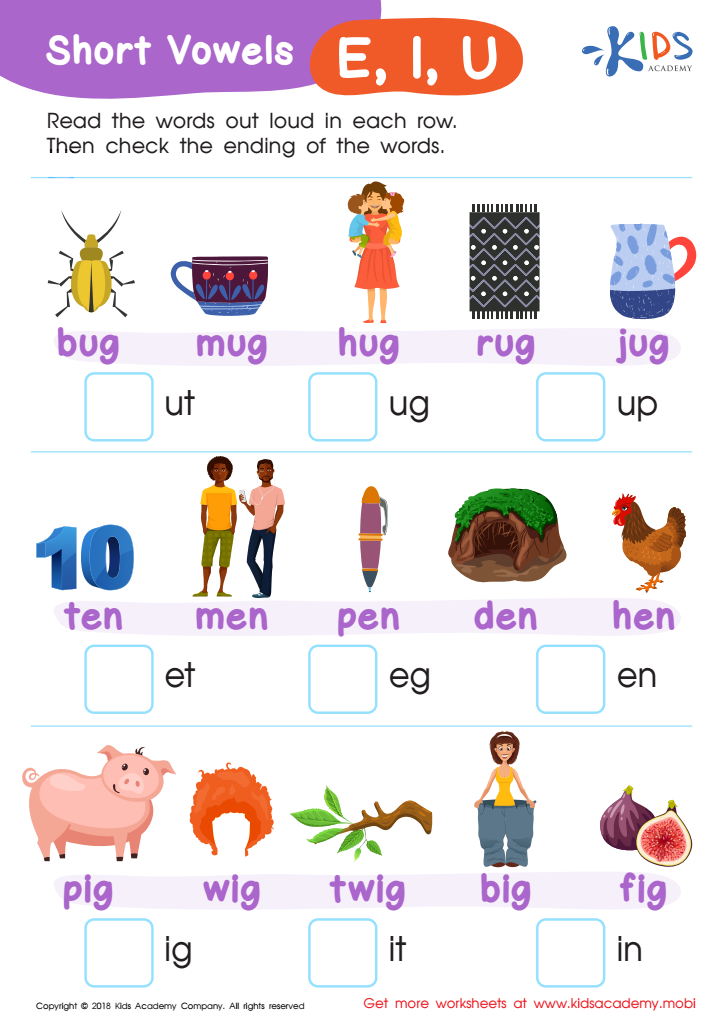
Short Vowels /e/, /i/, and /u/ Worksheet
 Assign to My Students
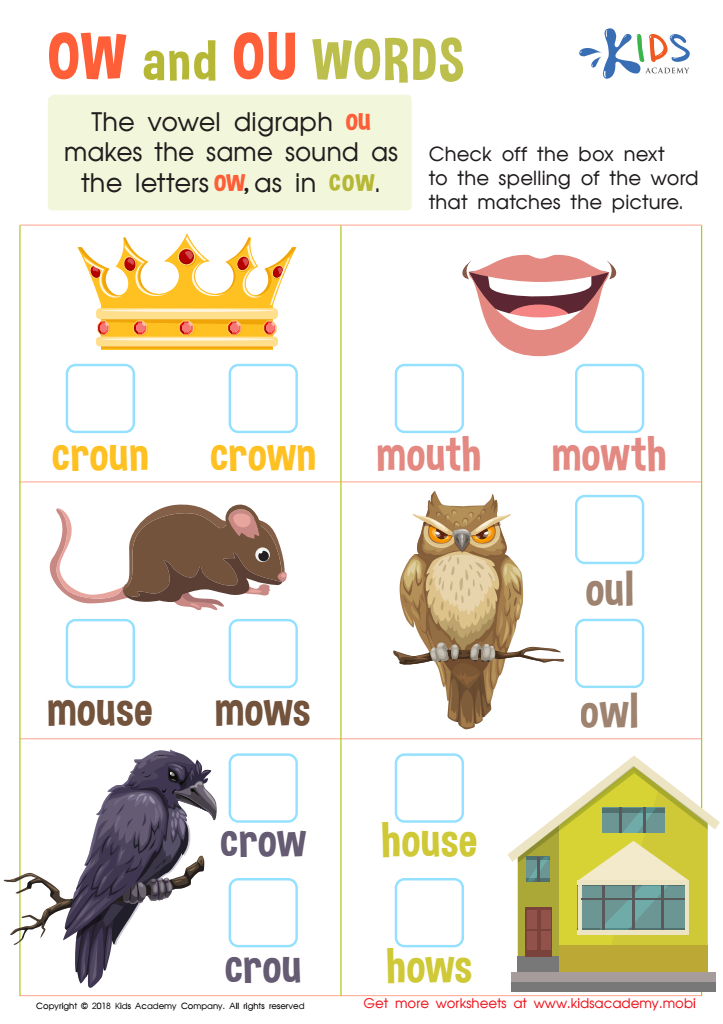
Reading: OW and OU Words Worksheet
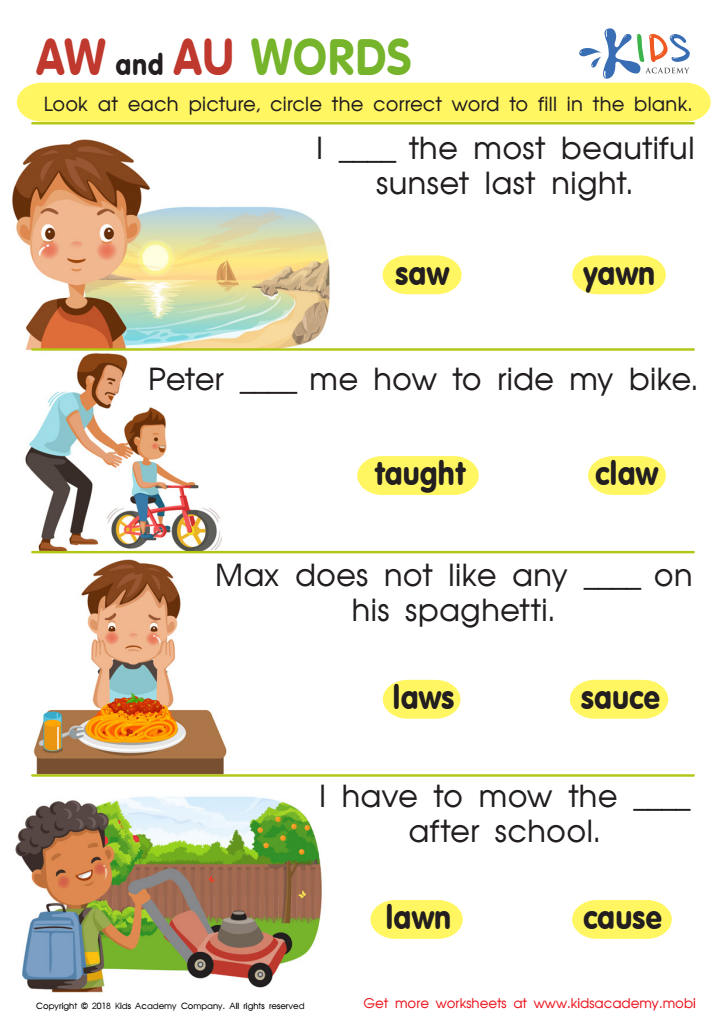
Reading: AW and AU Words Worksheet
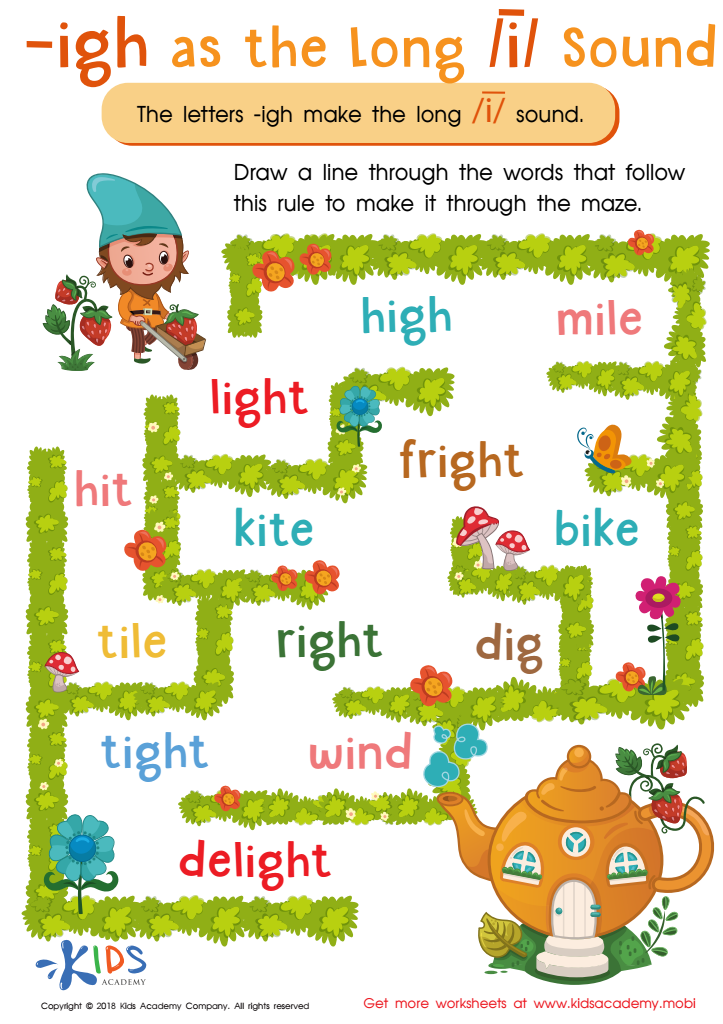
Reading: IGH as Long I Worksheet
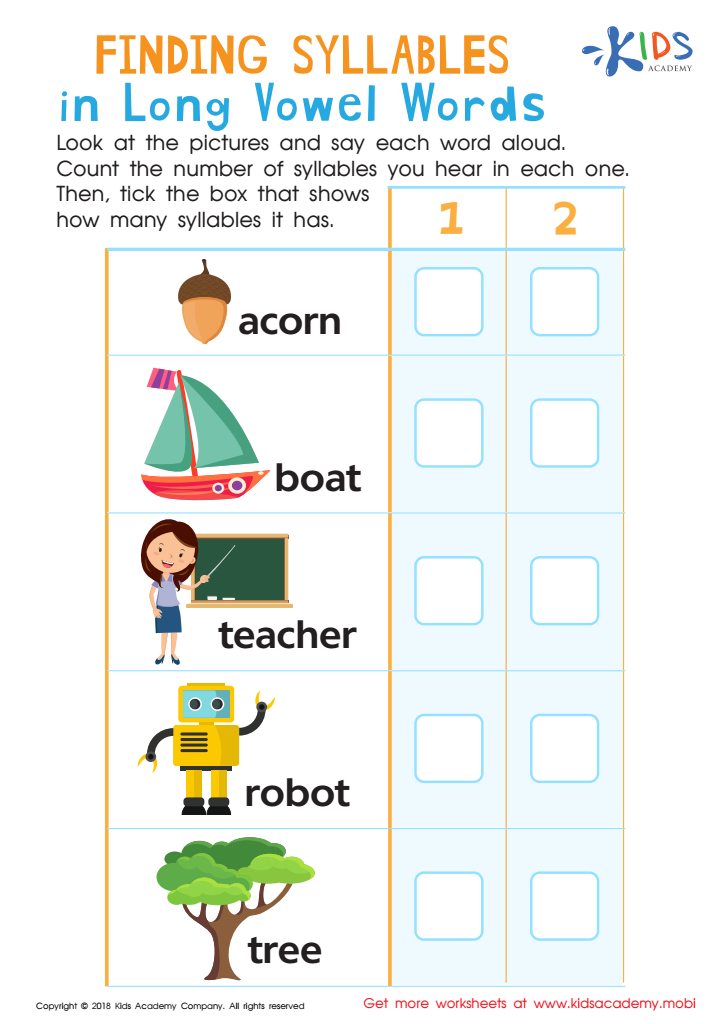
Finding Syllables in Long Vowel Words Worksheet



Vocabulary expansion is crucial for 7-year-olds as it lays the foundation for effective communication and comprehension skills. At this age, children are increasingly engaging with more complex texts and conversations. By focusing on vowels and consonants, parents and teachers can enhance children's phonetic understanding, essential for reading and writing.
Vowels and consonants form the building blocks of language. Understanding how they interact helps children decode new words. A rich vocabulary not only improves language proficiency but also boosts confidence in expressing thoughts and ideas. This is particularly important in today's digital world, where literacy extends beyond traditional reading and writing to include digital literacy and understanding diverse media.
Engaging children in activities that promote vocabulary expansion, such as singing, rhyming games, or storytelling that emphasizes diverse vocabulary, can be both fun and educational. Furthermore, a strong vocabulary is linked to better academic performance and cognitive development. As such, investing time and resources in this area helps foster well-rounded, articulate individuals prepared for future learning and social interactions. Encouraging vocabulary development at this critical stage supports lifelong communication skills, making it a priority for parents and teachers alike.