Reading comprehension Vowels Worksheets for 7-Year-Olds - Page 2
27 filtered results
-
From - To

Long and Short E Worksheet
 Assign to My Students
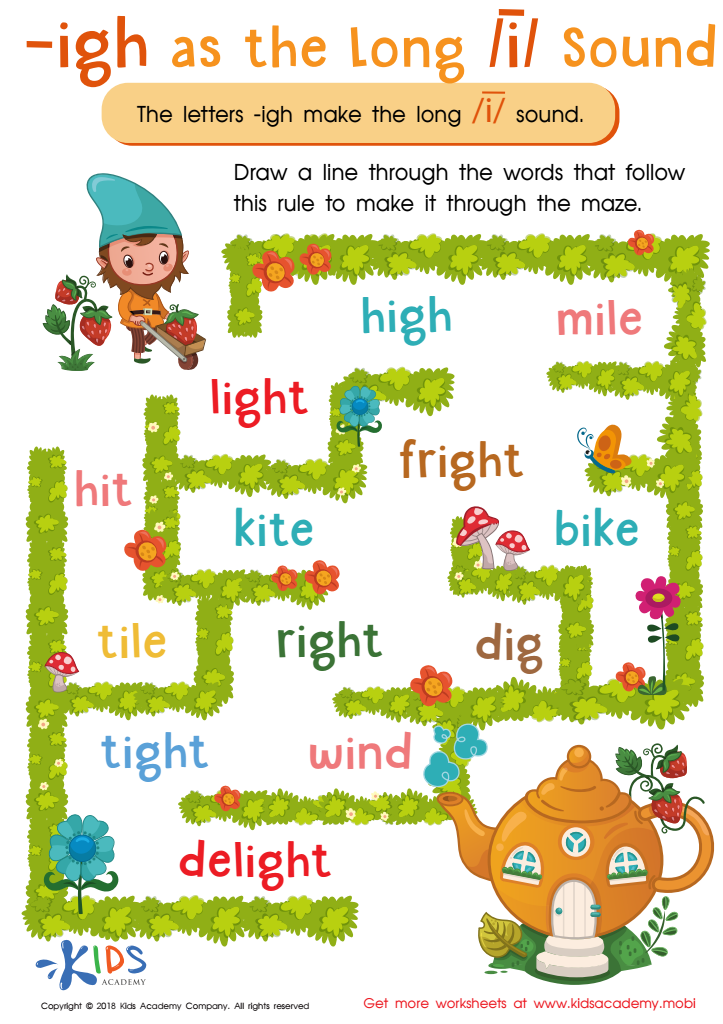
Reading: IGH as Long I Worksheet
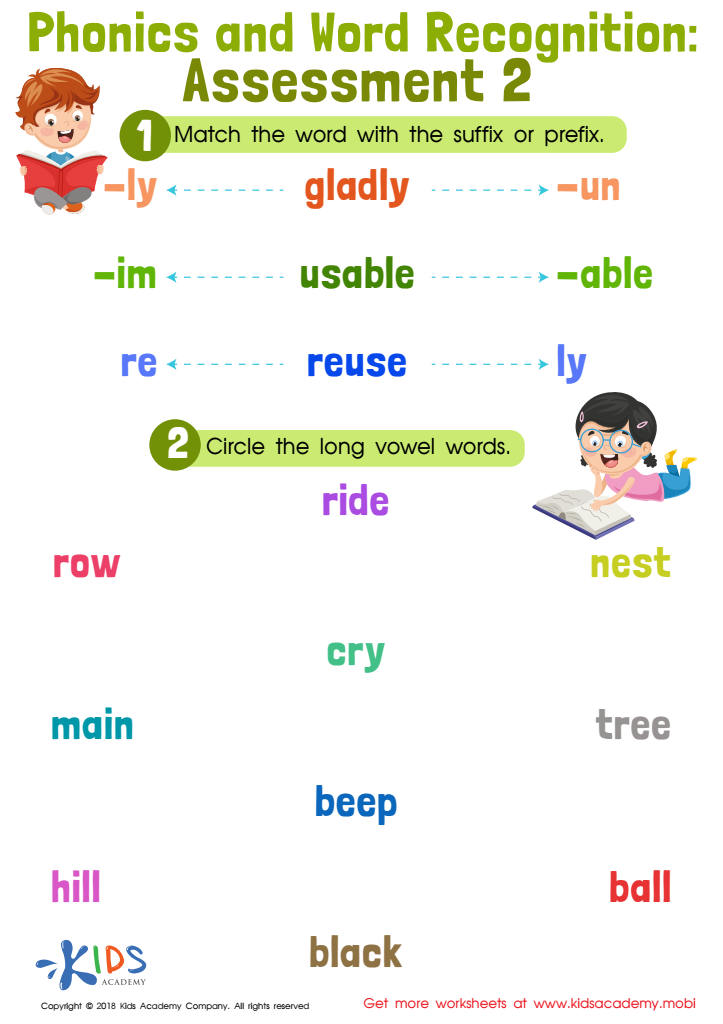
Phonics and Word Recognition: Assessment 2





Reading comprehension is essential for 7-year-olds as it lays the groundwork for lifelong learning and literacy. Understanding the nuances of vowels is crucial because vowels are the building blocks of words, affecting pronunciation, meaning, and ultimately comprehension. When children grasp vowel sounds and their varied uses in different words, they read more proficiently, leading to improved confidence.
Parents and teachers should prioritize reading comprehension focused on vowels, as it aids in phonetic awareness, which is vital at this age. By mastering vowel sounds and combinations, children can decode unfamiliar words, enhancing their ability to engage with texts independently. This skill not only supports academic success across subjects but also enriches their imagination and cognitive abilities.
Moreover, strong comprehension skills correlate with better performance in standardized tests and future educational pursuits. Engaging with fun activities, stories, and discussions centered on vowels can make learning enjoyable, encouraging a love for reading. By nurturing these skills, parents and teachers equip children with tools that foster critical thinking, creativity, and effective communication, which are essential in our increasingly complex world. Therefore, focusing on reading comprehension and vowels is vital in setting children on a path of success and curiosity.







