Filters

28 filtered results

Clear all filters
Favorites
With answer key
Interactive

28 filtered results

Difficulty Level

Grade


Check out this FREE Trial Lesson on Vowels for age 7!

Distinguish between Long I and Short I

Favorites
With answer key
Interactive
  • 7
  • Spelling practice
  • Vowels
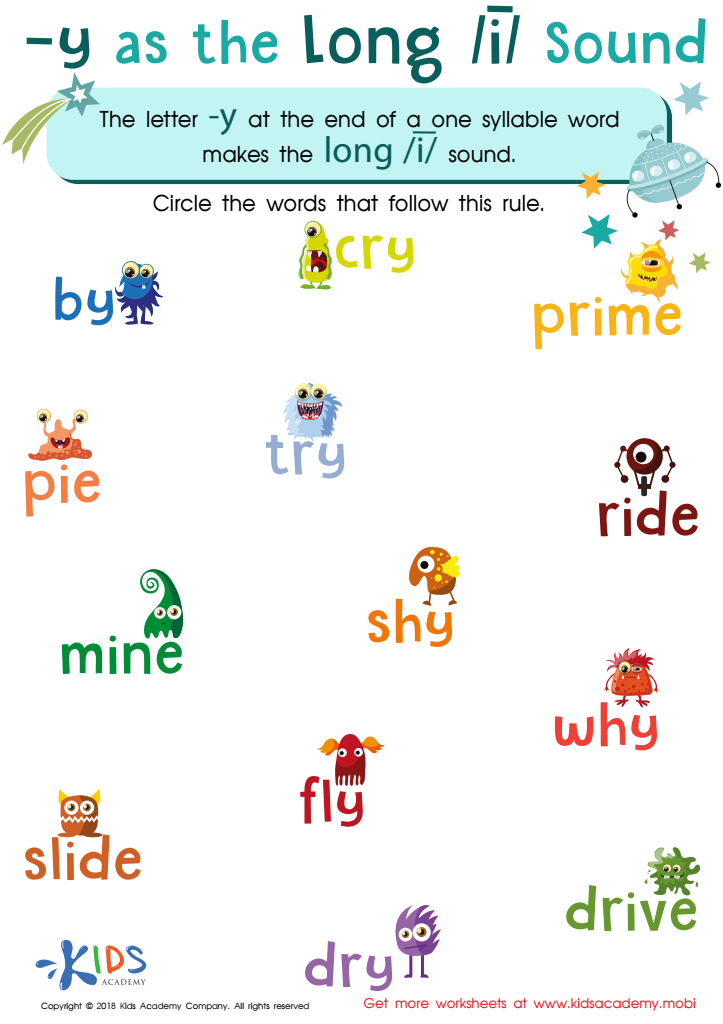
Reading: Y as Long I Worksheet

Reading: Y as Long I Worksheet

Students need practice and exposure to letters that make different sounds for decoding and reading success. This printable is a great resource for language arts classes: it explains that words ending with Y and having only one syllable make the long I sound. Students will circle all words with Y that have this sound.
Reading: Y as Long I Worksheet
Worksheet
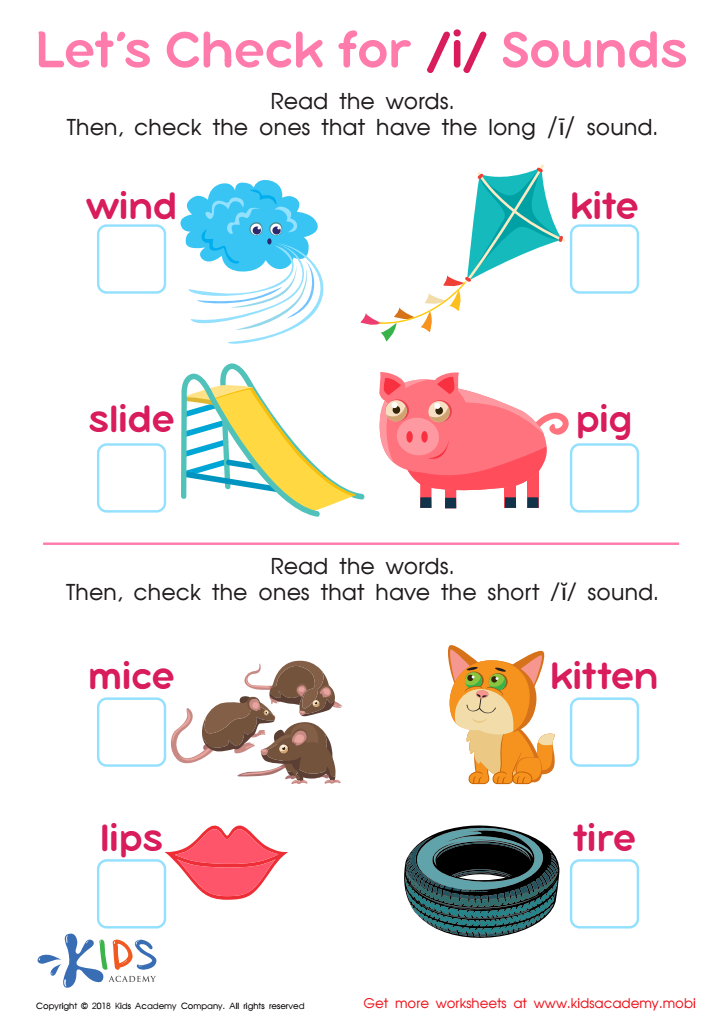
Let's Check for «i» Sounds Worksheet

Let's Check for «i» Sounds Worksheet

This fun worksheet with pictures boosts phonics skills - differentiating between long «ī» and short «i» sounds in 1- and 2-syllable words. Kids use picture clues to read words, then check off the correct ones. It's a great way for new readers to practice early reading skills and find success on their own.
Let's Check for «i» Sounds Worksheet
Worksheet
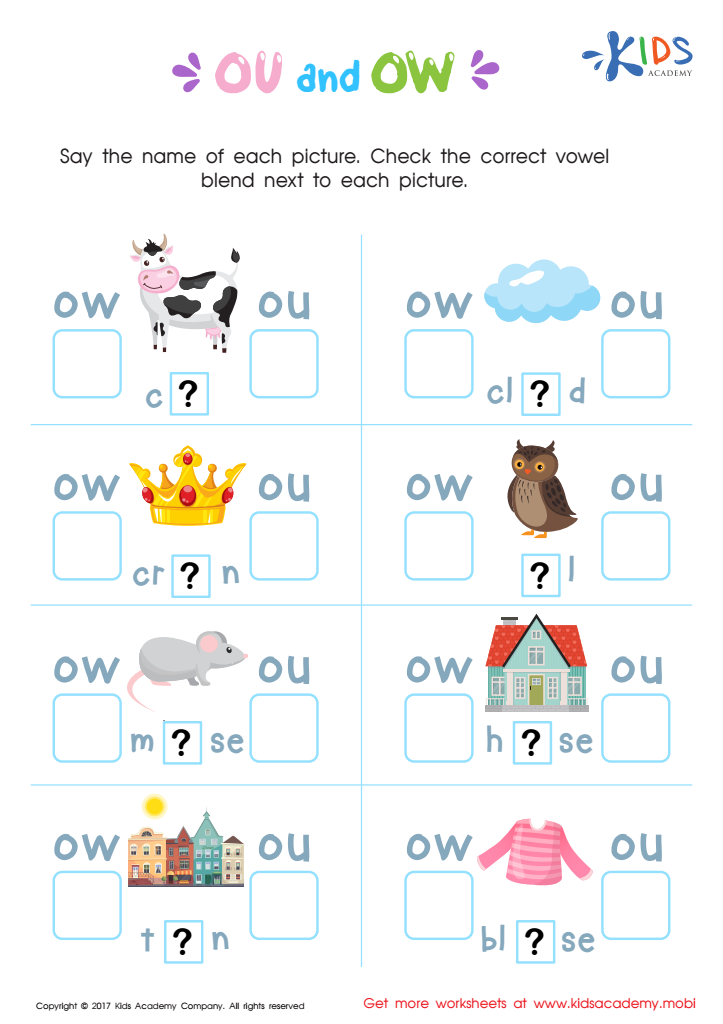
Ou and ow words worksheet

OU and OW Words Worksheet

Enhance your child's reading and spelling with this ou and ow words worksheet! Fun pictures and common words make mastering the diphthongs ou and ow easy and enjoyable.
OU and OW Words Worksheet
Worksheet
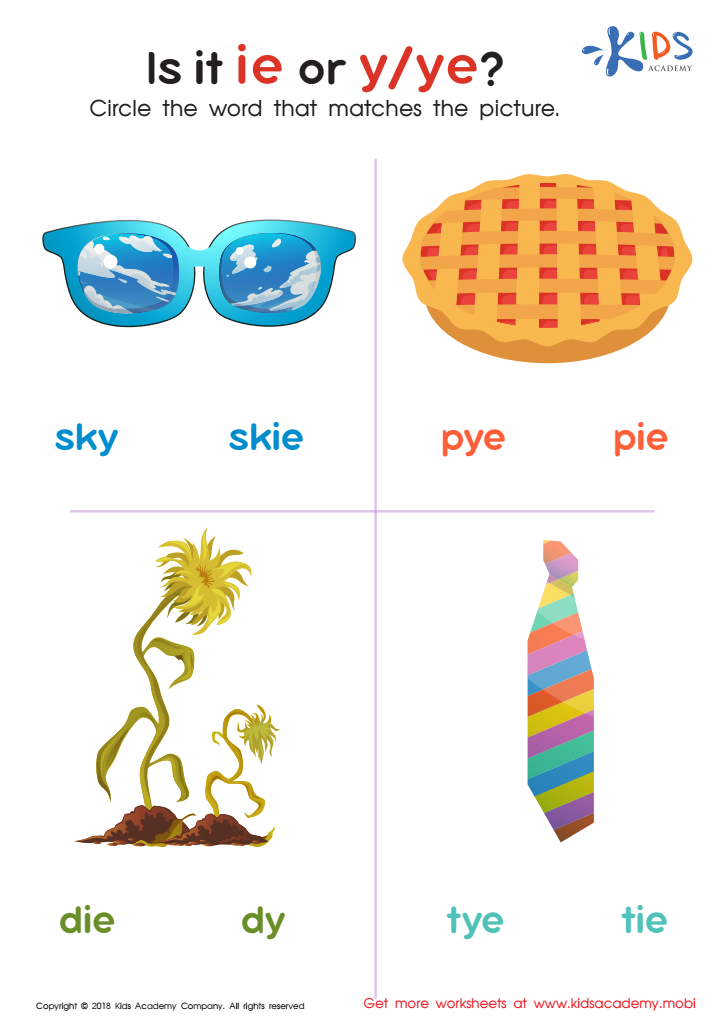
Is It IE or Y/Ye? Worksheet


Is It IE or Y/Ye? Worksheet

Test your child's picture identification skills by pointing at common items in your house and asking them to name them. Then, look at the objects in this worksheet with your little one. Point at each one, ask for the name, then ask which spelling is correct. Help them circle the correct word.
Is It IE or Y/Ye? Worksheet
Worksheet


Spelling practice, particularly with vowels, is crucial for 7-year-olds as it forms a foundational skill for reading and writing. At this age, children are beginning to transition from learning to read to reading to learn. Understanding vowels—their sounds and placement—is essential, as they are key to forming words. Mastery of vowel patterns helps children decode unfamiliar words, promoting confidence in their reading skills.

Moreover, strong spelling abilities enhance a child’s overall communication skills. When students practice spelling words correctly, it improves their writing clarity, allowing their ideas to be expressed coherently. Parents and teachers should recognize that regular spelling practice also encourages cognitive development by engaging memory and recall skills.

Additionally, the early practice of vowel sounds can foster a love for language. When children experience success in spelling, they feel accomplished, which boosts self-esteem and motivates further learning. In the digital age, where communication occurs through multiple mediums, spelling proficiency ensures children can convey their thoughts effectively.

In summary, emphasizing vowel spelling practice not only strengthens essential literacy skills but also lays the groundwork for a child’s educational journey, making it a vital focus for both educators and parents.