Memory enhancement Chess Worksheets for 7-Year-Olds
3 filtered results
Difficulty Level
Grade
Age
-
From - To
Subject
Activity
Standards
Discover our engaging Memory Enhancement Chess Worksheets designed specifically for 7-year-olds! These unique resources blend the excitement of chess with fun activities that boost memory and cognitive skills. Each worksheet encourages children to explore chess moves, recognize patterns, and improve strategic thinking while enjoying the game. With colorful illustrations and age-appropriate challenges, kids will have a blast as they enhance their memory capabilities. Whether used at home or in the classroom, our worksheets provide an effective way to foster critical thinking and concentration. Start your child's journey to becoming a chess champion while sharpening their memory today!
Favorites
With answer key
Interactive
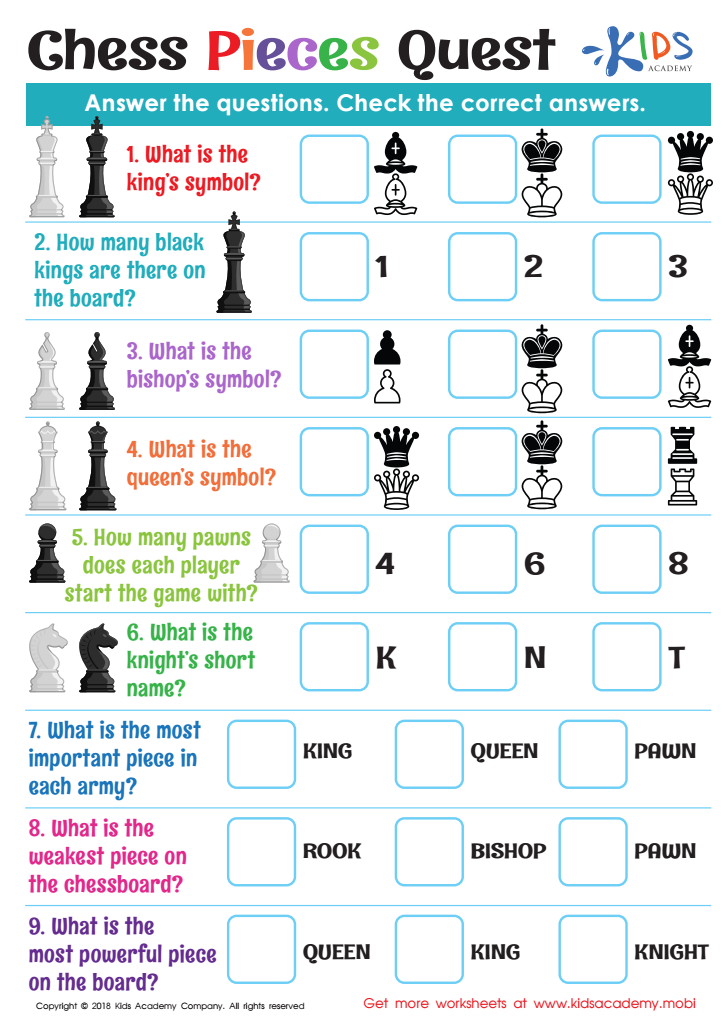
Chess Pieces Quest Worksheet
Help your child prepare for the chess quest by refreshing their knowledge of the symbols and characteristics of each chess piece. Then, have them try the 9 questions on this worksheet. These questions will assess their understanding of the symbols and how many pieces each player starts with.
 Assign to My Students
Chess Pieces Quest Worksheet
Worksheet
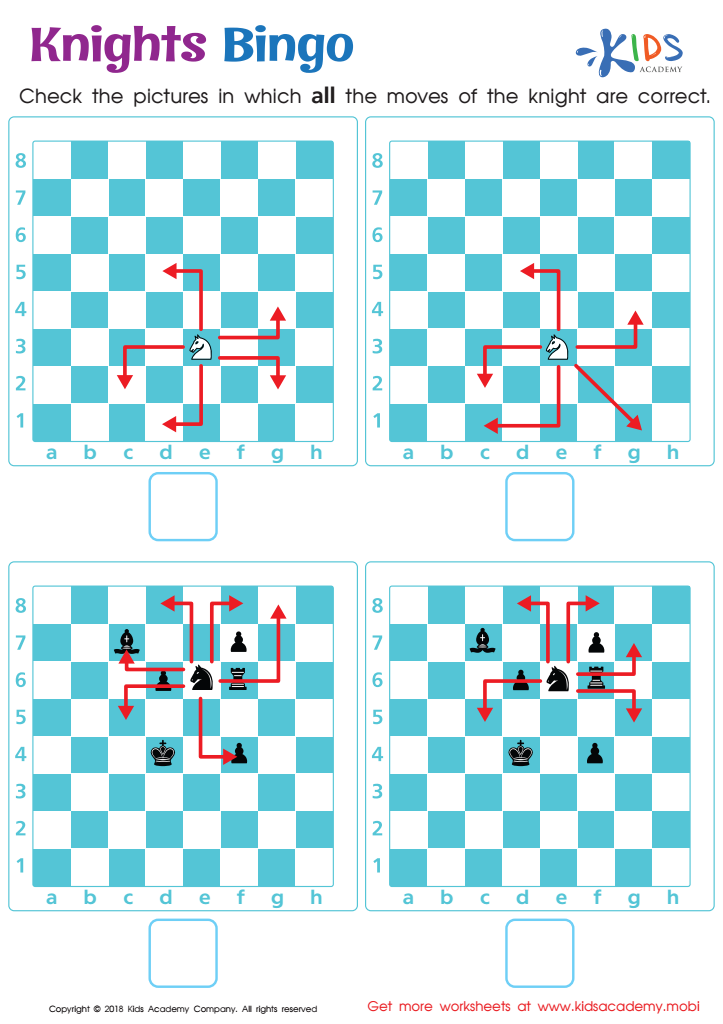
Knights Bingo Worksheet
Help your child identify legal knight moves in this easy worksheet. Review each picture with them, questioning if the knight moves are correct. Then have them verify pictures with correct moves.
Knights Bingo Worksheet
Worksheet
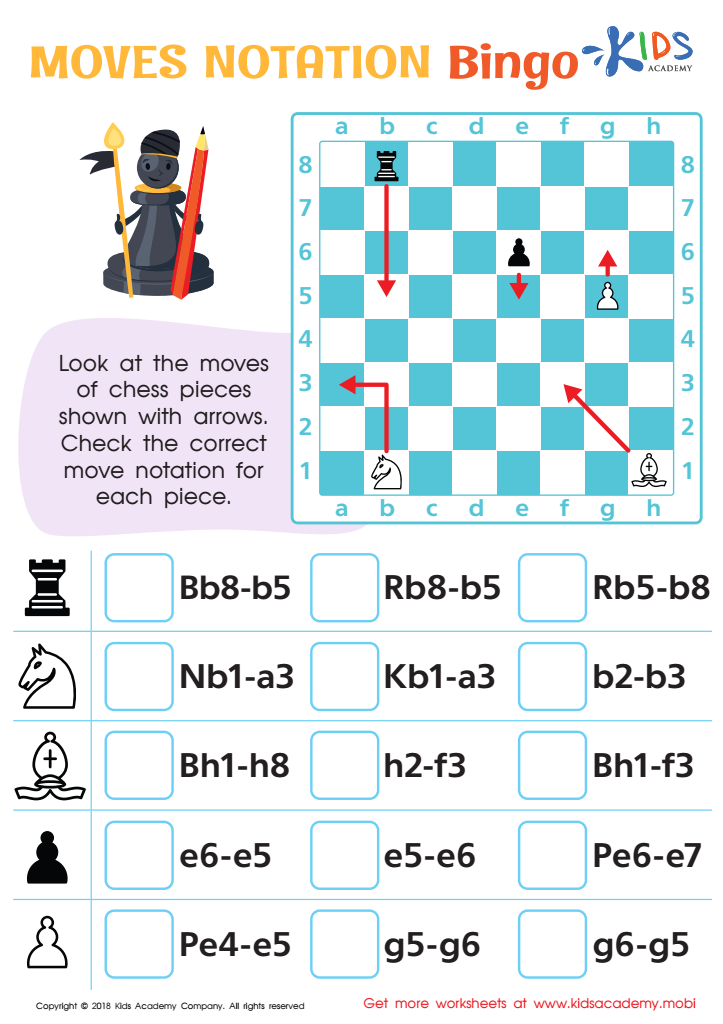
Moves Notation Bingo Worksheet
Test your child's chess notation skills with this simple worksheet. Download the PDF which shows a chess board and arrows pointing to pieces. Ask your child to identify the moves and note them down correctly. The notations needed are for bishop, pawn, rook and knight. Up to 80 words.
Moves Notation Bingo Worksheet
Worksheet
Join Kids Academy for Free
Who is primarily going to use this learning content?



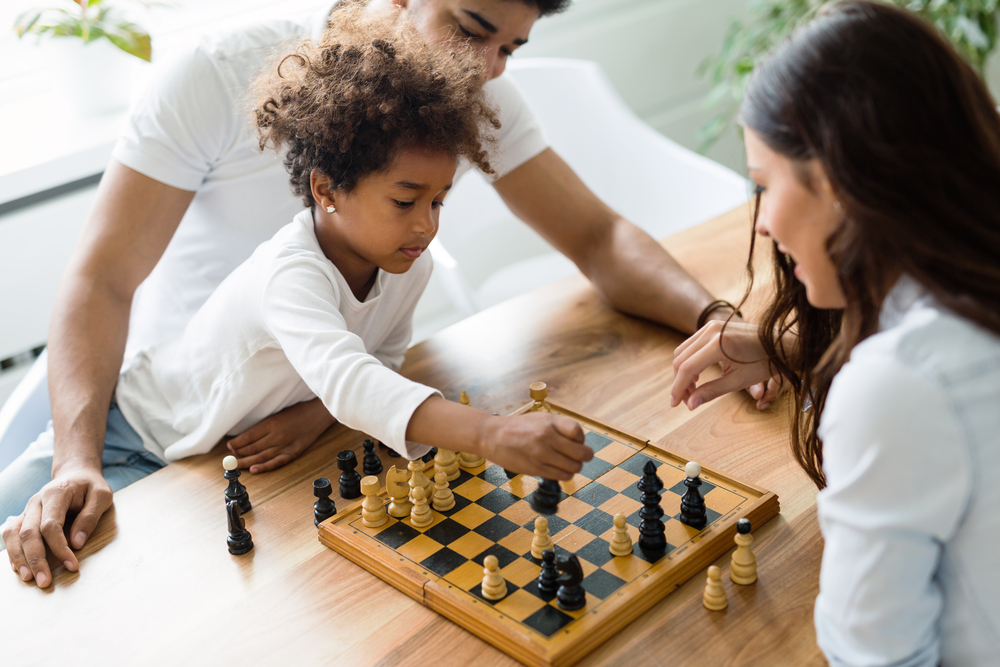

Memory enhancement through chess is vital for 7-year-olds due to its profound impact on cognitive development. At this formative age, children are honing their thinking skills, and chess offers a unique opportunity to improve their memory, focus, and problem-solving abilities. The game requires players to remember various moves, strategies, and opponent behaviors, promoting enhanced recall and retention skills.
For parents and teachers, investing in chess means fostering a love for learning and developing critical intellectual capacities. Studies show that children who engage in chess are more likely to excel in subjects like math and reading, as the game encourages logical reasoning and pattern recognition. Chess also instills patience and discipline, virtues essential to both academics and life.
Additionally, learning chess in a social setting enhances teamwork and communication skills, as players often engage in discussions about tactics and outcomes. This interactive experience builds confidence and encourages a healthy competitive spirit. By implementing memory enhancement chess strategies, we can empower children not just in the realms of strategy and gameplay, but also in their overall academic journey, preparing them for future challenges both in and outside of school. Chess is more than a game; it's a valuable tool for cognitive growth and personal development.