Problem-solving abilities Chess Worksheets for 7-Year-Olds
3 filtered results
-
From - To
Unlock the power of problem-solving with our engaging Chess Worksheets designed specifically for 7-year-olds! These tailored resources challenge young minds to think critically and strategize, enhancing their cognitive abilities through fun and interactive activities. Each worksheet utilizes the fascinating game of chess to teach essential skills such as reasoning, decision-making, and logical thinking. As children navigate various chess scenarios, they'll not only improve their game but also develop resilience and perseverance. Perfect for both classroom and at-home learning, our worksheets promote a love for chess while building foundational problem-solving competencies. Empower your child’s learning journey today!
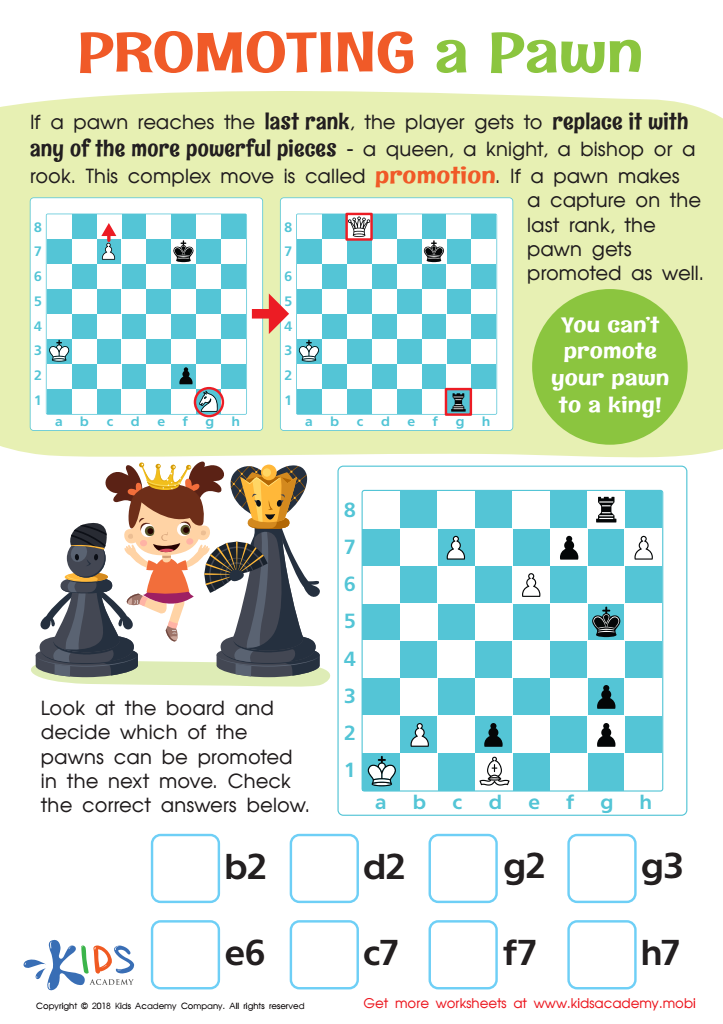
Promoting a Pawn Worksheet
 Assign to My Students
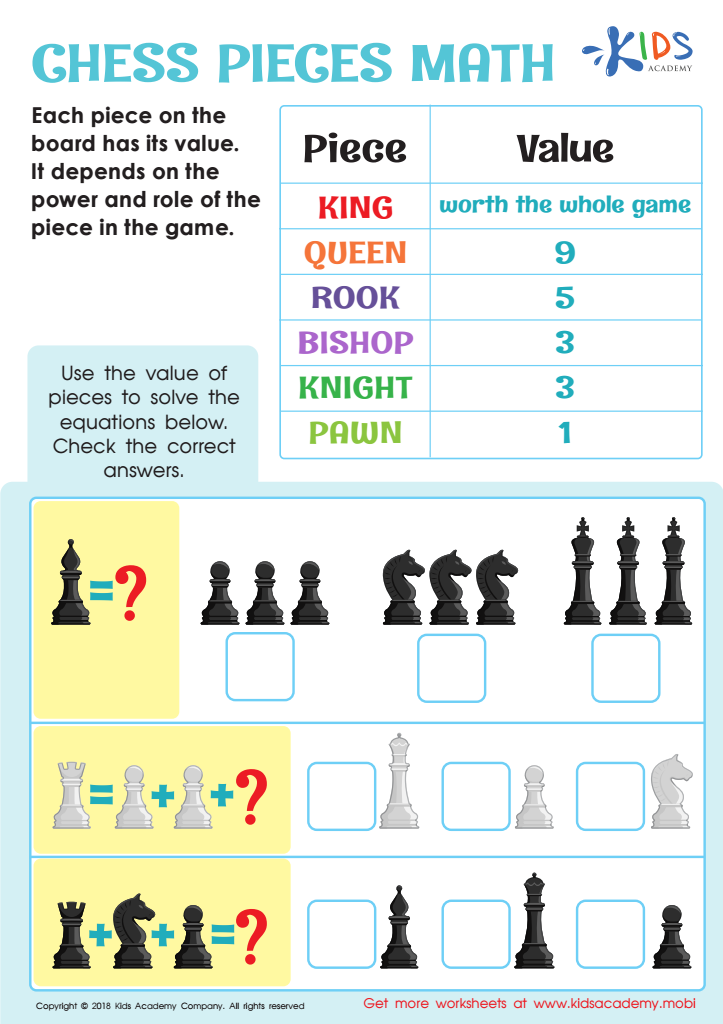
Chess Pieces Math Worksheet
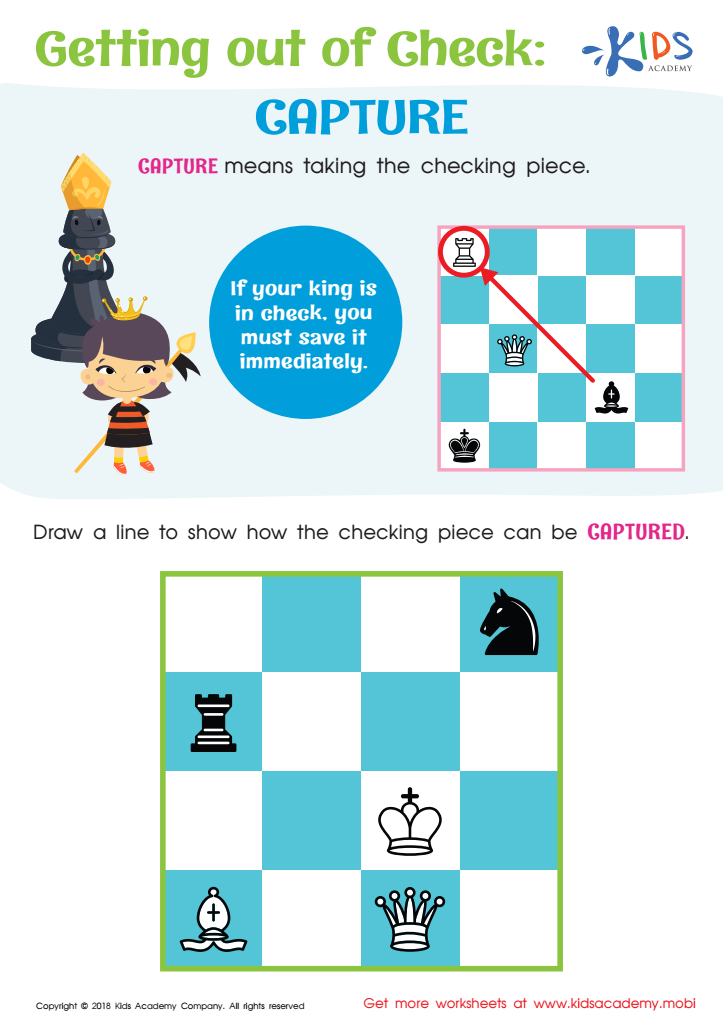
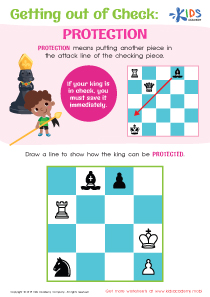
Getting out of Check: Capture



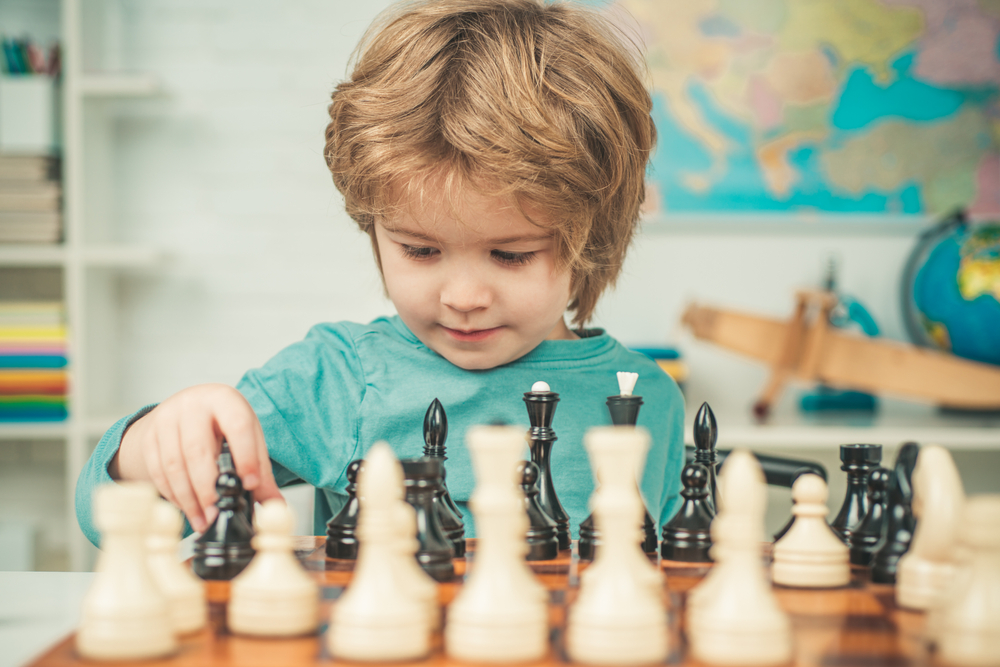



Problem-solving abilities are crucial for the cognitive development of 7-year-olds, and engaging in chess offers a fantastic platform for enhancing these skills. When children play chess, they cultivate critical thinking, as they need to evaluate numerous possible moves while anticipating their opponent’s strategy. This process involves analyzing situations, predicting outcomes, and making informed decisions—all essential problem-solving techniques.
Moreover, chess encourages perseverance. Young players often face challenging situations on the board that require tenacity to overcome. Parents and teachers can use these moments to teach children the importance of resilience, helping them to understand that failure can lead to growth and improvement.
Additionally, chess supports social-emotional development. As children learn to compete and interact with peers, they develop patience, sportsmanship, and the ability to collaborate, all while refining their problem-solving capabilities. These social skills will serve them well beyond the chessboard and into classroom cooperation and group activities.
Ultimately, fostering problem-solving abilities through chess not only boosts academic performance in subjects like math and science but also sets the foundation for lifelong critical thinking skills, making it an invaluable addition to a child's education. Therefore, parents and teachers should embrace chess as a meaningful tool for learning and personal growth.