Spatial awareness Chess Worksheets for 7-Year-Olds
3 filtered results
-
From - To
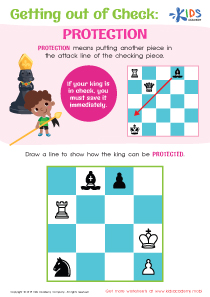
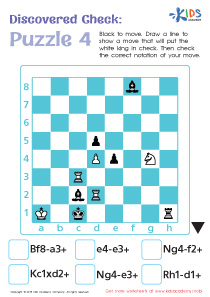
Help your 7-year-olds develop essential spatial awareness skills with our engaging Chess Worksheets! These thoughtfully designed activities incorporate the strategic elements of chess to challenge and capture young minds. Children will enhance their ability to visualize pieces on the board, understand spatial relationships, and improve problem-solving skills through fun, interactive exercises. Ideal for both the classroom and home, our worksheets create a foundation for critical thinking while making learning exciting. Explore our collection today to provide your child with valuable tools for success in chess and beyond, setting them on the path to becoming confident strategists!
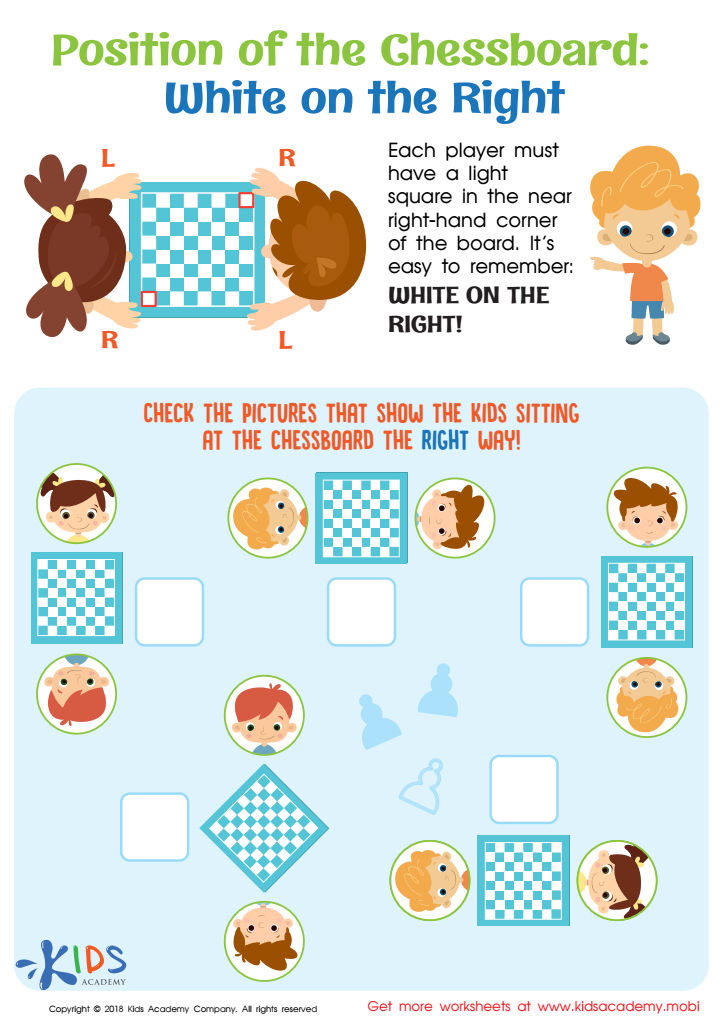
Position of the Chessboard: White on the Right Worksheet
 Assign to My Students
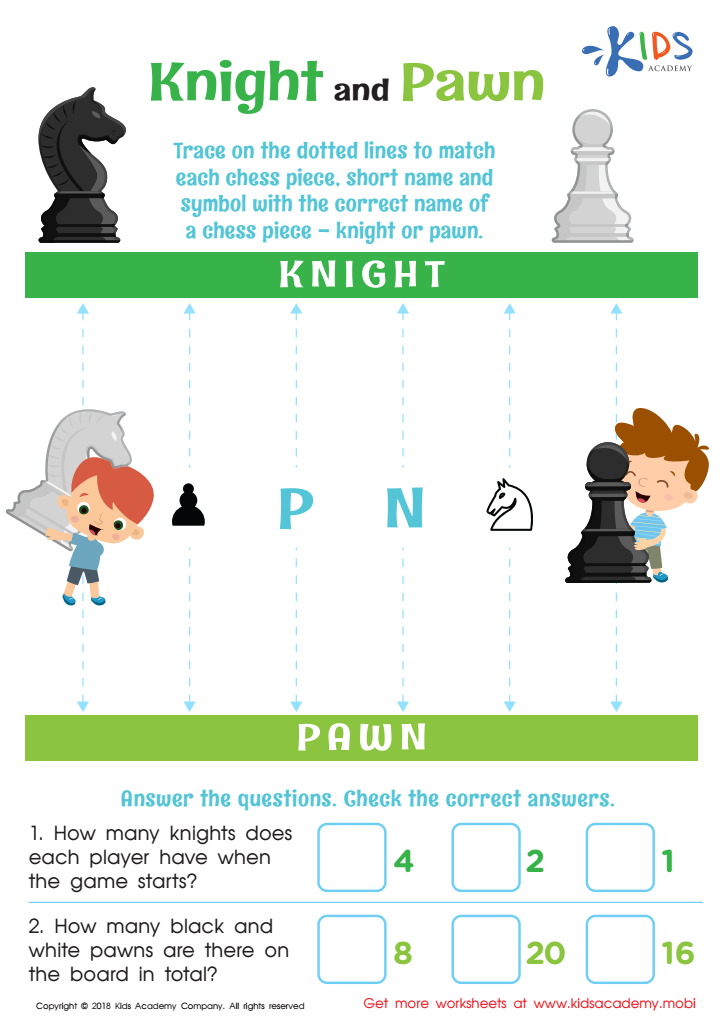
Knight and Pawn Worksheet
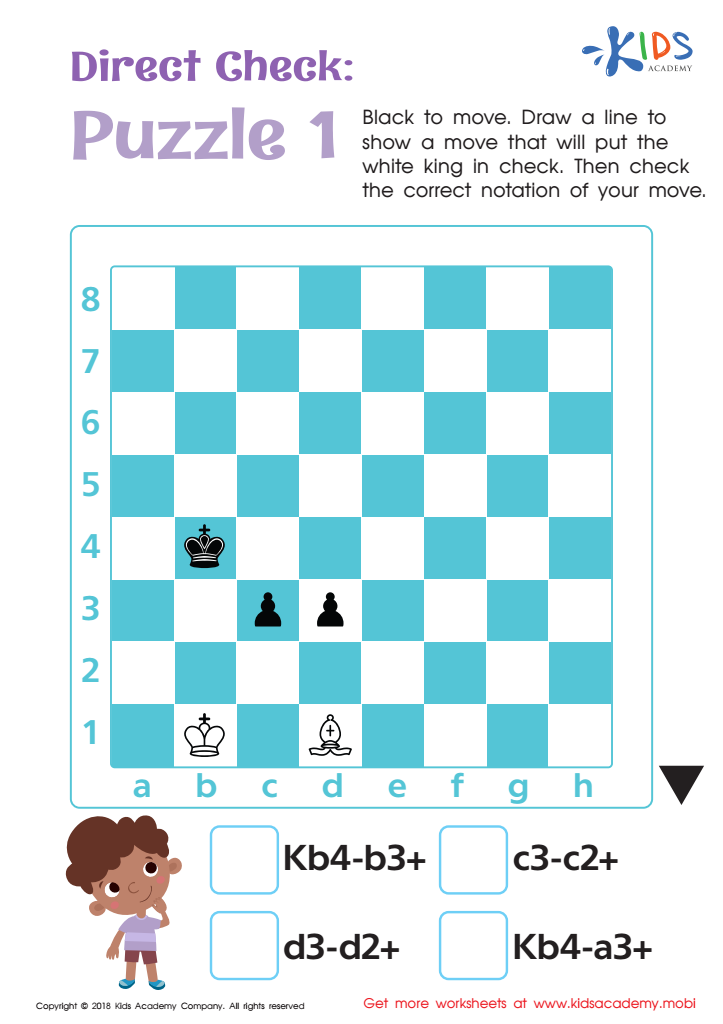
Direct Check: Puzzle 1 Worksheet



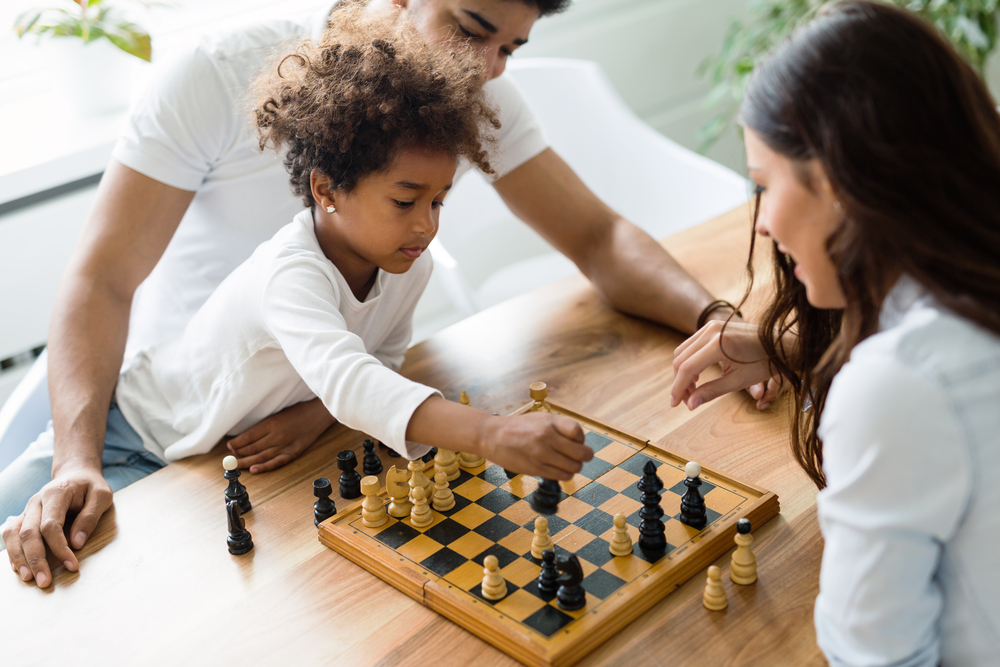


Spatial awareness is the ability to understand and interact with the spaces around us, which is crucial for young learners. Teaching chess to 7-year-olds enhances spatial awareness by helping them visualize the movement and positioning of pieces on the board. As they learn the unique movements of each piece - like the knight’s L-shape or the bishop’s diagonal - they develop a better understanding of geometric concepts and spatial reasoning skills.
Parents and teachers should care about this development because strong spatial awareness is linked to success in STEM fields (Science, Technology, Engineering, Mathematics) and overall cognitive skills, including critical thinking and problem-solving. Chess encourages kids to think ahead, plan strategically, and foresee the potential consequences of their moves, reinforcing these essential skills.
Moreover, engaging in chess also boosts concentration, patience, and emotional resilience, as children learn to handle wins and losses with grace. By fostering these abilities at an early age, adults can help build a solid foundation for lifelong learning. In a world increasingly reliant on technology and problem-solving skills, encouraging activities like chess becomes integral to preparing children for future challenges.