Letter tracing skills English for Beginners Worksheets for 7-Year-Olds
3 filtered results
-
From - To
Our "Letter Tracing Skills English for Beginners Worksheets for 7-Year-Olds" are expertly designed to help young learners with writing English alphabets. Targeted for 7-year-olds, these engaging worksheets promote fine motor skills and foundational literacy. Each printable sheet guides children through the process of tracing and writing letters in uppercase and lowercase, enhancing their confidence and mastery of the English language. These activities are perfect for ESL students and native speakers alike, making the learning process fun and effective. Boost your child's handwriting skills and set them on the path to academic success with our thoughtfully crafted tracing materials.
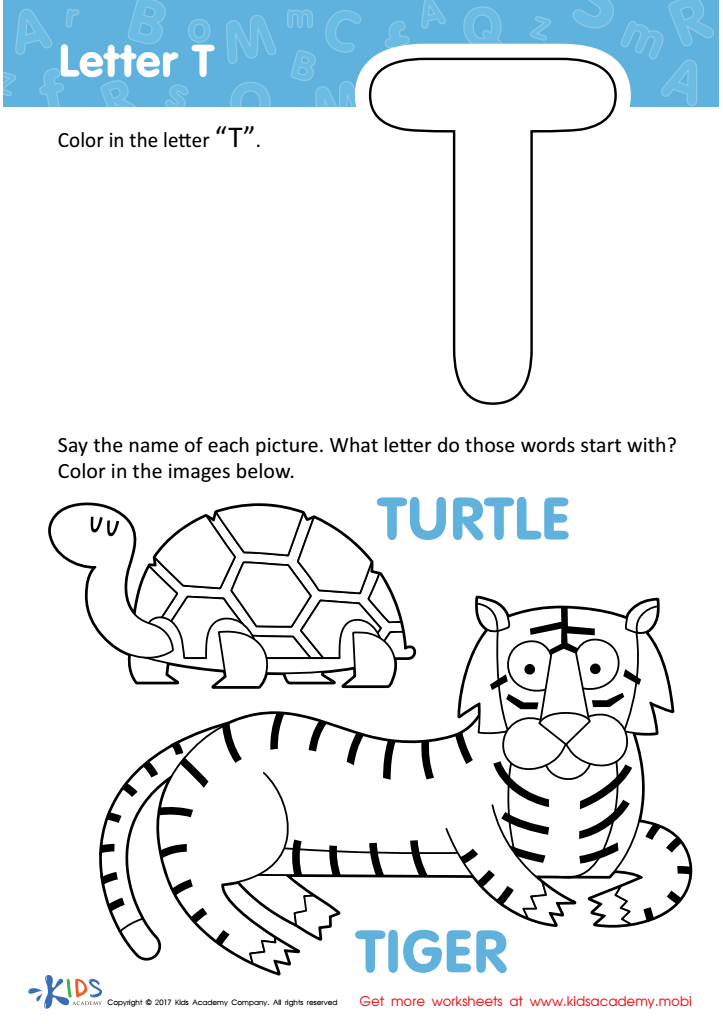
Letter T Coloring Sheet
 Assign to My Students
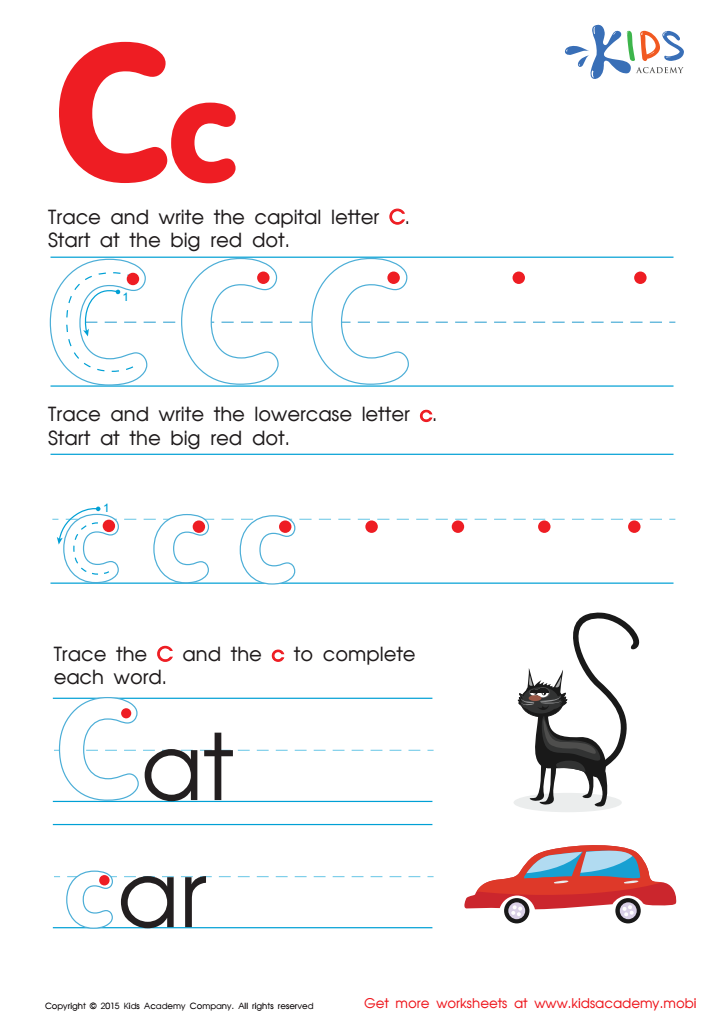
Letter C Tracing Page
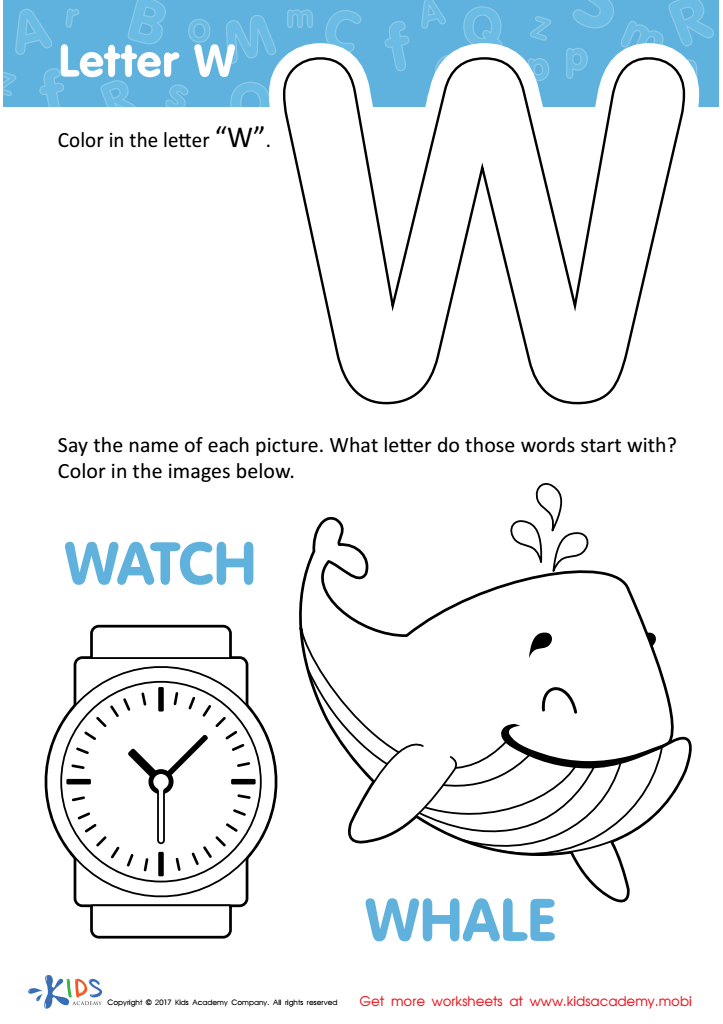
Letter W Coloring Sheet
Assign to My Students




Letter tracing skills play a crucial role in the early literacy development of 7-year-olds. For parents and teachers, ensuring that children develop these skills is essential for several reasons. First, letter tracing helps refine fine motor skills, which are vital for writing legibly. The controlled movement required for tracing aids in muscle memory development, enabling children to grasp writing implements properly.
Second, letter tracing reinforces letter recognition. By repeatedly tracing each letter, children begin to familiarize themselves with its shape, which is the foundational step towards reading. This rote practice helps bridge the gap between seeing a letter and associating it with the corresponding sound, a critical component of phonics.
Additionally, letter tracing encourages focus and perseverance. As children work on tracing each letter, they hone their ability to pay attention to detail and to complete tasks—a skill that benefits them across all learning activities.
Lastly, the act of tracing can be highly engaging, often utilizing fun activities and colorful worksheets, making learning feel like a game rather than a chore. Engaging children in a positive and enjoyable learning experience can foster a lifelong love of learning.
In sum, focusing on letter tracing for 7-year-olds lays a robust groundwork for literacy, fine motor skill development, attention to detail, and a positive educational attitude.