Animal Classification Worksheets for 7-Year-Olds
3 filtered results
-
From - To
Explore our engaging Animal Classification Worksheets for 7-year-olds, designed to make learning fun and interactive! These worksheets introduce young learners to the exciting world of animals, helping them distinguish between different categories such as mammals, reptiles, birds, and more. With vibrant illustrations and simple explanations, your child will develop essential skills in observation and critical thinking. Activities include sorting animals, matching them to their habitats, and identifying key characteristics. Perfect for enhancing science lessons or as supplementary material for home learning, our worksheets foster a love for nature while supporting educational growth. Start your child's adventure in animal classification today!
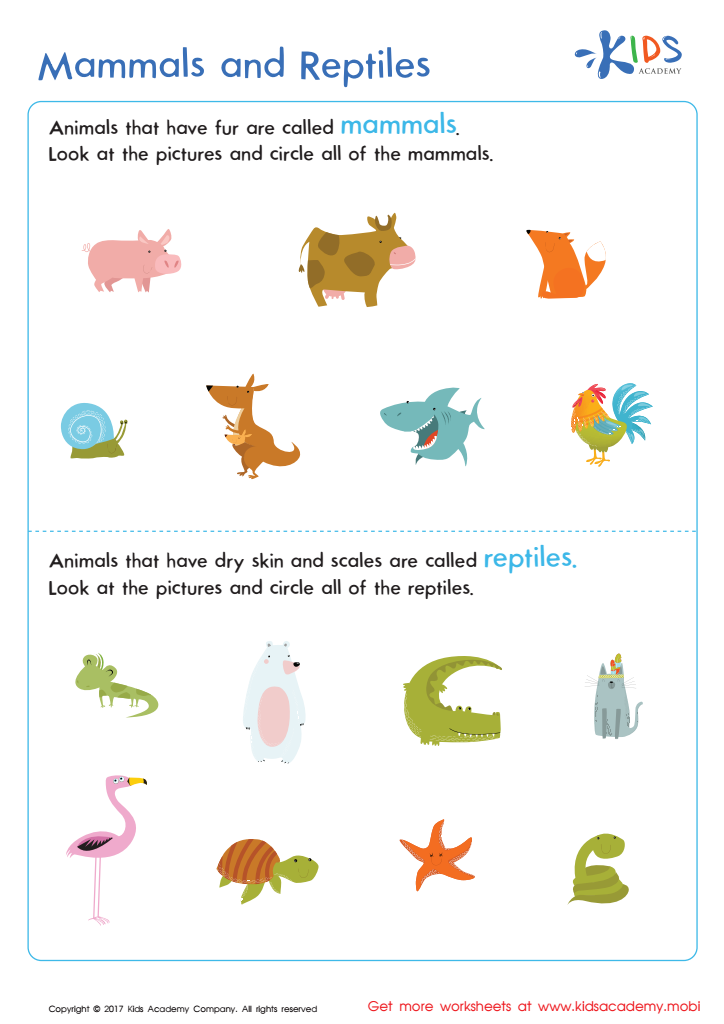
Mammals and Reptiles Worksheet
 Assign to My Students
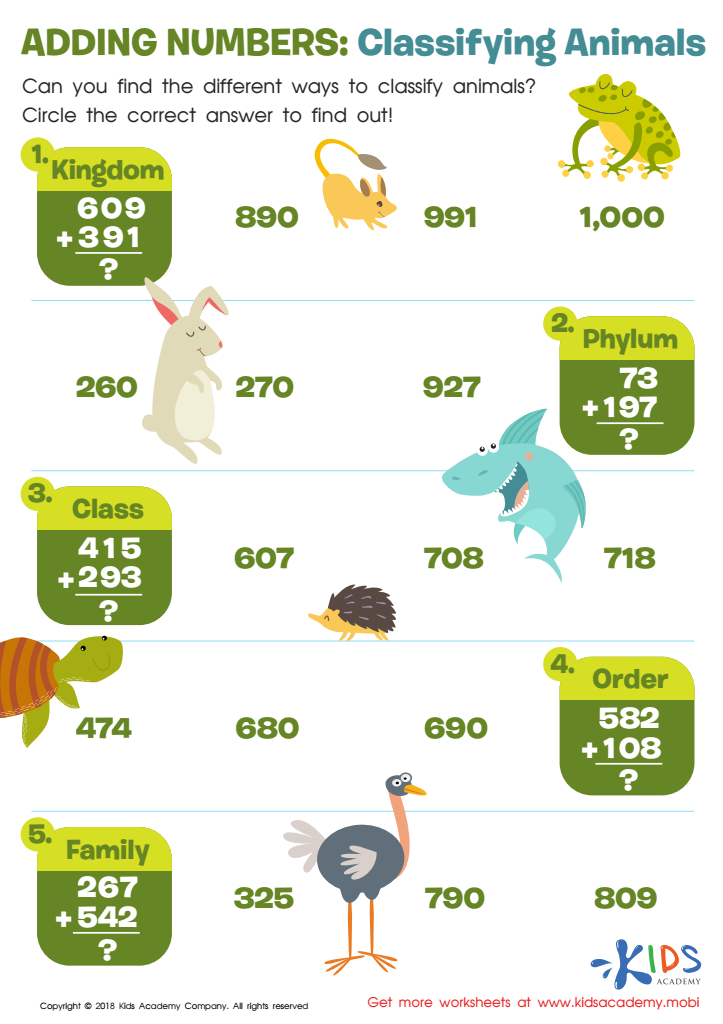
Adding Numbers: Classifying Animals Worksheet
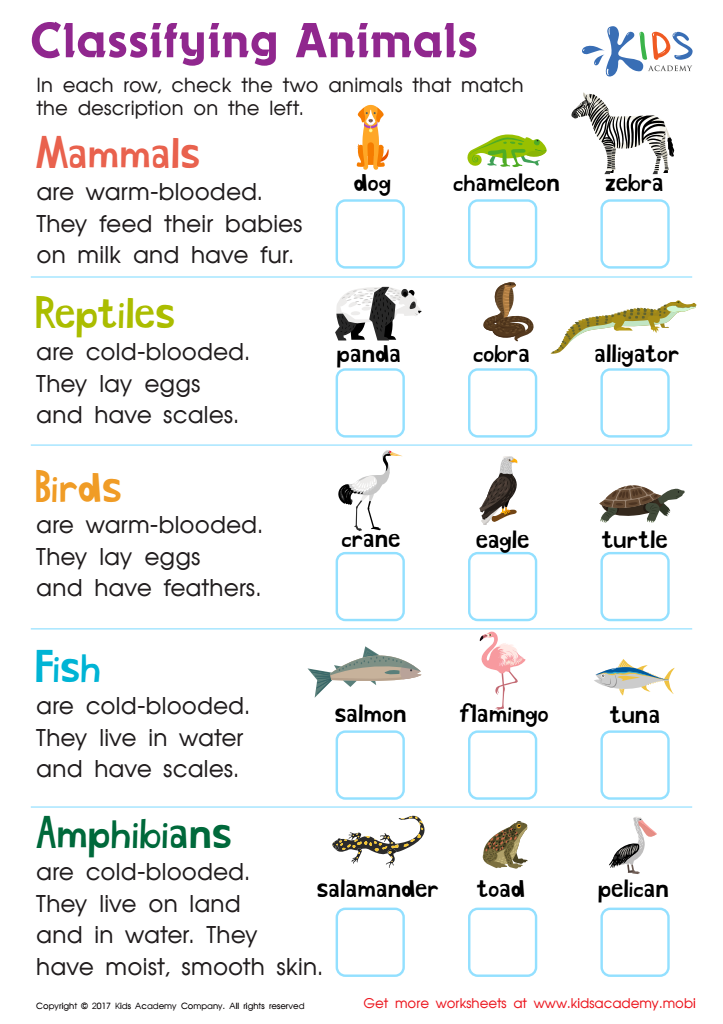
Classifying Animals Worksheet







Understanding animal classification is essential for children, especially those around 7 years old, as it lays the foundation for scientific thinking and inquiry. At this age, children are naturally curious about the world around them, and learning how animals are grouped based on shared characteristics cultivates their observational skills and critical thinking.
Parents and teachers should prioritize this subject as it helps children develop an appreciation for biodiversity and the environment. By identifying different animal groups such as mammals, birds, reptiles, amphibians, and fish, kids learn to recognize patterns and relationships in nature, fostering an understanding of ecosystems and the importance of conservation.
Additionally, animal classification introduces children to terms and concepts that enrich their vocabulary and cognitive skills, enhancing their overall educational experience. Activities centered around this topic—such as observing animals, visiting zoos, or engaging in games—can be designed to be interactive and engaging, making learning fun.
Lastly, encouraging knowledge of animal classification can provoke conversations about respect for living beings and the responsibilities humans have in protecting wildlife, contributing to the development of compassionate and environmentally conscious individuals. Overall, animal classification not only boosts educational growth but also nurtures a sense of responsibility towards nature.








