Applying math skills Worksheets for 7-Year-Olds
3 filtered results
-
From - To
Explore our comprehensive collection of Applying Math Skills Worksheets designed for 7-year-olds! These engaging worksheets help young learners apply their mathematical knowledge to real-world scenarios, enhancing their problem-solving abilities and critical thinking. Each activity is crafted to align with common core standards, focusing on key concepts such as addition, subtraction, multiplication, and division. Our colorful, interactive worksheets make math fun and accessible, encouraging kids to build confidence and proficiency. Perfect for classroom use or supplemental home learning, these resources are ideal for educators and parents alike. Download now and watch your child thrive in their math journey!
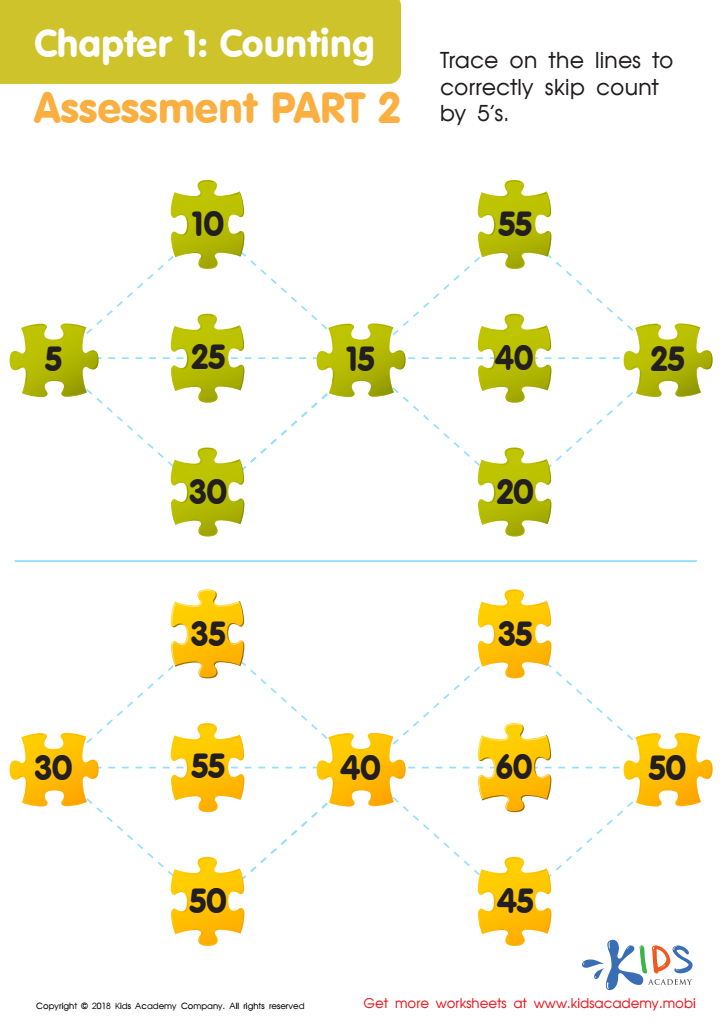
Counting: Assessment 2 Worksheet
 Assign to My Students
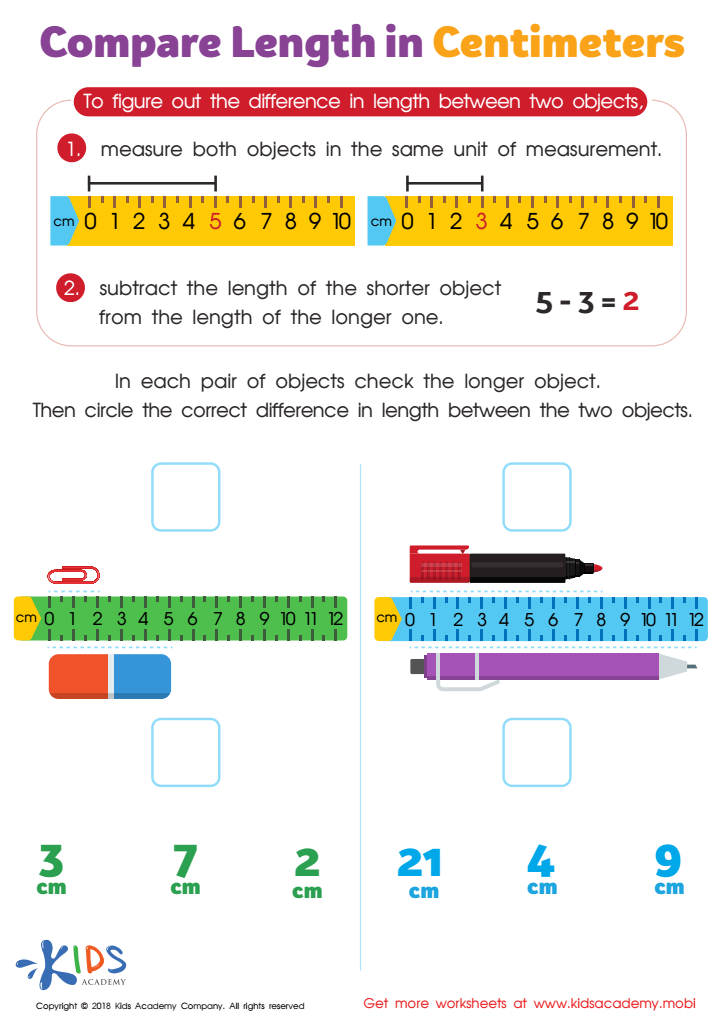
Compare Length in Centimeters Worksheet








Parents and teachers should prioritize the development of math skills in 7-year-olds because this age marks a critical period for cognitive and emotional growth. Mastery of foundational math concepts not only supports academic success in later grades but also helps in nurturing essential life skills. Research indicates that children who grasp math early are more likely to develop analytical thinking, problem-solving abilities, and confidence in their skills, setting the stage for future STEM learning and career opportunities.
Moreover, math is intertwined with everyday life; from shopping to cooking, the ability to apply math makes daily activities more manageable and engaging. Encouraging practical applications of math through fun activities, such as measuring ingredients during cooking or timing the duration of play, helps solidify understanding and fosters a positive attitude toward the subject.
Additionally, early introduction of math skills can help close achievement gaps. Children who receive support from parents and teachers during this formative stage are less likely to struggle with advanced concepts later on. Ultimately, nurturing mathematical aptitude not only prepares children for academic success but also empowers them to tackle real-world challenges confidently and creatively as they grow.








