Fractions understanding Worksheets for 7-Year-Olds
3 filtered results
-
From - To
Discover engaging fractions understanding worksheets designed specifically for 7-year-olds! Our expertly crafted resources help young learners grasp the fundamental concepts of fractions through fun and interactive activities. With a variety of worksheets that cover identification, representation, and comparison of fractions, children will build confidence in their mathematical skills. Each worksheet is tailored to boost understanding in a playful manner, making learning enjoyable and effective. Parents and educators can seamlessly integrate these printable resources into their teaching plans to support children's early math development. Explore our worksheets now and watch your child's understanding of fractions flourish!
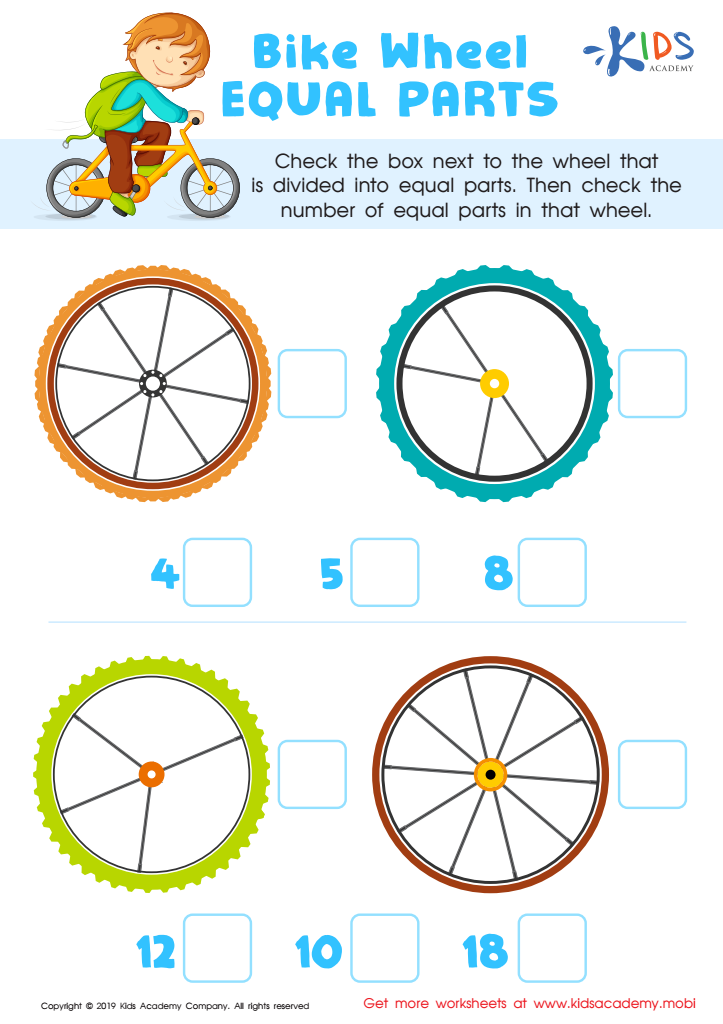
Bike Wheel Equal Parts Worksheet
 Assign to My Students
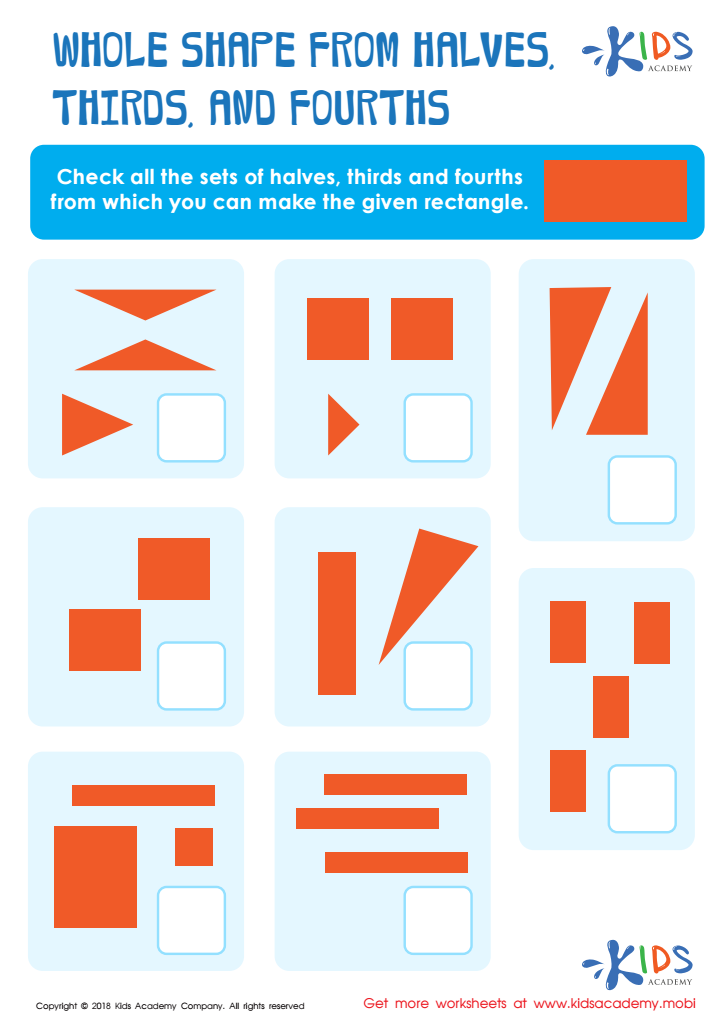
Whole Shape from Halves, Thirds and Fourths Worksheet




.jpg)


Understanding fractions is crucial for 7-year-olds as it lays a foundation for their future math skills and critical thinking abilities. At this age, children begin to explore concepts of part and whole, which are fundamental not only in mathematics but also in daily life. For instance, identifying fractions helps them grasp portions of food, time, and even budgeting, fostering practical decision-making skills.
Parents and teachers should care about this stage of fraction learning because it taps into children’s natural curiosity. It encourages them to see the world around them more analytically. Mastering fractions at an early age builds confidence and reinforces spatial awareness, which are essential for advanced concepts they will encounter later, such as decimals and percentages.
Moreover, since math literacy is tied to future academic success, a strong grasp of fractions can boost overall performance in school. Furthermore, engaging with fractions through playful activities and real-world applications can create enjoyable learning experiences, making the subject matter relevant and stimulating. By prioritizing a solid understanding of fractions, we equip children with essential problem-solving skills that extend well beyond mathematics, shaping them into more capable thinkers in all areas of life.








