
Geographic knowledge Worksheets for 7-Year-Olds
3 filtered results
Difficulty Level
Grade
Age
-
From - To
Subject
Activity
Standards
Discover engaging and educational Geographic Knowledge Worksheets tailored specifically for 7-year-olds. These expertly designed printables from Kids Academy make learning about maps, continents, oceans, and landmarks both fun and interactive. Each worksheet encourages critical thinking and improves spatial awareness with age-appropriate activities, quizzes, and puzzles. Perfect for home or classroom use, these resources help young learners grasp fundamental geography concepts while fostering a love for exploration and discovery. Boost your child's geographic skills and set a strong foundation for future learning with our comprehensive collection of captivating worksheets. Visit Kids Academy to get started today!
Favorites
With answer key
Interactive
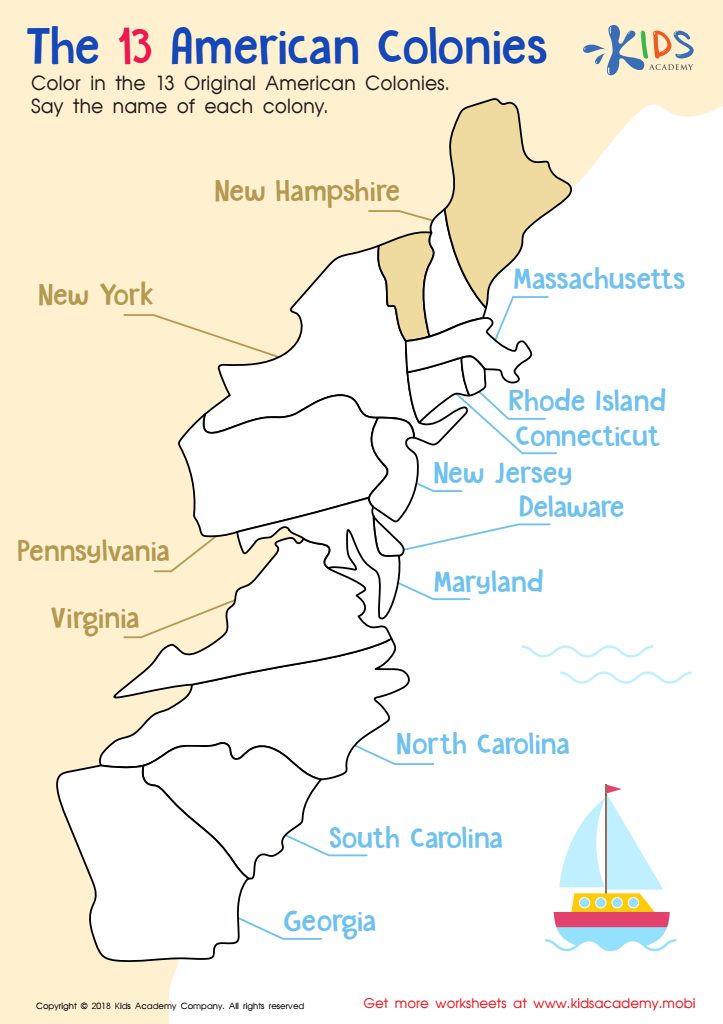
The 13 American Colonies Worksheet
Ensure kids are knowledgeable in maths, English, science, history, and geography. Test their American knowledge: Can they name the 13 Original American Colonies? Use the worksheet; have them color each colony and name it out loud.
Download (PDF)
 Assign to My Students
Assign to My Students
The 13 American Colonies Worksheet
Worksheet
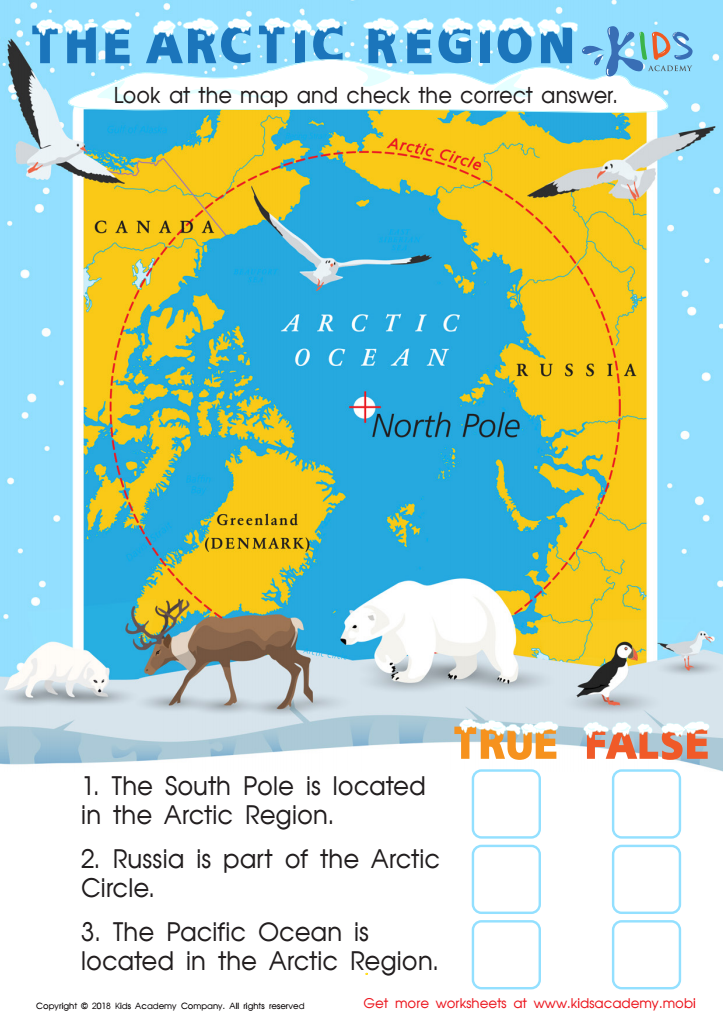
The Arctic Region Worksheet
Kids who love geography will enjoy this worksheet. On the printout there's a map. Show your child the landmarks and read them aloud. Have them take note of the locations. Then, ask them to answer the questions at the bottom using the map; check the answers.
The Arctic Region Worksheet
Worksheet
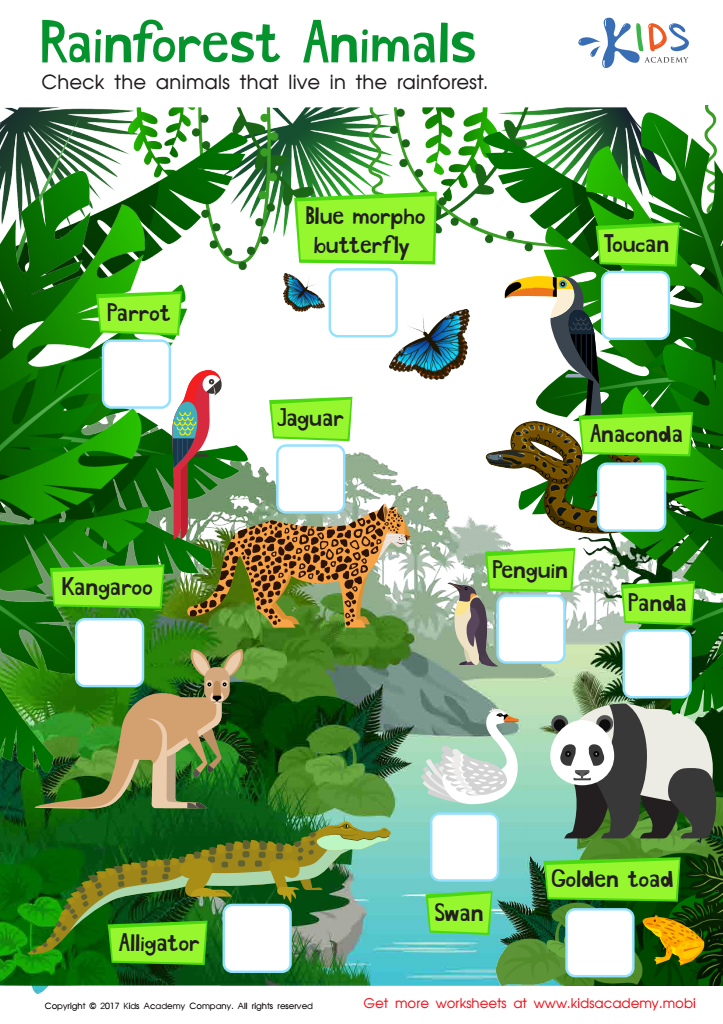
Rainforest Animals Worksheet
Kids love the bright, vivid pics of rainforest animals in this worksheet. It fuels their interest in life science and brings joy to their learning. It encourages them to study these animals in detail.
Rainforest Animals Worksheet
Worksheet
Join Kids Academy for Free
Who is primarily going to use this learning content?




Geographic knowledge is essential for 7-year-olds as it provides a foundation for understanding the world around them, fostering a sense of place and global awareness. By learning basic geography, children begin to comprehend the spatial relationships between different locations, enriching their ability to connect with their immediate environment and the broader world. This awareness prompts curiosity and openness, crucial traits for lifelong learning.
For parents and teachers, promoting geographic knowledge means equipping children with tools to appreciate cultural diversity and environmental interdependence early on. Understanding different regions, climates, and ecosystems cultivates empathy and respect for other people and natural habitats. Furthermore, geography nurtures critical thinking and problem-solving skills. Activities like map reading, discussing landscapes, and noting geographical features involve logical reasoning, helping to foster cognitive development.
At a practical level, early geographic learning supports academic achievement in other subjects, such as history and science, by providing contextual background. Knowing where historical events occurred or how geographical factors influence climate patterns enriches a child’s educational experience, allowing for a more integrated understanding of various subjects.
Teachers and parents caring about geographic education are, therefore, guiding children to become well-rounded, informed, and compassionate individuals prepared to navigate and contribute positively to an interconnected world.








