
Improves number recognition Worksheets for 7-Year-Olds
3 filtered results
Difficulty Level
Grade
Age
-
From - To
Subject
Activity
Standards
Enhance your 7-year-old's number recognition skills with our engaging worksheets! Designed specifically for young learners, these printable activities make mastering numbers fun and interactive. Each worksheet focuses on different aspects of number recognition, including identifying, writing, and counting. With colorful illustrations and relatable themes, children will enjoy solving problems and completing exercises that stimulate their learning. Perfect for home or classroom use, these worksheets also support foundational math skills essential for future learning success. Empower your child with confidence in their number abilities while cultivating a love for learning through play. Experience the joy of number recognition today!
Favorites
With answer key
Interactive
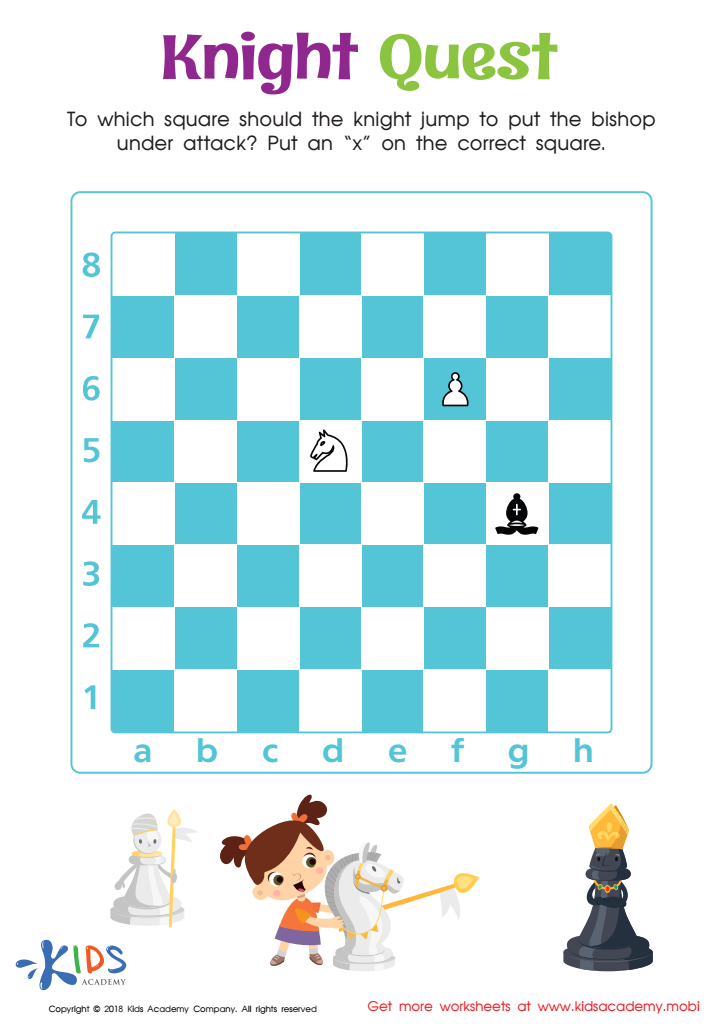
Knight Quest Worksheet
Testing your child's strategic planning and chess skills? Give them this worksheet: Ask them to mark an 'x' on the square where the knight should jump to attack the enemy bishop. See how well they plan for a win! (80 words)
 Assign to My Students
Knight Quest Worksheet
Worksheet
Join Kids Academy for Free
Who is primarily going to use this learning content?







Improving number recognition in 7-year-olds is crucial for fostering a strong foundation in mathematics and overall cognitive development. At this age, children are transitioning from basic counting to understanding numerical concepts and their applications. Mastery of number recognition helps them confidently engage in more complex mathematical operations, such as addition, subtraction, and problem-solving, which become integral parts of their education.
Parents and teachers should care about this skill because it directly correlates with academic success. Children who struggle with number recognition may find math intimidating, which can hinder their interest and performance in the subject. Early intervention ensures these children develop a positive attitude towards math and a belief in their capabilities, promoting lifelong learning.
Moreover, number recognition plays a pivotal role in everyday life. By being proficient in recognizing and understanding numbers, children can develop essential skills for managing time, money, and basic data. This early experience with numbers contributes to their ability to interpret information, make decisions, and face real-world situations confidently as they grow.
In summary, prioritizing number recognition in young learners not only supports their academic journey but also equips them with vital skills necessary for navigating life effectively.








