Math problem-solving skills Worksheets for 7-Year-Olds
4 filtered results
-
From - To
Discover our engaging Math Problem-Solving Skills Worksheets, specifically designed for 7-year-olds! These interactive resources help young learners develop essential problem-solving abilities through a variety of fun exercises and activities. Kids will enhance their critical thinking skills, improve their number sense, and build confidence as they tackle age-appropriate math challenges. Our worksheets cover essential topics like addition, subtraction, and basic word problems, making math both enjoyable and accessible. Perfect for at-home practice or classroom use, these worksheets will keep your child engaged while they master fundamental math concepts. Equip your child with the skills they need for a successful math journey!
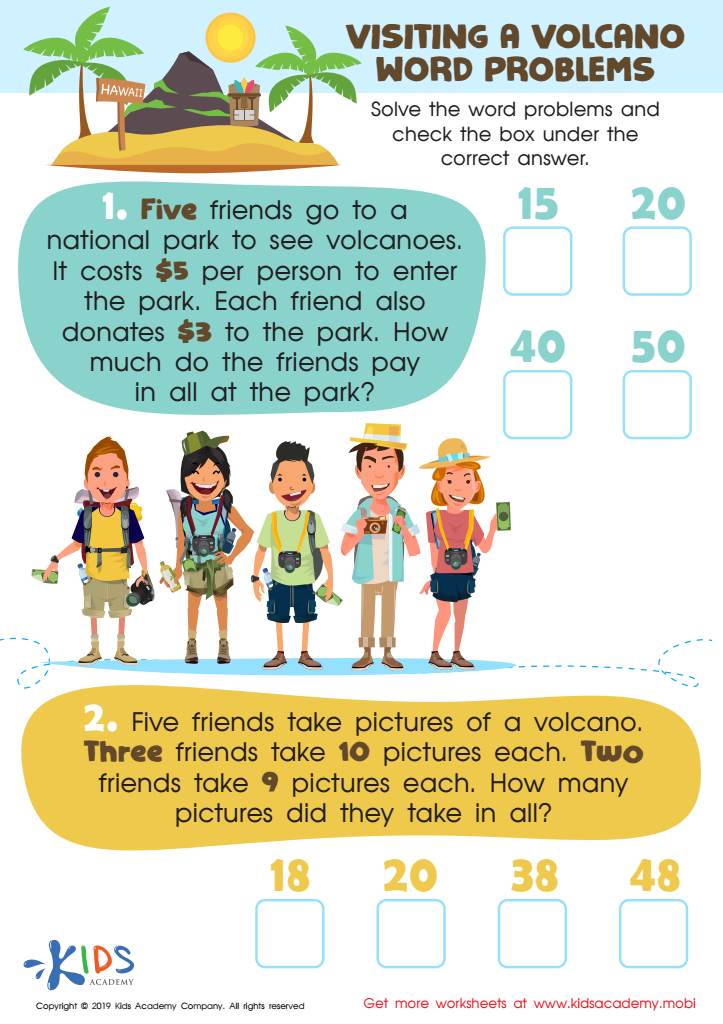
Visiting a Volcano Word Problems Worksheet
 Assign to My Students







Math problem-solving skills are crucial for 7-year-olds, as they lay the foundation for critical thinking and everyday decision-making. At this age, children are developing their ability to understand and manipulate numbers, interpret mathematical relationships, and engage in logical reasoning. Recognizing patterns and solving problems help children to connect mathematical concepts to real-life scenarios, fostering a practical understanding of how math applies to the world around them.
Parents and teachers play an essential role in nurturing these skills. Encouraging children to approach problems with confidence can boost their self-esteem and resilience, important traits for future learning. Math problem-solving also enhances creativity, as children often need to think outside the box to find solutions.
Additionally, strong math skills correlate with academic success in other subjects, improving a child’s overall educational experience. Furthermore, in a world that increasingly relies on technology and data analysis, equipping young learners with solid math problem-solving skills prepares them for future opportunities and challenges. Engaging with math in a supportive environment can spark a lifelong interest in the subject, fostering a generation that values analytical thinking and a love for learning. By prioritizing math problem-solving, parents and teachers contribute to children's holistic development.








