
Number writing Worksheets for 7-Year-Olds
3 filtered results
Difficulty Level
Grade
Age
-
From - To
Subject
Activity
Standards
Discover our engaging number writing worksheets designed specifically for 7-year-olds! These resources help young learners practice their number formation and handwriting skills through interactive and fun activities. Our worksheets encourage children to trace, write, and refine their understanding of numbers, promoting confidence in their mathematical abilities. With vibrant illustrations and clear instructions, your child will enjoy honing their writing skills while reinforcing their knowledge of numerals. Ideal for homeschooling or supplementing classroom learning, these worksheets provide a valuable tool for fostering literacy and numeracy. Downloadable and easy to use, our number writing worksheets are perfect for budding mathematicians!
Favorites
With answer key
Interactive
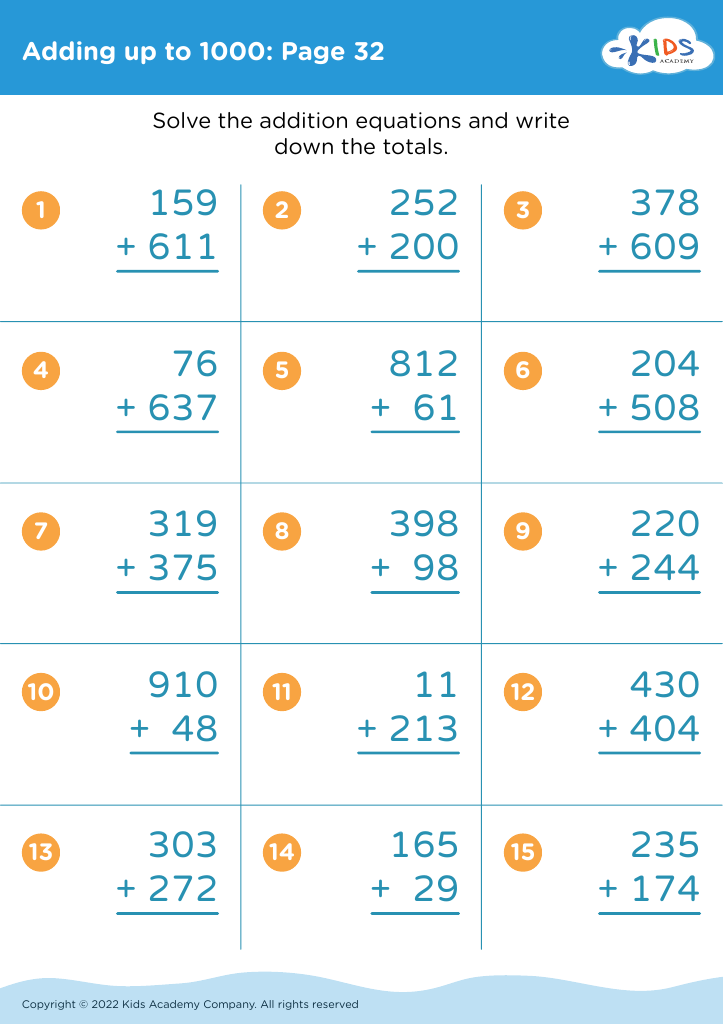
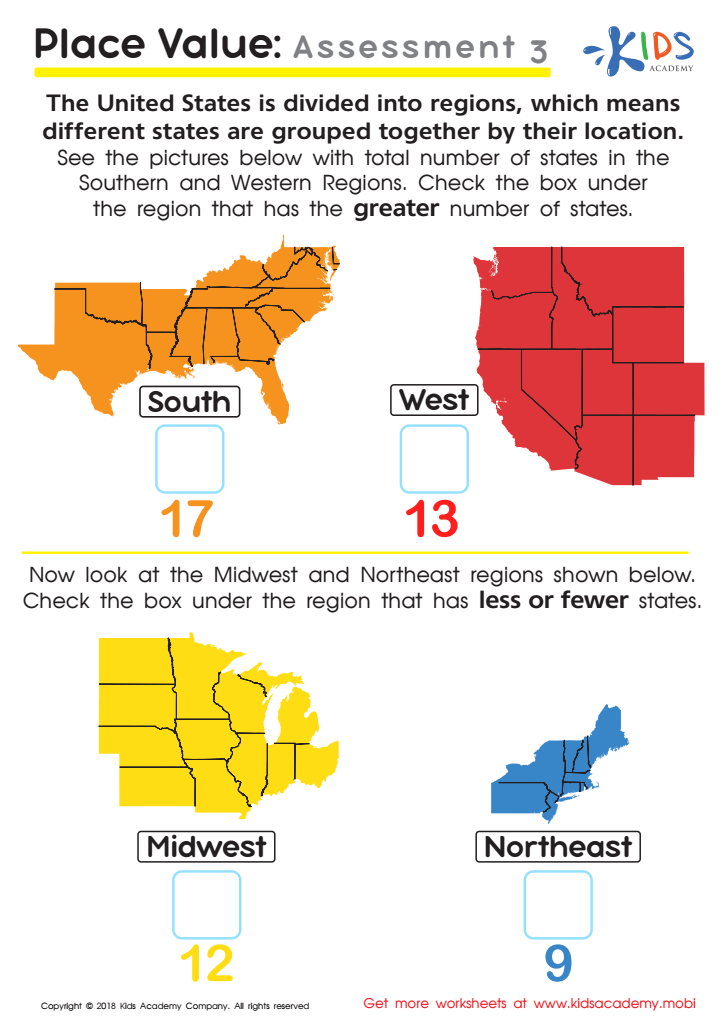
Place Value: Assessment 3 Worksheet
Test your child's math skills without them realizing it! This fun worksheet looks at the states and regions of the U.S. and your child can compare numbers greater or lesser than the other. It's the perfect way to assess your child's number sense without them knowing.
 Assign to My Students
Place Value: Assessment 3 Worksheet
Worksheet
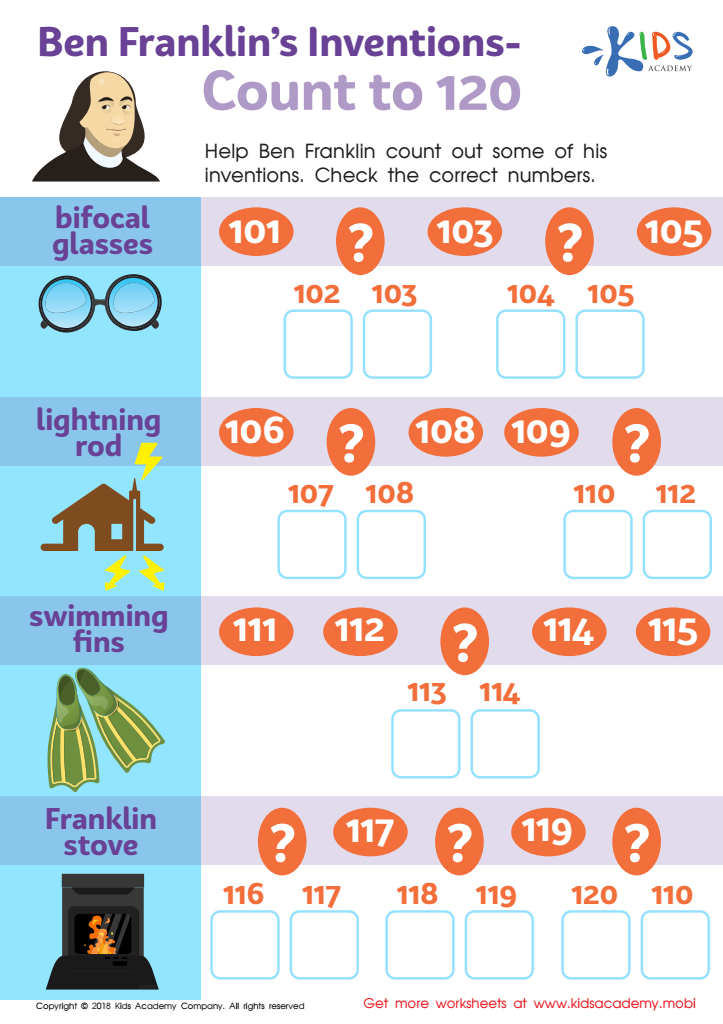
Ben Franklin’s Inventions – Count to 120 Worksheet
Benjamin Franklin is a significant figure in US history. He invented objects we use daily. If your child is interested in object history and invention, they'll love this worksheet. See if they can help Mr Franklin count his inventions and check their answers. It's a simple and enjoyable task!
Ben Franklin’s Inventions – Count to 120 Worksheet
Worksheet
Join Kids Academy for Free
Who is primarily going to use this learning content?




.jpg)



Teaching number writing to 7-year-olds is essential as it forms the foundation for later mathematical skills and cognitive development. At this age, children are transitioning from simple number recognition to more complex mathematical tasks, including addition, subtraction, and basic problem-solving. By emphasizing number writing, parents and teachers help children improve their fine motor skills, which are crucial for overall handwriting and drawing proficiency.
Moreover, writing numbers reinforces their understanding of numerical concepts, aiding memory retention and mathematical fluency. This practice supports students in developing an organized approach to math, allowing them to visualize operations and understand concepts like place value more deeply.
Encouraging number writing also nurtures a child’s ability to communicate their thought processes in mathematics. Written numbers can help clarify their reasoning, making it easier for adults to understand their approach and provide targeted support.
Lastly, establishing a strong foundation in number writing catalyzes a child's confidence and enthusiasm for math. When children feel capable and adept at working with numbers, they're more likely to engage positively with future mathematical learning experiences, setting the stage for academic success in school and beyond. Thus, supporting number writing is crucial for holistic child development in mathematics.








