Recognizing equal parts Worksheets for 7-Year-Olds
3 filtered results
-
From - To
Welcome to our Recognizing Equal Parts Worksheets for 7-Year-Olds! These engaging, printable resources are designed to help young learners grasp the concept of fractions through fun and interactive activities. With vibrant illustrations and simple instructions, children will easily explore equal parts in various shapes and sizes, developing their critical thinking and problem-solving skills. Ideal for classroom use or at-home learning, our worksheets foster curiosity and hands-on experiences, ensuring a solid foundation in math. Download today and watch your child build confidence in recognizing equal parts while enjoying the learning journey! Perfect for educators and parents alike.
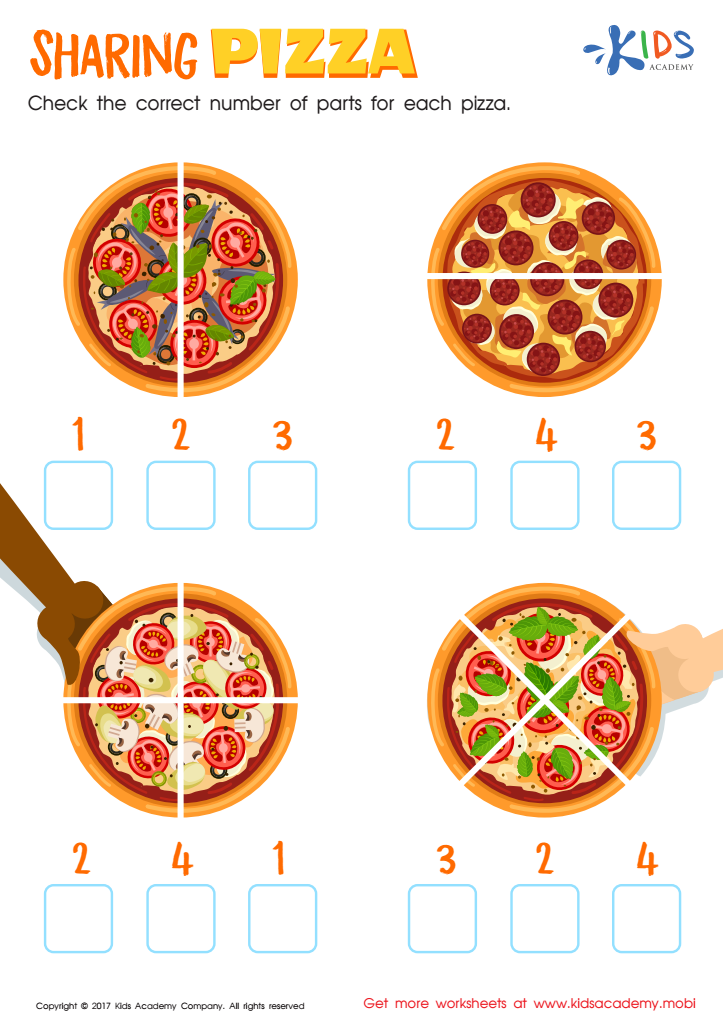
Sharing Pizza Worksheet
 Assign to My Students
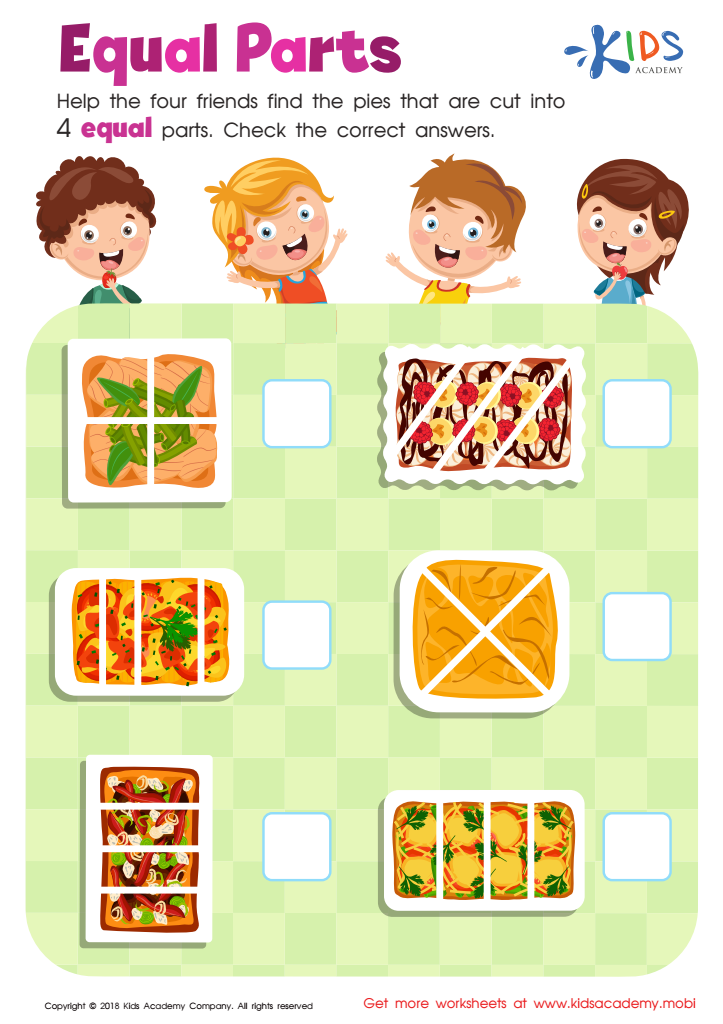
Equal Parts: Food Worksheet



Recognizing equal parts is a fundamental concept in mathematics and geometry that significantly impacts a child’s cognitive development and understanding of the world around them. For 7-year-olds, grasping the idea of equal parts develops essential skills in problem-solving, critical thinking, and spatial awareness. When parents or teachers emphasize recognizing equal parts, they aid children in understanding fractions, which are crucial for grasping more complex mathematical concepts later on.
Moreover, recognizing equal parts fosters a sense of fairness and equity. As children learn to divide objects or shapes into equal portions, they begin to appreciate the importance of sharing and fairness in their relationships with peers and family. This skill can translate into real-life situations, such as sharing food or resources, and encourages teamwork and cooperation.
Additionally, understanding equal parts fuels creativity. Encouraging children to engage with art, cooking, or crafting by dividing materials into equal sections helps them explore this concept practically and expressively. In essence, promoting the recognition of equal parts nurtures key academic skills, social values, and creative problem-solving abilities that are vital for a well-rounded education and personal growth.








