Telling time Worksheets for 7-Year-Olds
4 filtered results
-
From - To
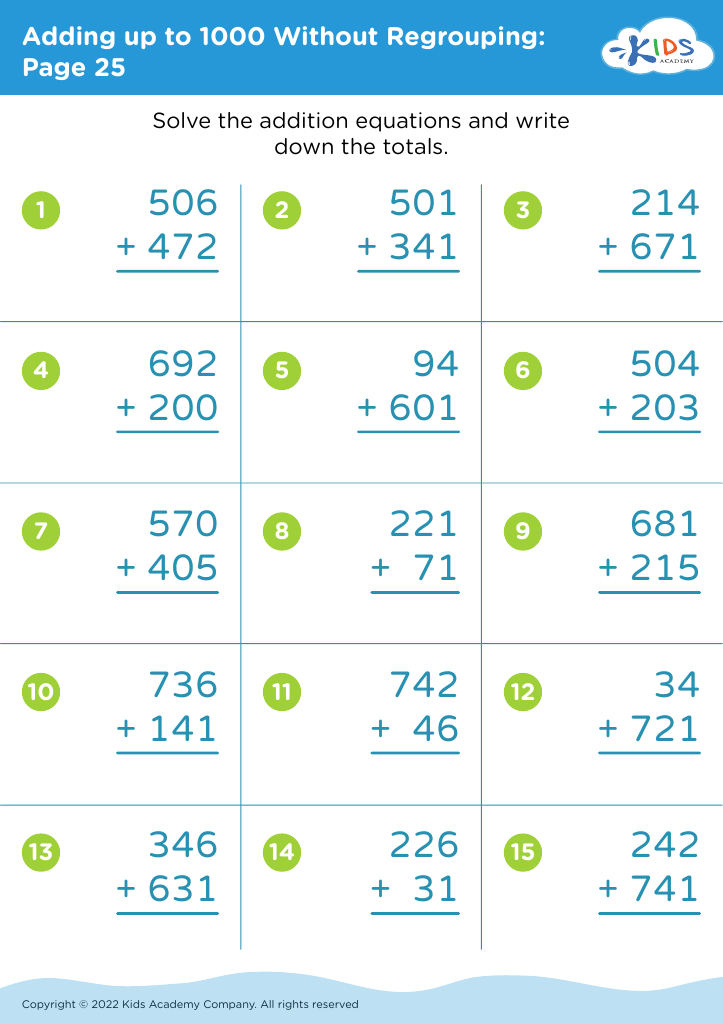
Enhance your child's time-telling skills with our engaging worksheets for 7-year-olds! Designed to make learning fun, our worksheets at Kids Academy help young learners grasp the concept of time, from reading analog clocks to understanding hours and minutes. These interactive activities are perfect for developing time sense and boosting confidence. With colorful designs and stimulating exercises, kids remain interested while mastering essential skills. Support your child's education journey and ensure they stay ahead. Discover the perfect collection to help your child learn at their own pace! Start exploring our Telling Time worksheets today!
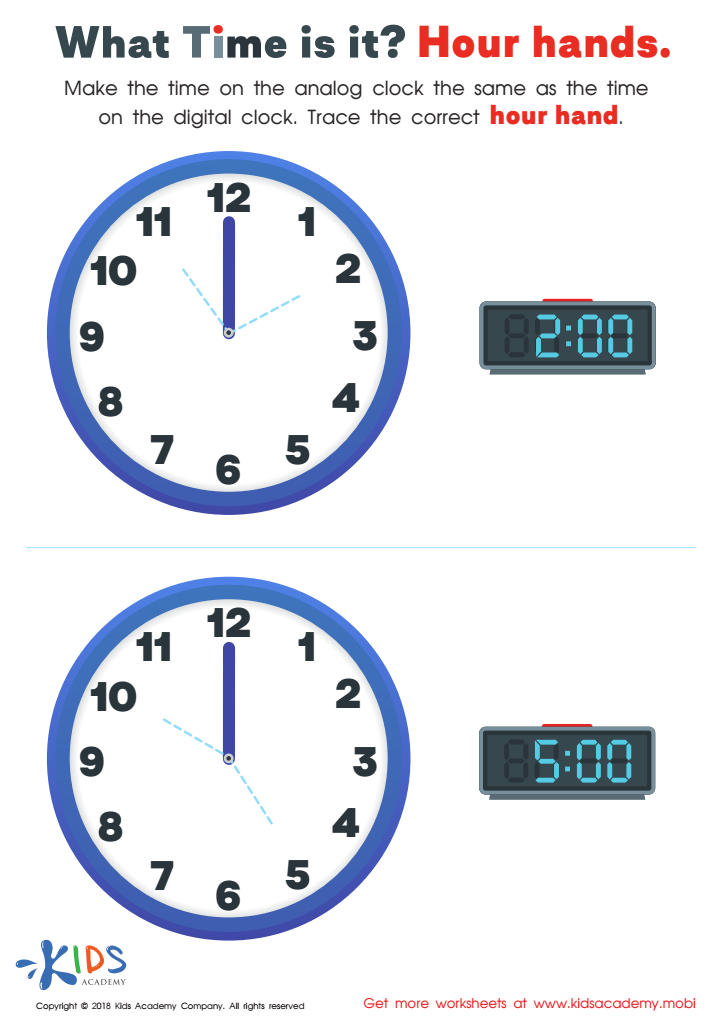
What Time Is it? Hour Hands Worksheet
 Assign to My Students








Telling time is a fundamental skill that 7-year-olds need to master, serving as a cornerstone for their overall development. For parents and teachers, caring about this skill is crucial for several reasons. Firstly, understanding time helps children develop a sense of responsibility and independence. It allows them to organize their day, manage their tasks, and comprehend the concept of punctuality. Knowing when to wake up, go to school, complete homework, and engage in extracurricular activities builds a structured routine, fostering discipline.
Moreover, learning to tell time enhances mathematical skills. Reading clocks involves counting, addition, and subtraction, which reinforces number sense and problem-solving abilities. It introduces children to fractions, as they recognize halves and quarters on the clock face, linking to broader mathematical concepts they'll encounter later.
Additionally, telling time is intertwined with daily life. It aids in understanding the sequence of events, enhancing cognitive skills related to cause and effect, and time-management literacy. Real-world applications, such as scheduling playdates, catching a bus, or adhering to timelines, provide practical lessons in reliability and readiness for future, more complex time-bound tasks.
In essence, by ensuring that 7-year-olds grasp the skill of telling time, parents and teachers set a solid foundation for their academic progress, personal growth, and lifelong independence.








