Understanding grouping Worksheets for 7-Year-Olds
3 filtered results
-
From - To
Discover our engaging understanding grouping worksheets designed specifically for 7-year-olds! These activities help young learners master the concept of grouping items—an essential mathematical skill. Through fun exercises, children will practice categorizing and sorting various objects, enhancing their critical thinking and observation skills. Our worksheets encourage hands-on learning and creativity, making math enjoyable and accessible. Perfect for at-home practice or classroom use, these resources support early learners in building a strong foundation in math and developing organizational skills. Explore our collection today and watch your child thrive as they grasp the importance of grouping in everyday life and mathematics!
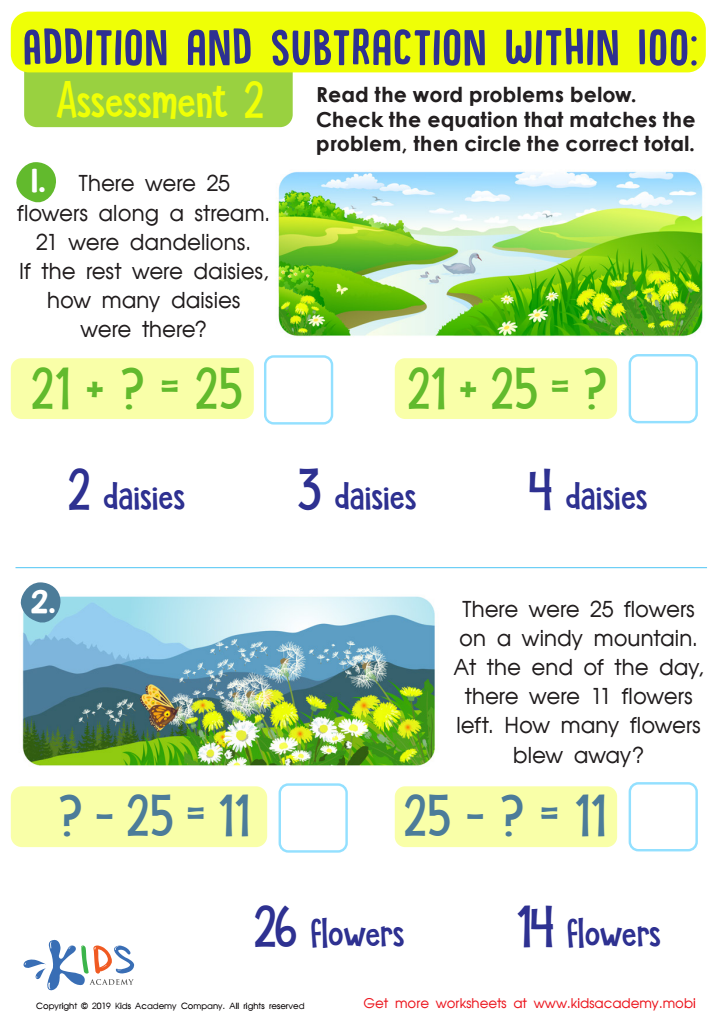
Assessment 2 Math Worksheet
 Assign to My Students
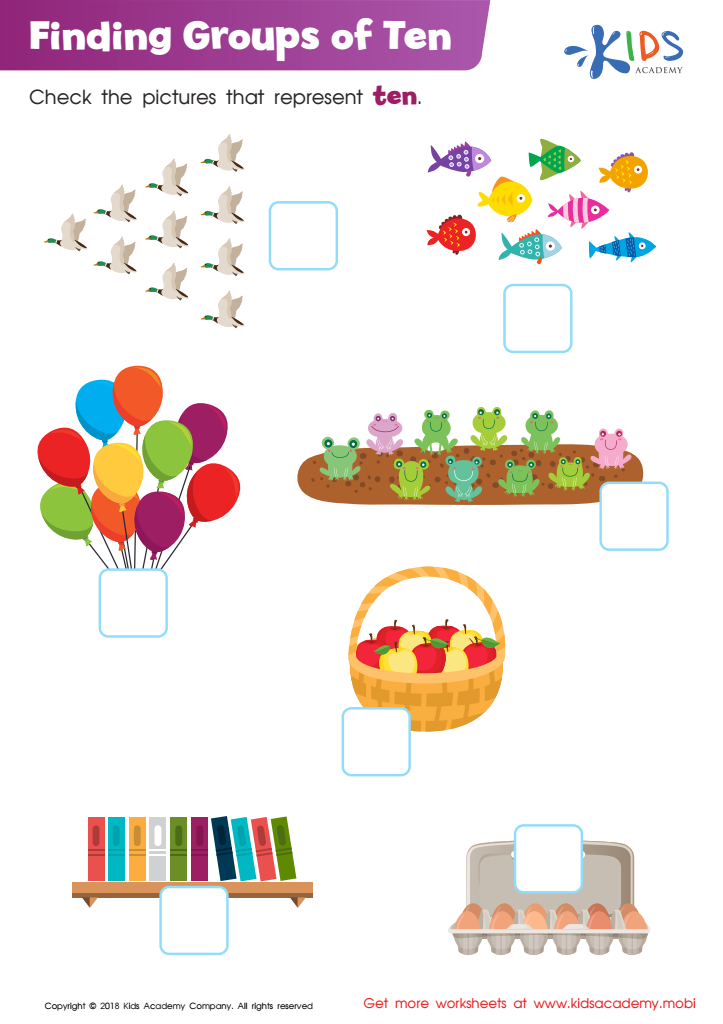
Finding Groups of Ten Worksheet
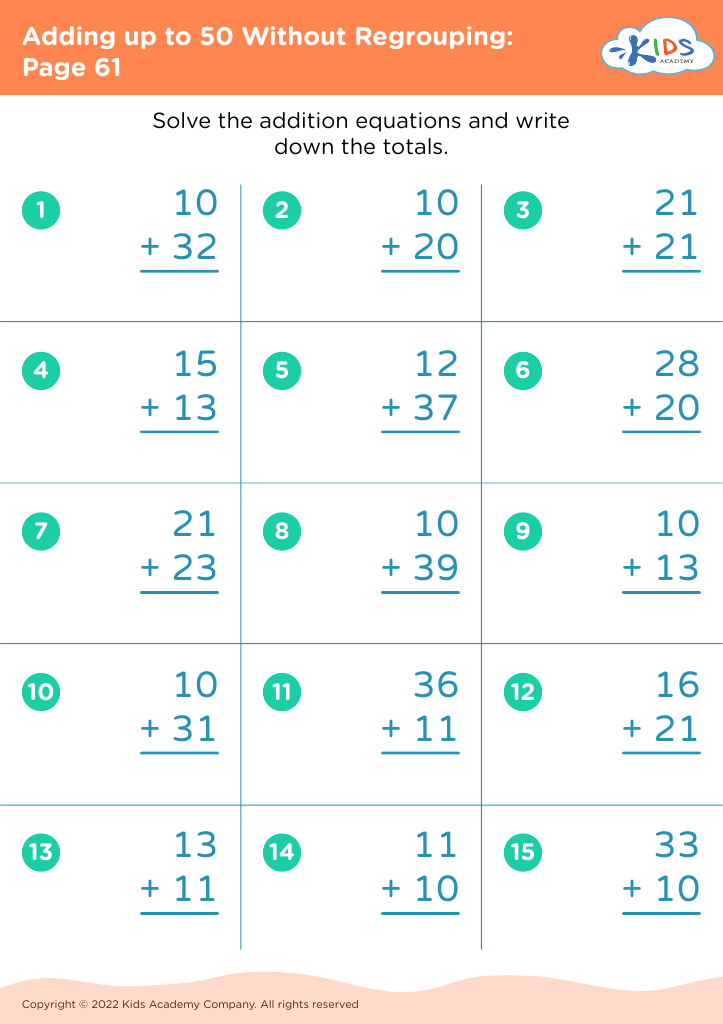







Understanding grouping is vital for 7-year-olds as it forms a foundational skill that underpins various academic concepts. At this age, children begin to encounter more complex mathematical ideas, such as addition, subtraction, multiplication, and division. Grouping helps them comprehend these concepts by allowing them to visualize and organize numbers in a way that makes calculations easier and more systematic.
Moreover, grouping encourages critical thinking and problem-solving skills. When children learn to group items or numbers, they enhance their ability to analyze patterns, recognize similarities or differences, and make connections among various concepts. This foundational understanding can foster a lifelong love of learning, as children become more adept at handling challenges in mathematics and beyond.
Furthermore, grouping can be an effective social tool, sometimes encouraging collaboration among peers. When children work together in groups, they develop teamwork and communication skills, which are essential for success in school and later in life. By recognizing the importance of grouping, parents and teachers can provide targeted support, enabling students to build endurance and confidence in their learning journey, ultimately setting the stage for future academic accomplishment and personal growth.








