Understanding light sources Worksheets for 7-Year-Olds
4 filtered results
-
From - To
Illuminate young minds with our "Understanding Light Sources" worksheets designed for 7-year-olds. These engaging worksheets from Kids Academy help children explore various light sources, enhancing their comprehension through fun and interactive activities. Through these printables, kids learn to identify natural and artificial light sources, understand how light travels, and develop critical thinking skills. Perfect for reinforcing science concepts taught in school, these worksheets provide hands-on learning that sparks curiosity and fosters a deeper understanding of the world around them. Start your child's journey into the fascinating realm of light with Kids Academy today!
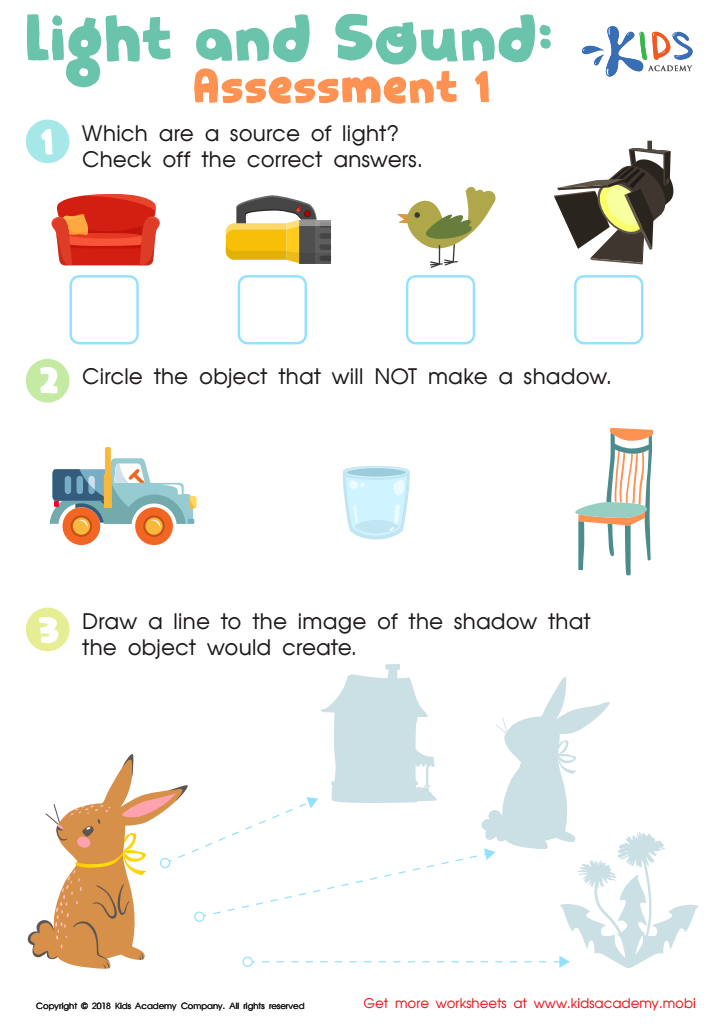
Light and Sound: Assessment 1 Worksheet
 Assign to My Students
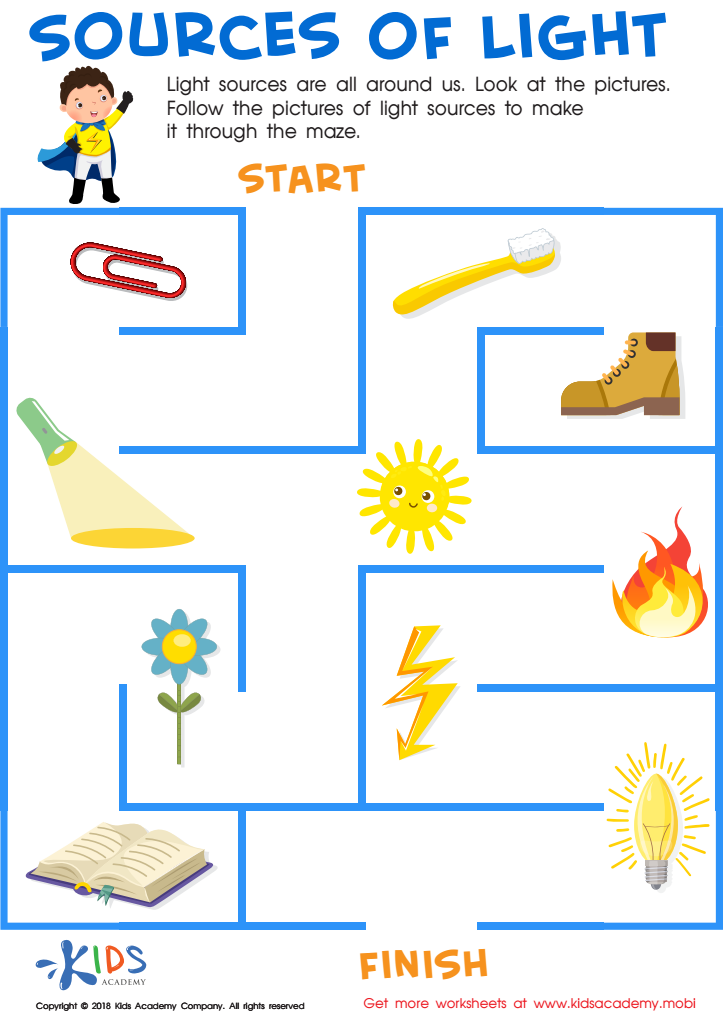
Sources of Light Worksheet
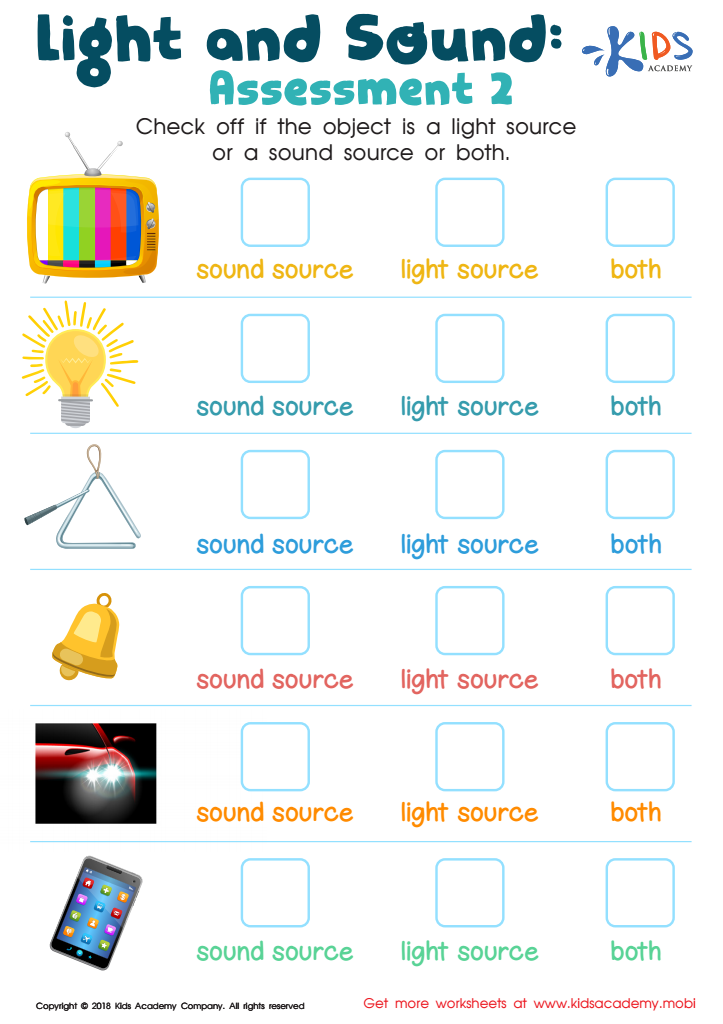
Light and Sound: Assessment 2 Worksheet
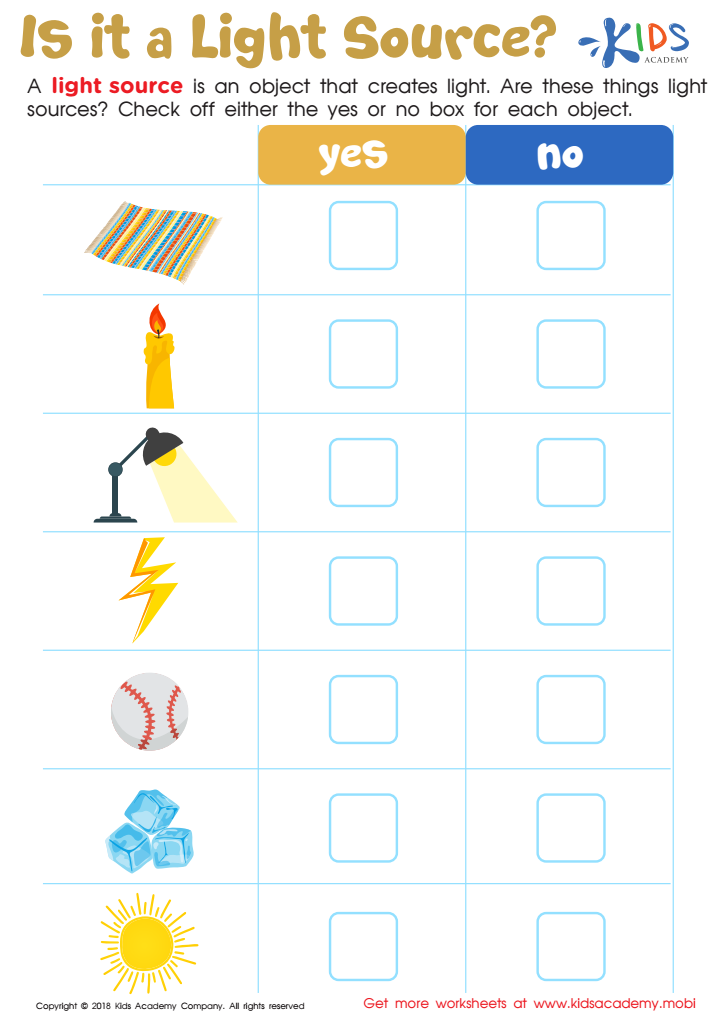
Is It a Light Source? Worksheet





.jpg)


Understanding light sources is fundamentally important for 7-year-olds as it lays the foundation for scientific inquiry and comprehension of the world. Encouraging curiosity about light introduces basic concepts of physics, energy, and environmental awareness that are crucial for their cognitive development.
At this age, children are naturally curious and open to learning new things. Exploring light sources—such as the sun, bulbs, and screens—piques their interest and encourages critical thinking. It helps them distinguish between natural and artificial sources of light, broadening their understanding of their environment. This, in turn, nurtures observational skills and fosters a mindset of questioning and discovering.
Moreover, recognizing the importance of natural light can instill sustainable habits early on. Children learn that sunlight is essential for plants, which ties into broader ecological topics about the environment and life sciences. This can also lead to discussions about energy conservation and why turning off lights when not needed is beneficial for the planet.
Additionally, understanding light sources links to everyday safety and health, emphasizing why we shouldn’t look directly at the sun or why flashlight batteries need to be checked.
Incorporating these lessons in a playful and engaging manner ensures children retain and apply this knowledge, enriching their educational experience and forming a solid base for future scientific learning.








