Understanding sequence Worksheets for 7-Year-Olds
7 filtered results
-
From - To
Discover the importance of understanding sequences with our engaging worksheets for 7-year-olds! These resources help young learners grasp the concept of order and sequence through fun activities and colorful illustrations. Our printable worksheets encourage children to practice arranging events, steps, and objects logically, enhancing their critical thinking and reasoning skills. By working through various exercises, students will improve their ability to recognize patterns and predict outcomes—essential skills for their educational journey. Perfect for home or classroom use, our understanding sequence worksheets are designed to make learning enjoyable and effective for your child. Start building a strong foundation today!
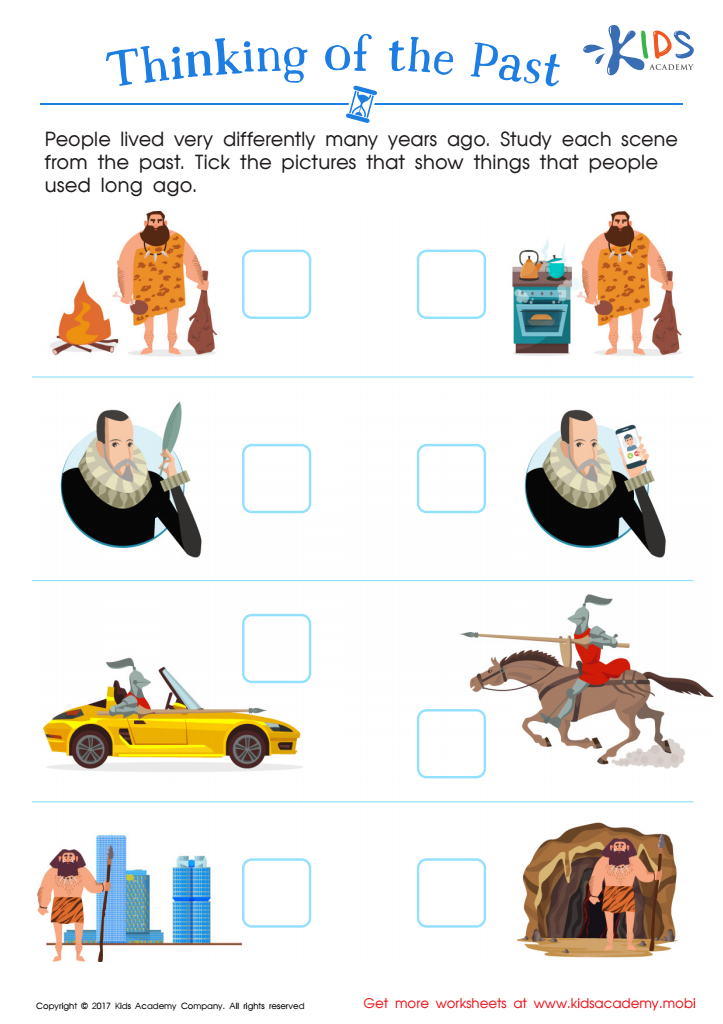
Thinking Past Printable
 Assign to My Students
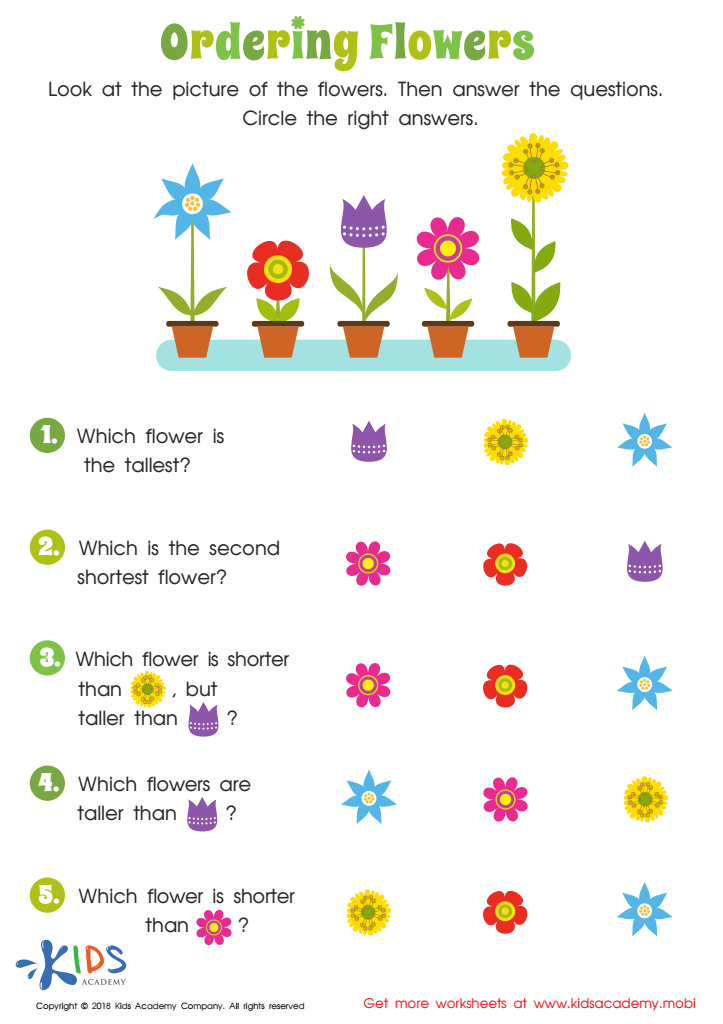
Ordering Flowers Worksheet
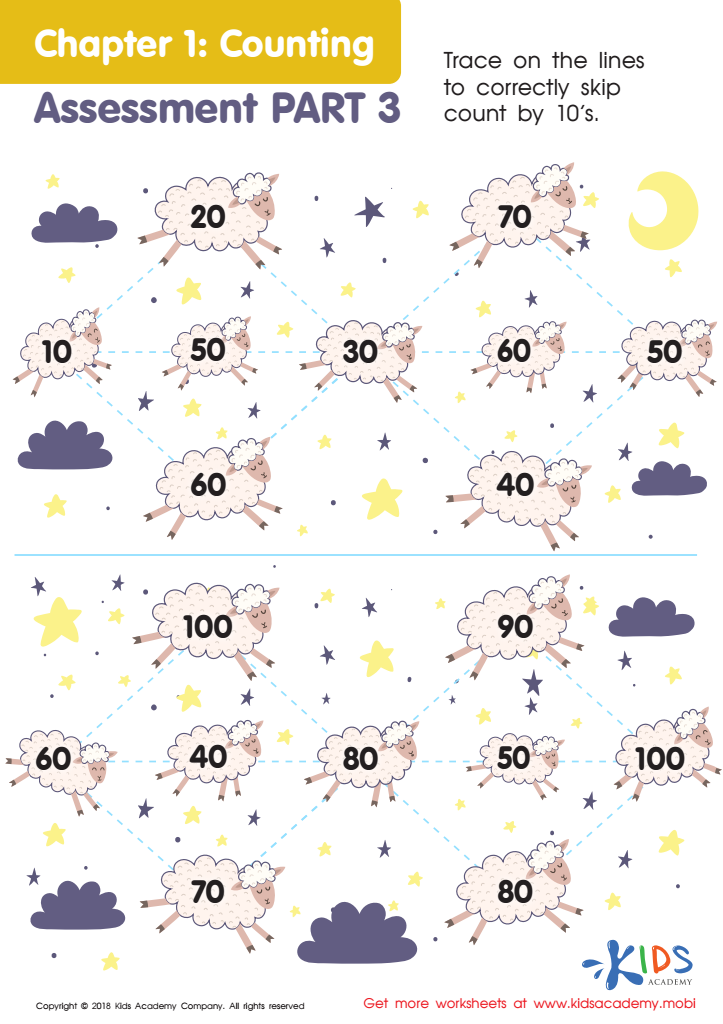
Counting: Assessment 3 Worksheet
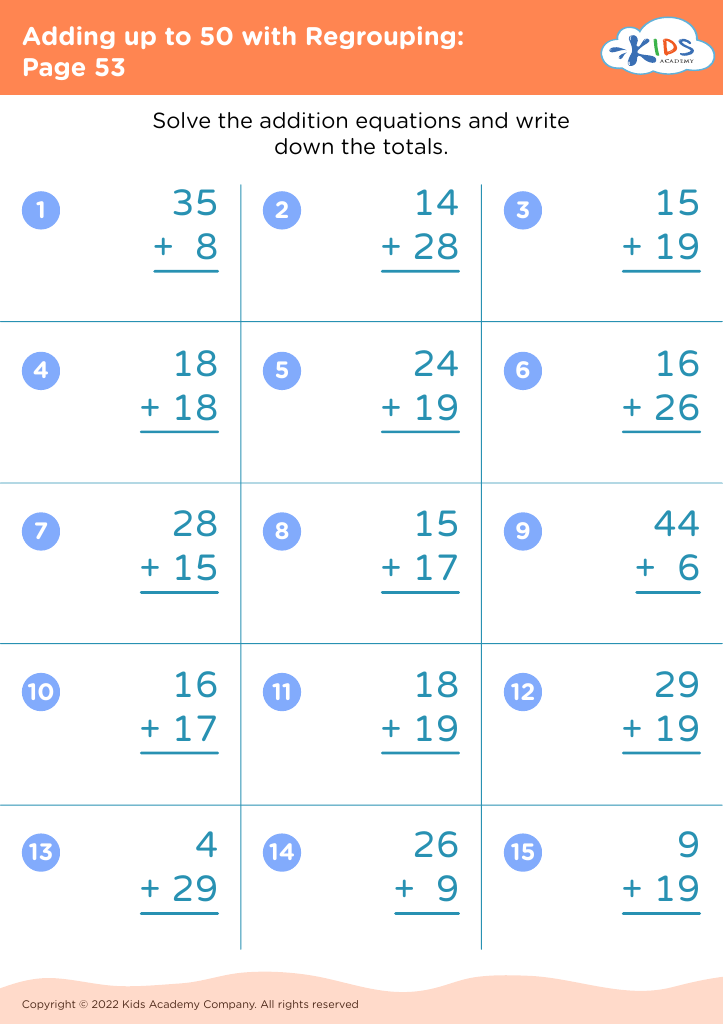
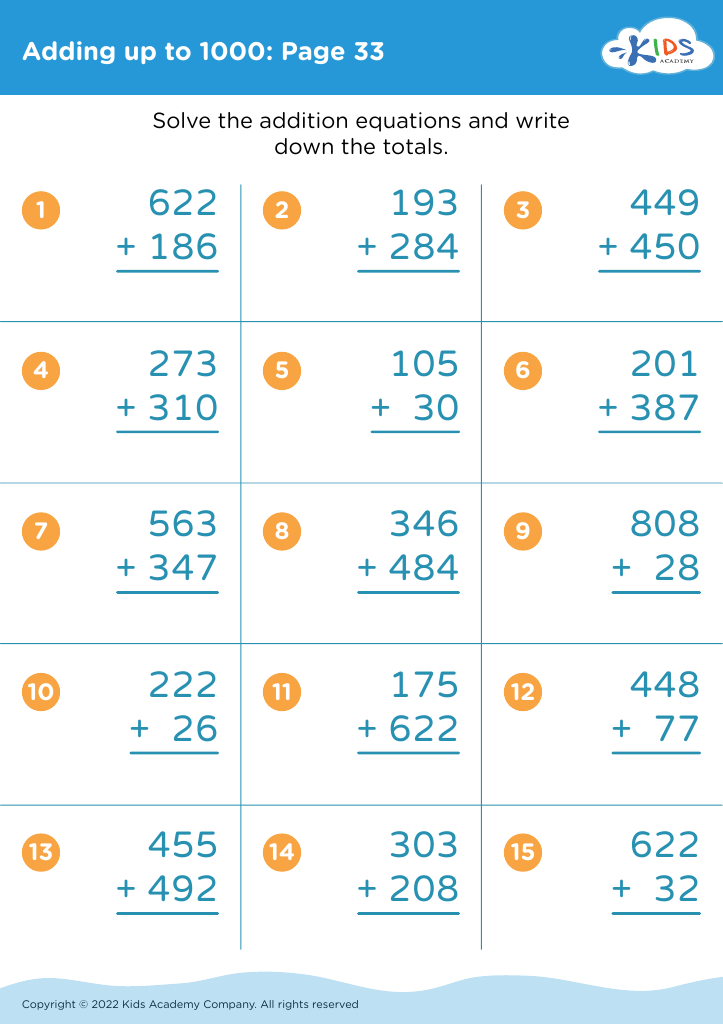








Understanding sequence is crucial for 7-year-olds as it lays the foundation for many cognitive and academic skills. At this developmental stage, children begin to grasp the concept of chronology, which is essential for reading comprehension, math problem-solving, and daily life skills. Learning sequences helps children develop logical reasoning, allowing them to understand cause and effect relationships and organize thoughts coherently.
For instance, in storytelling, recognizing the sequence of events enhances comprehension and retention. Children learn to predict outcomes and infer meaning, vital for effective communication. In mathematics, understanding order and patterns aids in grasping concepts such as addition and subtraction, as well as more complex operations later on.
Moreover, sequential thinking cultivates independence in daily tasks, from following instructions to solving complex problems. As children learn to follow and create sequences, they become more adept at planning and organizing activities, which are invaluable life skills.
For parents and teachers, nurturing this understanding not only supports academic success but also promotes critical thinking and problem-solving capabilities. Building a strong foundation in sequential understanding ensures that children are well-equipped to tackle future educational challenges and thrive in various aspects of life.








